Trump Says Iran War Could End Soon — But Bombing Is Intensifying
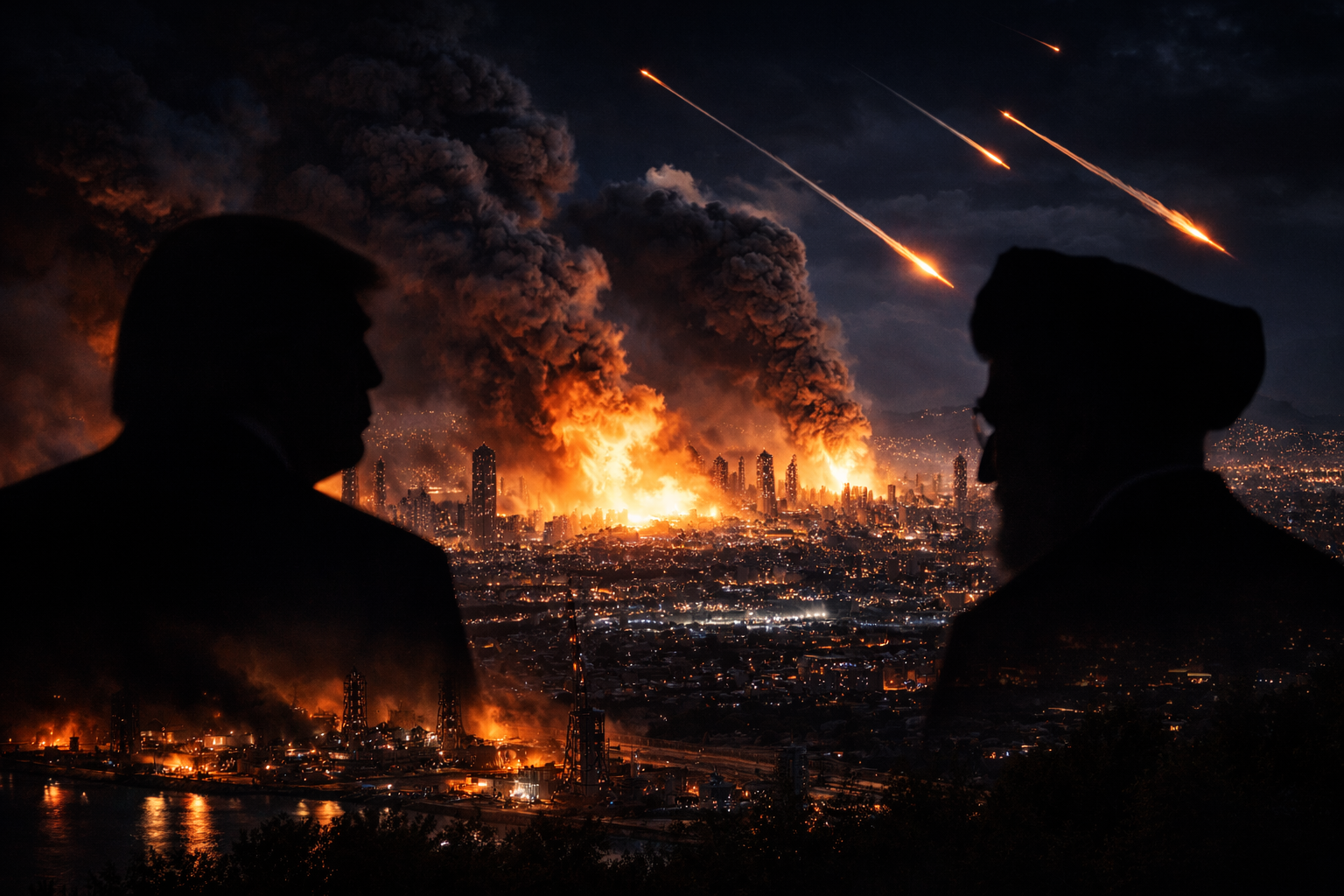
War or Victory Lap? Trump Signals End of Iran Conflict as Strikes Escalate
Trump Signals Iran War Could End Soon—Even as the Most Intense Strikes Yet Hit Iran
The United States–Iran war has entered one of its most confusing phases yet. On the same day U.S. officials signaled that the conflict could end “very soon,” the Pentagon announced that the military campaign would intensify with the most aggressive wave of strikes so far.
The contradiction is a major messaging problem. It has become the central strategic question surrounding the conflict.
U.S. Defense Secretary Pete Hegseth said the next phase would involve the most intense day of strikes yet, aimed at destroying Iranian missile launchers, naval capacity, and drone infrastructure.
At nearly the same time, President Donald Trump publicly suggested the war could end much sooner than expected, describing the campaign as “very far ahead of schedule.”
The result is a strange reality: the war appears to be escalating tactically while politically being framed as nearing its end.
The story turns on whether the intensified bombing is the final phase of a short war—or the opening stage of something much larger.
Key Points
The U.S.–Israel campaign against Iran began on 28 February 2026, targeting nuclear, missile, and military infrastructure.
U.S. officials say the next wave of attacks will be the most intense yet, aimed at crippling Iran’s remaining military capacity.
President Trump has simultaneously suggested the conflict could end “very soon," signaling optimism about the campaign’s success.
Iran continues retaliatory attacks across the region, including missile and drone strikes on U.S. allies and Gulf infrastructure.
The war has already disrupted global oil markets and shipping through the Strait of Hormuz, a route responsible for about one-fifth of global oil trade.
Analysts and governments worldwide are now trying to determine whether the war is nearing its conclusion or entering a more dangerous escalation phase.
How the War Reached This Point
The current conflict began with coordinated U.S. and Israeli strikes against Iran on 28 February 2026, targeting military facilities, missile infrastructure, and elements of Iran’s nuclear program.
The operation, known as Operation Lion’s Roar, represented the largest direct military confrontation between the United States and Iran in decades.
The initial strikes hit multiple Iranian cities, including Tehran, Isfahan, Qom, and Kermanshah. Iranian leadership figures and senior military officials were reportedly killed in the opening phase.
Iran responded quickly.
Within days, Iran launched hundreds of drones and ballistic missiles targeting Israel, U.S. military bases in the Gulf, and infrastructure in countries including Qatar, Bahrain, Saudi Arabia, and the United Arab Emirates.
The regional impact spread rapidly:
shipping through the Strait of Hormuz collapsed
energy infrastructure was hit
global oil prices surged above $100 per barrel
At one point, tanker traffic through the strait dropped dramatically as shipping companies pulled vessels from the area.
The war quickly evolved from a targeted military operation into a broader regional confrontation.
The Messaging Clash Inside Washington
The biggest source of confusion now is not battlefield developments but political messaging from U.S. leadership.
Trump has repeatedly suggested the campaign is progressing faster than expected and could conclude soon. Markets reacted strongly to those comments, with oil prices falling sharply as investors priced in the possibility of a shorter conflict.
But military leaders are describing something very different.
Defense officials say the U.S. is accelerating strikes, not winding them down, and that the operation aims to permanently destroy Iran’s ability to threaten the region.
In practical terms, that means:
destroying missile stockpiles
dismantling naval assets
targeting military production facilities
Those goals typically require sustained military pressure, not a rapid exit.
The contradiction has sparked intense debate among analysts about whether the political messaging is strategic—or simply inconsistent.
What the Battlefield Actually Shows
Despite the escalation in bombing, the military balance may already be shifting.
U.S. commanders say Iranian offensive capabilities have dropped sharply since the war began, including a dramatic decline in missile and drone attacks.
The United States and Israel have reportedly damaged or destroyed dozens of Iranian naval vessels and key military-industrial facilities.
At the same time, Iran has expanded retaliation beyond Israel and U.S. bases, launching strikes across the Gulf and threatening shipping routes.
The war has also spread into neighboring regions:
drone attacks on Gulf infrastructure
missile strikes on U.S. bases
fighting linked to Iranian proxy forces
That regional dimension is one reason analysts believe the conflict may be harder to end quickly.
What Most Coverage Misses
The key strategic hinge in this war is not the bombing campaign itself.
It is the Strait of Hormuz.
Roughly 20 percent of the world’s oil supply passes through this narrow shipping lane, making it one of the most important chokepoints in the global economy.
Iran cannot defeat the United States militarily. But it can create enormous economic pressure by disrupting shipping in the strait.
That gives Tehran leverage even while losing on the battlefield.
This is why the war’s real end condition is not simply destroying missile sites or drone factories. It is restoring stable shipping and energy flows through the Gulf.
Until that happens, markets and governments will assume the conflict is still active.
Global Consequences Already Emerging
Even a short war has had enormous ripple effects.
Energy markets were the first to react. Oil prices surged above $100 per barrel at the peak of the crisis before falling again when Trump suggested the war might end soon.
Financial markets swung wildly as investors tried to interpret the mixed signals from Washington.
Meanwhile, airlines suspended flights across large parts of the Middle East, and thousands of civilians have been displaced by the fighting.
Governments around the world are also watching the conflict closely because it could reshape power dynamics in the region.
If Iran’s military capabilities are permanently degraded, the balance of power between Iran, Israel, and Gulf states could shift for years.
The Fork in the Road Now
Three possible paths are emerging.
The first is the scenario Trump is signaling: a rapid military victory followed by a ceasefire or negotiated settlement.
The second is a longer air campaign designed to systematically dismantle Iran’s military infrastructure.
The third—and most dangerous—is regional escalation, where Iranian retaliation draws in more countries and expands the conflict beyond its current boundaries.
The signposts to watch are clear:
whether shipping through the Strait of Hormuz resumes normally
whether Iran continues missile attacks across the region
whether the U.S. launches additional large strike waves after this one
If the current escalation truly represents the final phase of the campaign, the war could end quickly.
If it does not, the next few weeks could determine whether this conflict remains limited—or becomes the largest Middle East war in decades.
