Ebola Is Moving Faster Than The Response — And That The Danger
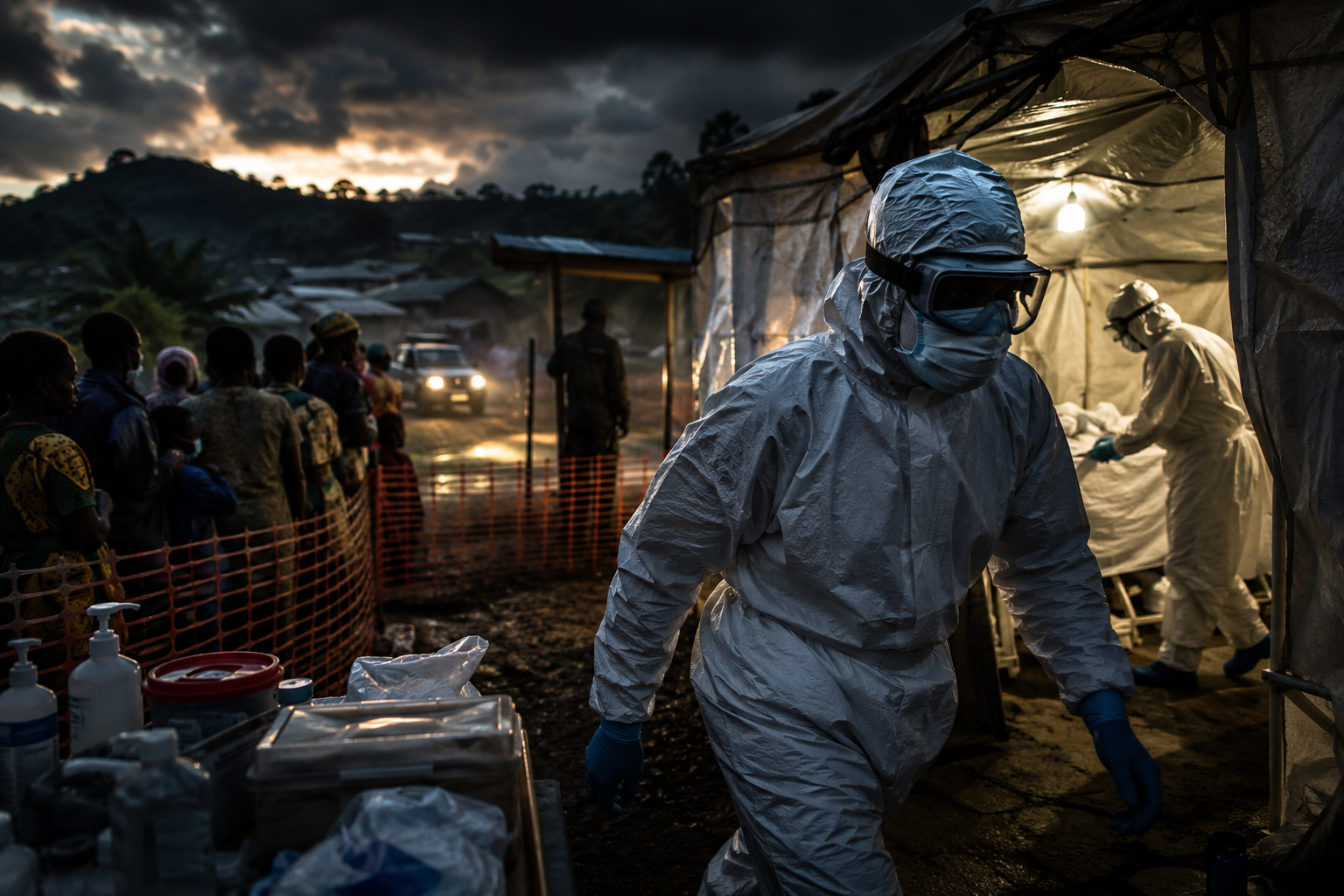
The Rare Ebola Strain Exposing A Dangerous Global Weakness
The Real Fear Is Not Panic—It Is Losing The Race
A Dangerous Outbreak Is Testing The ResponseThe latest Ebola warning is not simply that more people have been infected. The deeper warning is that the outbreak is still moving faster than the system trying to contain it.
The Democratic Republic of the Congo and Uganda are dealing with an Ebola outbreak caused by the Bundibugyo species of the virus. WHO says the outbreak was confirmed in May 2026, is centred in north-eastern DRC, and has involved cross-border spread to Uganda. It has also been declared a Public Health Emergency of International Concern, meaning the response requires international coordination rather than local containment alone.
That matters because Ebola is not controlled by reassurance. It is controlled by speed, isolation, contact tracing, safe care, trusted local communication and safe burial practices. When any of those elements falls behind, the virus gains time.
The Numbers Are Moving In The Wrong Direction
The confirmed figures have risen sharply. WHO’s disease outbreak update reported 915 confirmed cases across DRC and Uganda by mid-June, with 234 deaths, while later figures cited by WHO leadership put DRC at 1,094 confirmed cases and 277 deaths, with Uganda recording 20 confirmed cases and two deaths.
The numbers are not just statistics. They are a signal that the outbreak has already escaped the clean early-containment phase. WHO has said contact tracing remains inadequate, treatment capacity is insufficient, safe burials remain a major challenge, and the health system is under pressure.
That is the real story. Ebola outbreaks become harder to stop when responders are no longer simply finding known chains of transmission, but trying to catch up with infections that may already have moved through families, clinics, travel routes and funerals.
Why Bundibugyo Makes This Harder
This outbreak involves Bundibugyo virus disease, not the more familiar Ebola virus species behind some previous major outbreaks. WHO states that there is no licensed vaccine or specific treatment for Bundibugyo virus disease, although work is ongoing to test promising candidates.
That changes the psychology of the response. In an outbreak where licensed countermeasures exist, vaccination can become a major weapon around cases and contacts. Here, the burden falls more heavily on older but still essential public health tools: rapid detection, isolation, protective equipment, infection control, contact follow-up and community trust.
Those tools can work. But they demand manpower, logistics, local consent and time. The outbreak is taking place in areas affected by insecurity, displacement, high mobility, cross-border trade and pressure on basic services. That is almost the worst possible operating environment for a disease that punishes delay.
Contact Tracing Is The Battlefield
Contact tracing sounds administrative. In reality, it is one of the main battlefields in an Ebola outbreak.
Every confirmed case creates a chain of people who may have been exposed. Those people need to be identified, monitored, supported and isolated quickly if symptoms appear. If that chain is incomplete, the virus gets more chances to jump quietly into the next household, clinic or community.
WHO reported that thousands of contacts had been identified in DRC, but not all were being successfully followed up. The agency’s 17 June update recorded 6,367 contacts identified, with 4,525 followed up across Ituri, North Kivu and South Kivu. That leaves a dangerous gap between known exposure and confirmed control.
This is why the phrase “outpacing the response” matters. It does not mean nothing is being done. It means the outbreak’s speed is forcing responders into catch-up mode, where each missed contact can become a new cluster and each delayed burial protocol can become a new transmission risk.
Safe Burials Are Not A Detail
Safe burials are one of the most sensitive parts of Ebola control. They are also one of the most important.
Ebola can spread through contact with bodily fluids, including after death. That means burial practices can become a major transmission point if families, communities and responders are not aligned. But burial is not just a technical procedure. It is grief, faith, honour, family duty and social trust.
When health authorities say a burial must be handled differently, they are not just asking people to accept a medical rule. They are asking them to change how they say goodbye to someone they loved. If that is done badly, communities may resist. If it is done respectfully, safely and locally, it can save lives.
This is why WHO keeps emphasising community engagement. Outbreaks are not defeated only by outside experts arriving with equipment. They are defeated when local people believe the response is there to protect them, not control them.
The Global Risk Is Low, But The Warning Is Serious
WHO has said the global risk remains low. That point matters. Responsible coverage should not turn a serious regional outbreak into a fantasy of instant global catastrophe.
But low global risk does not mean low significance. Ebola does not need to become a global pandemic to expose serious weaknesses in preparedness. A fast-moving outbreak in a conflict-affected, mobile region can still test international coordination, funding, surveillance, border preparedness and trust in public health institutions.
The danger is not only that the virus crosses borders. It already has. The danger is that the response lags long enough for the outbreak to become more entrenched, more expensive, more politically sensitive and harder to contain.
This Is Also A Test Of Memory
The world has seen Ebola before. It has seen what happens when early warnings are underestimated, when local health systems are overwhelmed, when communities mistrust outside responders, and when international attention arrives late.
The uncomfortable question is whether those lessons have been fully absorbed. Modern public health systems often speak the language of preparedness, but preparedness is not a slogan. It is laboratories, trained staff, surveillance networks, community relationships, emergency funding, supply chains, protective equipment, burial teams, transport routes and political attention before the emergency becomes visually dramatic.
That is why this outbreak should be watched carefully. Not with panic, but with seriousness. A virus that can move faster than the response is not just a biological threat. It is a stress test for the institutions built to stop it.
The Real Stakes Are Speed, Trust And Capacity
The simplest version of the story is that Ebola cases are rising. The stronger version is that three systems are being tested at once: speed, trust and capacity.
Speed decides whether cases are found early. Trust decides whether communities cooperate. Capacity decides whether health systems can isolate, treat, trace and bury safely without collapsing under pressure. When all three are strained together, an outbreak can become much harder to control than the raw numbers initially suggest.
That is the deeper warning behind WHO’s language. The world does not need to panic. It does need to notice. Because when a deadly outbreak is moving faster than the response, the decisive question is no longer whether action is happening. It is whether action is happening fast enough to take back control.
