

Greenland and NATO: The Arctic Flashpoint Europe Can’t Ignore
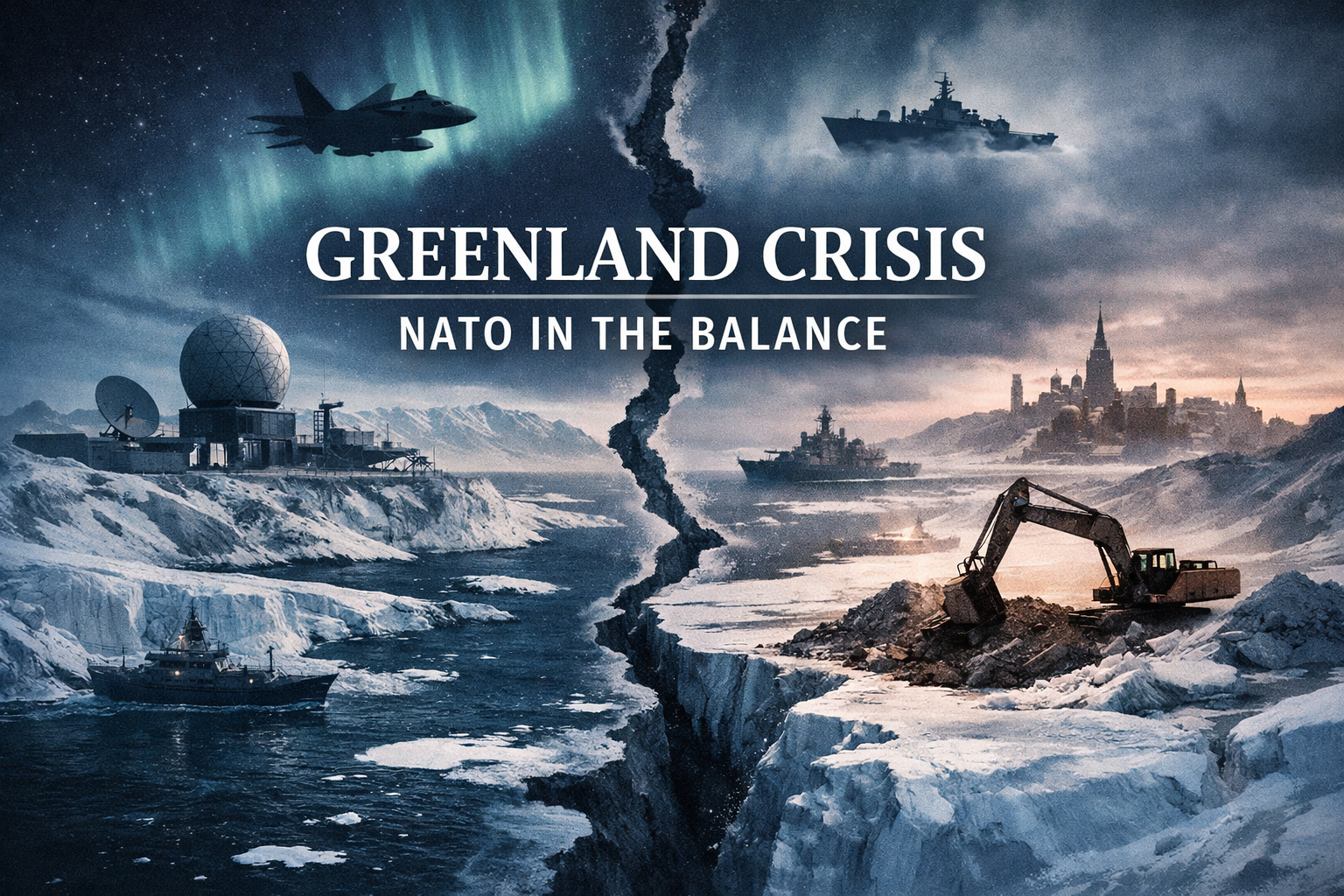
Greenland and NATO are colliding as Denmark warns a US takeover would end the alliance. Here’s what treaties allow, what “control” requires, and what happens next.
As of January 6, 2026, Denmark has pushed the Greenland dispute into NATO territory, warning that a U.S. attack or forced takeover would effectively end the alliance.
The warning landed days after a dramatic U.S. operation in Venezuela that captured President Nicolás Maduro, jolting allies into taking “rhetoric” as a signal of real willingness to use force. In Greenland, the response has been unusually direct: stop the threats, stop the insinuations, and treat Greenland’s sovereignty as non-negotiable.
This is no longer a niche Arctic story about minerals and maps. It is a stress test for the core promise that holds the West together: that allies do not coerce, annex, or “take” each other.
The article below breaks down what the treaties actually cover, what military posture exists on the ground today, what “control” would really require, and the scenarios that could fracture NATO faster than any external enemy.
The story turns on whether Washington treats Greenland as an allied asset to defend or a territory to control.
Key Points
Denmark’s prime minister has framed a U.S. attack on Greenland as a NATO-ending event, escalating the stakes beyond routine diplomatic protest.
Greenland is covered by NATO via Denmark, and the North Atlantic Treaty’s geographic scope explicitly includes islands in the North Atlantic area north of the Tropic of Cancer.
The United States already has a strategic foothold in Greenland through Pituffik Space Base and long-standing defence agreements, making the "we need Greenland" claim contested.
“Control” would mean more than symbolism: it would require legal transfer, consent, and governance—or coercion backed by force, which would collide with international law and alliance norms.
Europe’s public response has tightened, with leaders backing Denmark’s position that Greenland’s future must be decided by Greenland and the Kingdom of Denmark.
The Venezuela operation has changed the context: it lowers the threshold at which allies assume Washington might act on maximalist goals.
Background
Greenland is a self-governing territory within the Kingdom of Denmark. It runs most domestic affairs through its own government and parliament, whereas Denmark retains responsibility for key areas such as foreign policy and defence. A 2009 self-government law recognizes Greenlanders as a people with the right to self-determination and provides a lawful pathway toward independence if Greenland chooses it.
Greenland is not an independent NATO member state, but it is covered by Denmark’s NATO membership. That matters because NATO’s collective defence obligations are not open-ended worldwide. The treaty’s own text sets geographic boundaries for what counts as an “armed attack” for Article 5 purposes, explicitly including islands under allied jurisdiction in the North Atlantic area north of the Tropic of Cancer.
The U.S. military presence in Greenland is not hypothetical. The United States operates Pituffik Space Base (formerly Thule Air Base) under long-standing defence agreements with Denmark. Pituffik supports missile warning and space surveillance missions, and its location is central to North American early-warning architecture. Greenland also sits on a strategic seam between North America and Europe, tied to Cold War and post–Cold War naval planning in the Greenland–Iceland–United Kingdom gap, a key corridor for tracking submarine movement between the Arctic/Norwegian Sea and the open Atlantic.
The political backdrop has sharpened since the start of 2026. After the U.S. operation in Venezuela, President Donald Trump renewed his public push for American “control” of Greenland, framing it as a defence necessity and linking it—explicitly or implicitly—to a broader willingness to act.
Analysis
Political and Geopolitical Dimensions
Denmark’s position is straightforward: Greenland is part of the Danish kingdom, Greenland’s people decide their future, and threats of annexation are unacceptable from an ally. Greenland’s leadership has reinforced that stance while trying to avoid panic, arguing that Greenland cannot be treated like a weak state ripe for seizure and insisting the island’s democratic status changes the entire premise.
For Europe, the danger is not only territorial. It is reputational and structural. NATO is built on the assumption that threats come from outside the alliance. The moment the feared aggressor is a leading member, the alliance’s decision model breaks down. NATO decisions are made by consensus. If the United States is the problem, the alliance becomes an emergency room run by the patient.
This is why Danish rhetoric has escalated from “not for sale” to “this ends NATO”. The point is deterrence by consequence: if Washington turns coercion into policy, Europe will treat it as an alliance-ending breach, not an awkward disagreement to be managed behind closed doors.
European leaders have begun responding publicly in that register. Support statements are not just moral postures. They are early signals that Europe is preparing for a scenario where NATO solidarity cannot be assumed.
Economic and Market Impact
Greenland’s mineral potential is real, but it is not a turnkey solution to supply-chain risk. Mining in Greenland is slow, capital-intensive, and politically constrained by local environmental and social concerns. The most valuable deposits tend to be tied to difficult projects with long timelines, and Greenland’s politics has already shown it can block or reverse high-profile mining plans.
That cuts against a simplistic “we need Greenland for minerals” argument. Even if Washington wanted privileged access, the practical route runs through investment, permitting, and partnership—steps that require Greenlandic legitimacy and Danish cooperation. Coercion would not speed this up. It would trigger legal battles, sanctions debates, investor caution, and a reputational shock that makes long-term projects harder to finance.
There is also a second-order economic story: leverage. When disputes turn geopolitical, governments reach for tools short of force—trade pressure, regulatory freezes, procurement decisions, and targeted industrial pain. If Greenland becomes a coercion test, expect economic retaliation and counter-retaliation to move from theory to practice.
Technological and Security Implications
Greenland’s security value is concrete and present-tense. Pituffik’s radar and surveillance roles are tied to missile warning and space domain awareness. In a world of faster missiles and intensified great-power competition, early warning is not a luxury. It is a critical node.
This is precisely why the “control” debate is so dangerous. The U.S. already benefits from a legal, operational, and strategic footprint. The marginal security gains from sovereign ownership are unclear, while the alliance costs are massive.
If Washington tried to shift from access to ownership, Denmark and Greenland would have strong incentives to tighten legal constraints, increase their own presence, and invite more European participation in Arctic defense planning. Germany’s suggestion that NATO discuss stronger protection for Greenland points in that direction: more allied visibility, more shared responsibility, and less room for unilateral narratives.
A hard posture scenario would also raise the risk of miscalculation. Greenland’s vast distances, harsh climate, limited infrastructure, and narrow chokepoints for air and sea logistics mean “quick control” is not a clean concept. Any attempt to seize or coerce would depend on a handful of ports, runways, and communications nodes—and would be visible, contestable, and diplomatically explosive from day one.
Social and Cultural Fallout
In Greenland, the sovereignty debate lands on lived history: the legacy of colonial administration, the push for more autonomy, and an internal argument about how to reach economic independence without trading one dependency for another. Many Greenlanders want stronger ties with the United States in practical areas—investment, security cooperation, education, trade—while still rejecting annexation outright.
In Denmark, public reaction is likely to harden. The idea that a NATO ally could threaten a NATO-covered territory scrambles the basic trust that makes shared defence possible. It also changes domestic politics: governments under pressure tend to reframe defense spending, basing, and intelligence as urgent, not optional.
In the United States, the Venezuela operation has already widened the debate about what “law enforcement”, “national security”, and “intervention” mean in practice. Greenland adds a new, more destabilising layer: the question of whether alliance relationships impose real limits, or merely polite friction.
What Most Coverage Misses
Most coverage treats “annexation” as either fantasy or a one-step military event. The real hinge is control of governance, not control of geography. Greenland is not a prize you grab and then administer easily. It has institutions, elections, legal status, and international relationships that would not evaporate on contact with a flag.
That means the most plausible escalation pathway is not an amphibious invasion. It is coercive bargaining: pressure dressed as “security necessity”, a demand for expanded basing rights framed as a fait accompli, and a narrative that delegitimizes Danish and Greenlandic objections as irresponsible or naïve. That is how control is often pursued in the modern era—incrementally, through leverage.
The second underplayed point is NATO’s structural weakness in this scenario. The treaty is designed for external attack, and NATO runs on consensus. If a major ally is the aggressor, the alliance is not just morally compromised—it is mechanically impaired. The “end of NATO” line is not only rhetoric. It reflects the reality that NATO cannot function if trust inside the club collapses.
Why This Matters
Greenland is a hinge point between Europe and North America and a critical node in the defence and surveillance systems that protect both. If the dispute escalates, it will not stay confined to Arctic diplomats. It will reshape how Europe thinks about its own defence autonomy, how smaller allies judge American guarantees, and how rivals test Western cohesion.
In the short term, the most affected players are Denmark and Greenland, which face direct political and security pressure, and NATO itself, which faces a legitimacy test. In the longer term, the risk is precedent: if coercion works once, it becomes a tool others try to copy.
What to watch next is concrete. Look for formal NATO consultations, changes to basing negotiations, shifts in Denmark’s Arctic defense posture, and any U.S. move from rhetoric into administrative action—new demands, timelines, or unilateral declarations. Also watch Greenland’s internal politics: sovereignty debates will intensify if outside pressure rises.
Real-World Impact
A Greenlandic business owner in Nuuk weighing whether to expand a tourism operation could see insurance and financing tighten if headlines keep implying instability or confrontation.
A Danish logistics planner supporting Arctic patrol and search-and-rescue may face sudden demands for more lift capacity, more cold-weather equipment, and faster procurement—because visible presence becomes a form of deterrence.
A U.S. military family connected to Pituffik operations may find that routine basing questions become politicized overnight, with legal and diplomatic conditions changing in ways that affect rotations, resupply, and long-term planning.
A shipping or energy risk team in London could see Arctic risk repriced, not because shipping routes suddenly open, but because a political shock in the High North can spill into sanctions, defense posture changes, and alliance uncertainty.
The Road Ahead
The Greenland dispute is not just about who owns an island. It is about whether alliances still constrain power. If Washington treats Greenland as a partner to protect, the crisis can de-escalate into a familiar pattern: more investment, more joint defense planning, and clearer rules around basing and access.
If Washington treats Greenland as something it must control, the logic changes. Denmark and Europe will assume the alliance’s core promise has broken, and they will begin acting accordingly—politically, militarily, and economically.
The decisive signposts will be simple to spot: whether U.S. rhetoric becomes written policy, whether demands come with deadlines, whether NATO is forced into emergency consultation, and whether Europe starts building “NATO minus America” capabilities in public rather than in theory. If those signposts appear, this moment will be remembered as the point where the Arctic stopped being a frontier and became a fault line.
