Houthi Camp Attack Kills 53, Yemen Authority Says: How Far Could the War Spread?
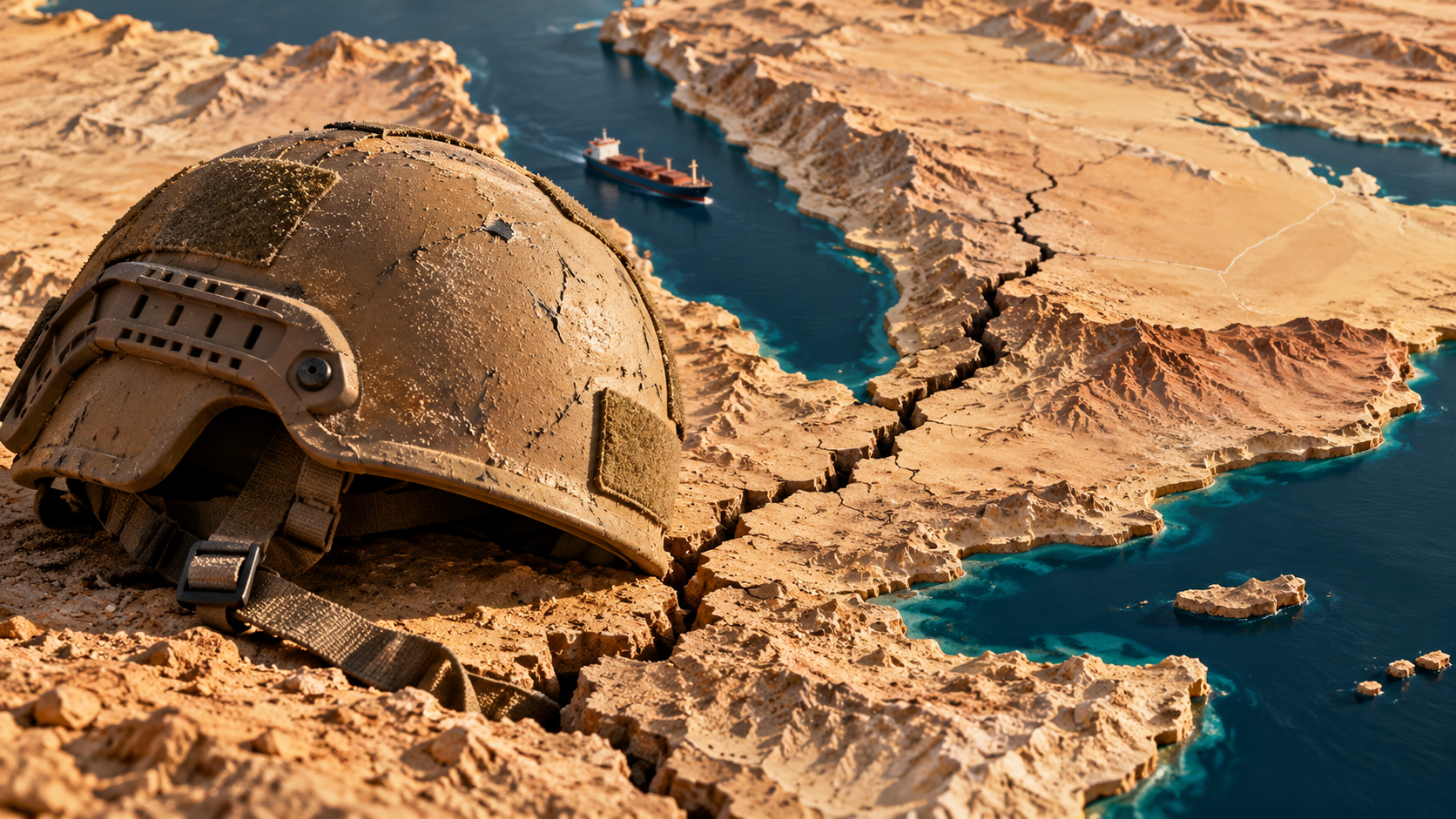
Saudi Arabia, Egypt and the Red Sea: What Yemen’s Escalation Could Mean
Could Yemen’s Latest Escalation Pull More Countries Into War?
The reported deaths in Shabwa intensify a conflict already linked to the Iran war, with Saudi security and Red Sea trade exposed to further escalation.
A Houthi attack on a government security training camp in Yemen’s Shabwa province killed 53 people and injured 200 on 19 October, according to the local authority. The figures remain preliminary.
Could it become a full regional war? The danger is real, but Yemen is already part of a wider conflict. The question now is whether this escalation brings more countries into sustained combat, extends attacks on infrastructure and makes vital shipping routes harder to use. None of those outcomes follows automatically from the camp strike.
What the Shabwa Attack Changes
Shabwa’s provincial government said those targeted were recruits preparing to join internal security forces. The Houthis acknowledged targeting the camp. Yemen’s Presidential Leadership Council chairman, Rashad al-Alimi, pledged a firm response.
The immediate pressure falls on Yemen’s government and its military backers. A training force represents future capacity: personnel who might defend territory, secure roads or replace exhausted units. Striking it can impose losses before recruits reach operational service.
That is a military interpretation of the target’s significance, rather than proof of the attackers’ precise intentions. The available evidence does not establish that this strike was designed to provoke a wider war.
Local authorities have sought stronger air defence and early warning systems. That request presents foreign partners with choices. They could supply equipment, train operators or take a more direct role in interception. These commitments would carry different risks and should not be treated as interchangeable.
Yemen Is Already Connected to the Iran War
The fighting involves an Iran-aligned Houthi movement and an internationally recognised government supported by a Saudi-led coalition. Renewed hostilities have eroded the relative calm that followed the 2022 truce.
The latest conflict has also involved Houthi attacks on Saudi territory and fighting near the southern entrance to the Red Sea. Those connections make a purely domestic description of Yemen’s war inadequate.
However, Iranian alignment does not establish Iranian responsibility for every targeting decision. Nothing in the material reviewed establishes that Tehran ordered the Shabwa attack. Confusing support, influence and operational command would produce a misleading account of how escalation could happen.
The Houthis have their own territorial and political interests. A settlement between larger powers would therefore need to address the actors fighting inside Yemen, rather than assume that an agreement elsewhere would settle their disputes.
Saudi Arabia Faces a Retaliation Dilemma
Saudi Arabia must consider both the credibility of its support for Yemen’s government and the vulnerability of its own infrastructure. Further retaliation could seek to degrade Houthi capabilities. It could also trigger additional attacks, leaving the kingdom spending more effort defending itself while the underlying conflict continues.
This creates a difficult test for military policy. Success cannot be measured only by how many targets are struck. It must also be judged against whether subsequent attacks decline, essential services remain functioning and government-held areas become more secure.
There is a plausible route to a larger war if repeated exchanges expand the target list and leaders conclude that limited operations cannot provide security. There is also a route to containment if defence and diplomatic pressure create room for negotiations. These are possible paths, not predictions with measurable odds.
Egypt’s Role Could Widen International Involvement
Egypt’s National Defence Council agreed on 18 October to support Saudi Arabia. The announcement did not specify the operational package. President Abdel Fattah al-Sisi had also sought parliamentary authority to deploy troops and equipment abroad.
The distinction between a Saudi defence commitment and an operational deployment matters. Political backing does not establish that Egyptian forces have entered combat in Yemen.
For Cairo, the shape of any mission would determine its exposure. Protecting installations, supporting interception and striking targets across a border involve different decisions. A limited mission could become harder to contain if foreign personnel were killed or their operating bases attacked.
The same care applies when discussing Britain’s defensive support for Saudi Arabia. Military assistance needs to be assessed by its actual role and authorisation. It should not be described as an unlimited commitment to every subsequent operation.
Why the Red Sea Makes This a Global Concern
The Bab el-Mandeb Strait connects the Gulf of Aden with the Red Sea. Ships using the Suez route between the Mediterranean and the Indian Ocean depend on access through this southern gateway.
The geography gives events in Yemen consequences well beyond its borders. Threats to vessels can affect routing decisions, insurance and delivery times. Commercial disruption does not require an attacker to occupy the entire coast or physically seal the waterway.
There are alternatives, but they depend on where a cargo begins and ends. Some voyages can divert around southern Africa. Saudi oil moved by pipeline to Red Sea terminals has a different set of routing options from oil loaded inside the Gulf. Bab el-Mandeb and the Strait of Hormuz are distinct chokepoints; one is not a universal substitute for the other.
For European and Asian economies, the risk is therefore broader than a single dramatic oil-price move. Longer journeys and less reliable schedules could spread costs through supply chains. The size and duration of any effect would depend on actual disruption, available capacity and how carriers respond.
The Escalation Signals That Matter
A wider war would become more plausible if several developments occurred together: sustained damage to Saudi infrastructure, an expansion of foreign combat deployments and repeated attacks that made commercial passage substantially harder.
Foreign casualties would be particularly significant because they could change another government’s objectives. A state initially providing defensive assistance might face pressure to retaliate. Whether it did so would remain a political choice, rather than an automatic consequence of an alliance.
Conversely, explicit limits on deployments, functioning communication channels and verifiable reductions in attacks would support containment. Military announcements alone reveal less than the tasks forces actually perform and the targets governments authorise them to strike.
For Yemenis, deterioration does not depend on a formal declaration of regional war. The World Food Programme said on 14 October that fighting had cut off life-saving assistance to 800,000 people. Blocked roads and restricted access were already turning military developments into shortages.
The most useful next test is what follows al-Alimi’s promised response: additional protection for vulnerable sites, a broader offensive, or action accompanied by a credible attempt to restore negotiations. Those decisions will show whether the Shabwa strike deepens this front or helps draw more countries directly into it.
Sources
Reuters — Houthi Attack Kills 53 at Yemen Government Training Camp, Officials Say — 19 October 2026; local-authority casualty figures and the broader conflict. Associated Press’s same-day account also supports the provincial statement, Houthi acknowledgement and promised response.
Associated Press — Egypt’s Top Security Body Agrees to Help Saudi Arabia Defend Itself Against Houthi Attacks — 18 October 2026; Egyptian support announcement and its unspecified operational scope.
US Energy Information Administration — Red Sea Chokepoints Are Critical for International Oil and Natural Gas Flows — 4 December 2023; geographical and energy-routing background, not current traffic volumes. The humanitarian figure comes from the World Food Programme’s 14 October 2026 statement published by the United Nations.
Next Reads
Egypt Moves Towards Saudi Defence Role as Houthi Attacks Escalate — The conditional commitments behind Cairo’s involvement.
Who Are the Houthis and Why Is Britain Providing Defensive Support to Saudi Arabia? — The movement’s regional reach and Britain’s announced role.
What if China Fully Joined the Iran War? Global Impact and Ranked Outcomes — A separate hypothetical assessment of a much larger international escalation.
