Italy Weighs Emergency Crackdown After Milan Riots as Salvini Targets Youth Violence
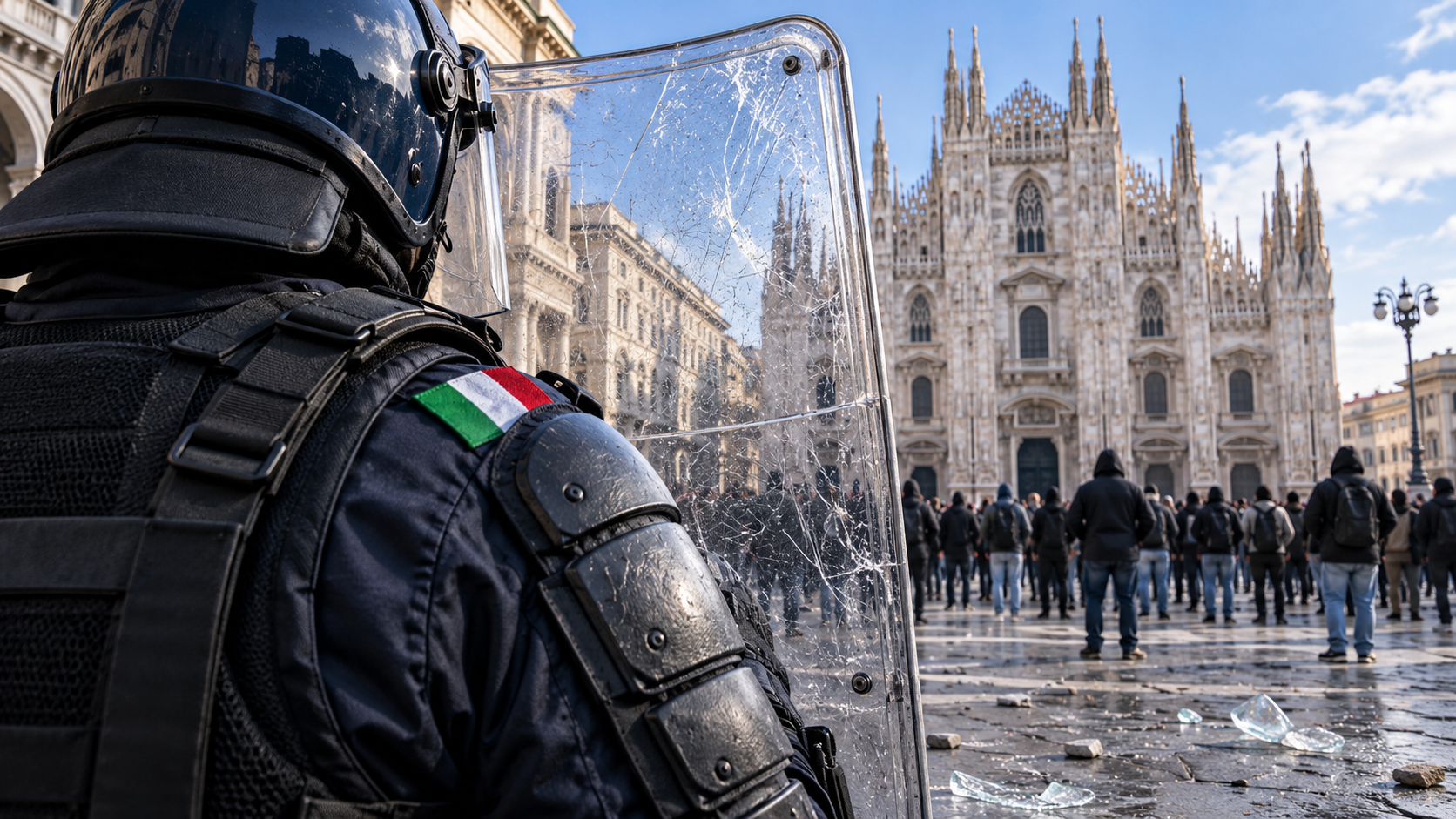
Milan Unrest Leaves Italy Confronting Violence and Cost-of-Living Anger
Milan After the Riots
Police say 32 people were arrested after Sunday’s unrest, while coalition leaders press for tougher powers involving minors.
Giorgia Meloni brought ministers and security chiefs together on Monday, 19 October, as Italy considered tougher measures after two days of rioting in Milan. Shops were looted, property was damaged and police used tear gas and water cannon during the weekend unrest.
The prime minister has promised to consider additional tools against people who exploit legitimate demonstrations to cause violence. Her coalition is pressing for action involving minors, with Matteo Salvini’s League seeking to extend preventive detention measures to younger suspects.
Those demands are proposals. The evidence available for this article does not establish that a new emergency decree has been approved or that the proposed powers have entered into force.
What Happened in Milan?
Saturday’s march against wars and rising living costs began peacefully before masked participants attacked police and set barricades alight near Piazza del Duomo. Officers responded with riot-control measures as the city centre emptied.
Further disorder followed on Sunday. Hooded groups damaged property and looted shops, including sports retailers and a phone store. Police said 271 people were taken to police stations during that day’s operation.
Of those, 32 were formally arrested, including 23 minors. Another 28 people were referred to judicial authorities. Being taken to a police station is not the same as being arrested, and none of these figures establishes guilt.
Police sources said 14 law-enforcement officers were injured in Sunday’s clashes. That is a count for a particular day and location, rather than a complete national injury total.
The involvement of young people has become central to the government’s response. It also makes precision essential: the age profile of those stopped cannot establish the conduct of every person involved in the demonstrations.
What Is the Government Considering?
Salvini wants to accelerate security measures already being considered in parliament. His proposals include extending preventive detention to minors and strengthening the response to group violence and property damage.
Other coalition figures have called for additional security personnel and a stronger state presence in Milan. The immediate political question is whether ministers will turn those demands into an urgent government measure, pursue legislation through parliament, or concentrate first on policing operations.
Each route would require scrutiny of its actual wording. A promise of tougher powers does not explain who could be detained, what evidence would be required or which safeguards would apply. Those details will determine the reach of any measure.
Meloni’s meeting brought the political leadership together with police and intelligence chiefs. Their involvement confirms the seriousness of the government’s response. It does not, by itself, prove that the unrest was centrally organised or directed from abroad.
A Dispute Over Police and Peaceful Protest
Milan’s centre-left mayor, Giuseppe Sala, has condemned the violence while questioning whether enough officers were deployed. Interior Minister Matteo Piantedosi has challenged the mayor, turning the operational response into a dispute between national and city leaders.
Democratic Party leader Elly Schlein has also condemned violence. She has warned against allowing the riots to drown out peaceful demonstrations by people struggling to make a living.
These positions address different questions. Investigators must establish who attacked officers, stole goods or damaged buildings. Political leaders must also decide how to respond to the grievances of people who demonstrated lawfully.
The distinction matters for the credibility of the response. A person protesting about household costs is not responsible for a stranger’s looting simply because both were present in the same city. Equally, an economic grievance does not excuse an assault or theft.
How Does France Fit In?
The Milan violence coincided with cost-of-living demonstrations and clashes in France. Across the border, school grievances had already helped drive a broader confrontation over public services and living standards.
The resemblance creates understandable concern about unrest spreading. It is not proof of a shared command structure, identical motives or coordination between people committing crimes in different countries.
For Italy, the next concrete test is the government’s proposed text. It will show whether the response is chiefly about resources, detention powers or criminal penalties, and how ministers intend to distinguish individual violence from lawful collective protest.
Sources
ANSA — Meloni Chairing Security Meeting After Youth Riots in Milan — 19 October 2026; security meeting, coalition proposals and political responses.
Reuters via Internazionale — Italian Police Detain Hundreds as Stores Looted in Weekend Unrest in Milan — 19 October 2026; Sunday’s police figures, looting and government response.
ANSA — Concluso a Palazzo Chigi il Vertice sull’Ordine Pubblico con Meloni — 19 October 2026; security discussions and proposed measures. Saturday’s chronology and Meloni’s public response were also checked against Associated Press coverage; Sunday’s officer injury count was checked against ANSA’s separate police update.
Next Reads
French Protests Erupt Into Clashes as Demonstrators Force Their Way Into Marseille City Hall — The parallel cost-of-living mobilisation across the border.
France Braces for Fresh Nationwide Student Protests After €30 Million Damage, Thousands Arrested and Teenagers Maimed — Background to the widening French protest movement.
French School Revolt Inflicts “Heaviest Toll in Decades” as PM Confronts Violence, Injuries and Widespread Damage — How the earlier education dispute developed.
