Ofcom Investigates Huw Edwards Drama Over Fairness and Privacy
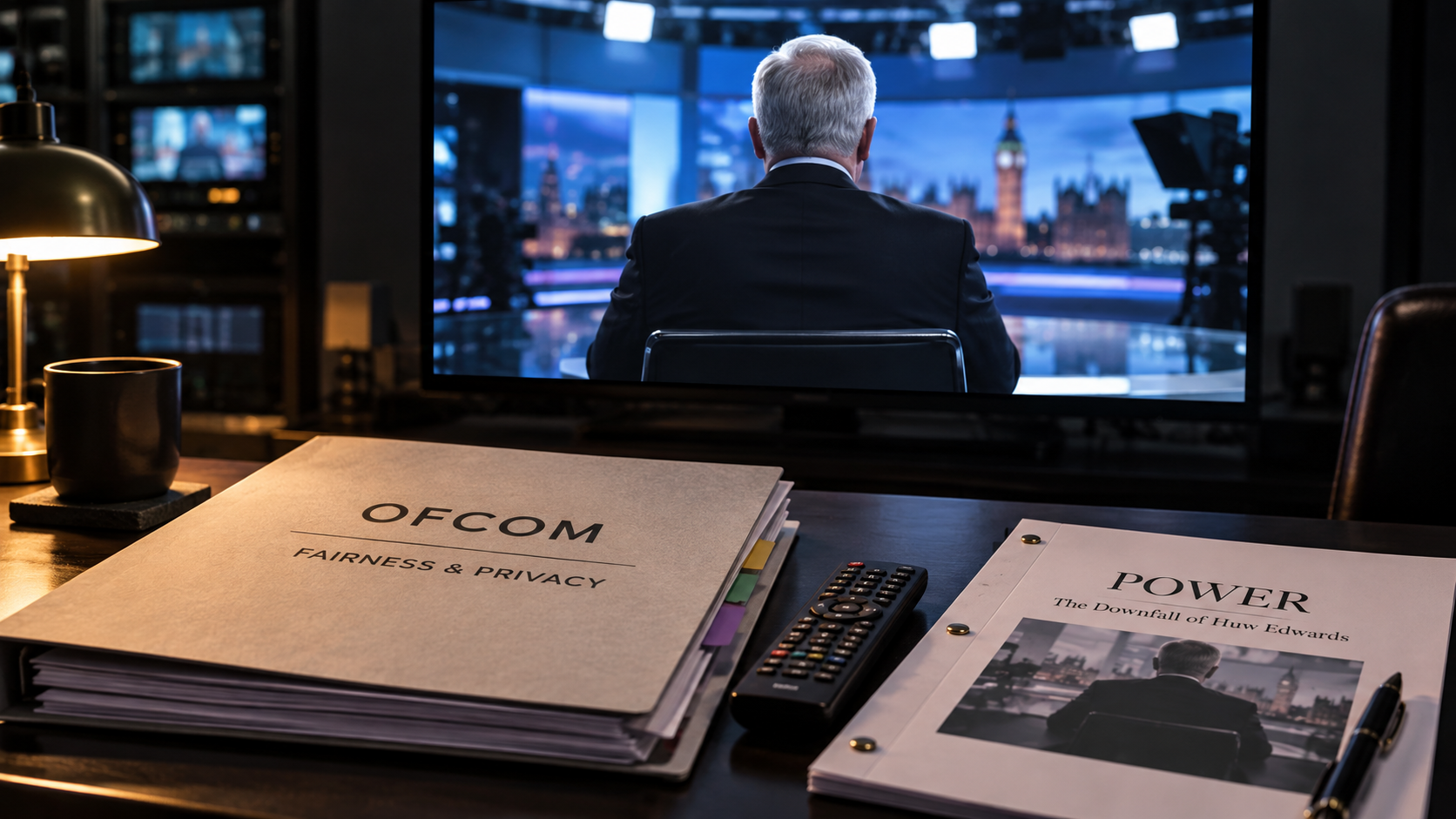
Huw Edwards, Factual Drama and the Rules Behind Ofcom’s Investigation
The Huw Edwards Drama Under Scrutiny
The regulator is examining a complaint about Power: The Downfall of Huw Edwards, starring Martin Clunes. No breach has been established.
Ofcom is investigating Channel 5’s factual drama about Huw Edwards over fairness and privacy, bringing the programme’s portrayal of the former newsreader under formal regulatory scrutiny.
The watchdog has confirmed that it is examining a complaint about Power: The Downfall of Huw Edwards. The announcement, made public on 19 October 2026, establishes that an investigation is under way. It does not establish that the programme broke broadcasting rules.
Martin Clunes plays Edwards in the production, which follows allegations about his contact with a vulnerable teenager and the separate events surrounding his conviction for child abuse image offences. The distinction between those strands matters: a conviction does not turn every allegation about a person into a proven fact.
What Ofcom Has Confirmed
An Ofcom spokeswoman said: “We are investigating a fairness and privacy complaint about this programme.”
The brief confirmation does not set out the disputed scenes, the full grounds of complaint or a timetable for a decision. It also does not identify the complainant. Those gaps limit what can responsibly be said about the case.
Fairness and privacy complaints concern people or organisations directly affected by a programme. They differ from complaints made by viewers about content they find offensive. The existence of this investigation should therefore not be treated as a measure of general audience opinion.
Nor can the complaint’s precise argument be reconstructed from Edwards’ earlier criticism alone. His objections before broadcast provide background to the dispute, but they are not a published account of the case Ofcom is now assessing.
Why a Drama Can Face a Fairness Investigation
The Broadcasting Code expressly addresses dramatisation. Rule 7.10 says that dramas and factually based dramas should not portray facts, events, individuals or organisations unfairly.
That provision matters because a programme does not escape fairness obligations simply by using actors. A factual drama can draw its authority from real events while using the techniques of fiction to make those events immediate and understandable.
The relevant question is how the portrayal treats the people involved. The Code also says that those facing significant allegations should normally receive an appropriate and timely opportunity to respond. Where a non-participant’s views are represented, that representation must be fair.
These are the general standards against which such programmes can be assessed. Ofcom’s short statement does not establish which particular practices are disputed in this case, or whether any individual scene has been singled out.
Edwards’ Objection and Channel 5’s Response
Before the programme’s March transmission, Edwards challenged whether the production would accurately represent what happened. He said its makers had failed to check the truth of their narrative with him and questioned its fairness.
Channel 5 disputed that account of its approach. The channel said the film drew on interviews with the young man and his family, text exchanges, the work of those who investigated the allegations and court material. It maintained that the production complied with the Broadcasting Code.
The channel also said that all allegations in the film had been put to Edwards through his solicitors six weeks before transmission.
That response identifies an important point of disagreement, but it cannot resolve the regulatory question by itself. Sending allegations in advance is relevant to an opportunity to respond. Ofcom must assess a complaint against the applicable standards, rather than accept either side’s description as the conclusion.
The production was made by Wonderhood Studios, with Clunes in the central role. Its commissioning announcement described a project built on extensive research and cooperation from people at the centre of the story. Those statements explain the makers’ stated approach; they are not an independent finding that every portrayal was fair.
What the Criminal Court Established
Edwards pleaded guilty on 31 July 2024 to three offences of making indecent images of children. The sentencing remarks record 41 images across three categories, including seven in Category A, the most serious category.
The judge imposed a six-month prison sentence suspended for two years in September 2024. The court record also explains an easily misunderstood legal term: “making” did not mean that Edwards physically photographed or filmed the abuse. The judge accepted that the conduct involved opening WhatsApp messages containing the images, with no evidence that he did anything further with them.
That explanation does not diminish the offences. It identifies the conduct for which he was sentenced.
The images were received through his contact with Alex Williams. That criminal case must be distinguished from the allegations involving the teenager whose account forms a central part of the drama. The chronology of Edwards’ downfall spans different allegations, investigations and proceedings; they should not be collapsed into a single finding.
Ofcom’s investigation concerns broadcasting standards. It is not an appeal against the criminal conviction or a new prosecution.
Privacy Depends on Justification
The Code’s privacy provisions require any infringement to be warranted. Where a broadcaster relies on public interest, it must demonstrate that the public interest outweighs the right to privacy in the circumstances.
Ofcom lists exposing crime, protecting public safety and revealing misleading claims among examples of public interest. It also makes clear that people in the public eye, and their families and friends, retain a private life.
The practical consequence is that the importance of a subject does not automatically justify every disclosure about everyone connected with it. A programme can examine serious wrongdoing while still facing questions about the treatment of particular private information.
No detailed public account of the privacy complaint has been established here. It would therefore be premature to name a particular disclosure as the reason for the investigation, predict a sanction or claim that the drama will be withdrawn. The unresolved question is which aspects of the broadcast Ofcom has been asked to examine, and how the regulator will apply its rules to them.
Sources
Brit Brief — Huw Edwards Sparks Ofcom Investigation With Channel 5 Drama Complaint — 19 October 2026 account carrying Ofcom’s confirmation; the complainant’s identity is not treated as confirmed in this article. Background statements from Edwards and Channel 5 were also checked against The Independent’s pre-broadcast account and Paramount’s commissioning announcement.
Ofcom — Section Seven: Fairness — Rules governing factual dramas and responses to significant allegations, read alongside Section Eight: Privacy.
Courts and Tribunals Judiciary — Huw Edwards Sentencing Remarks — Primary record of the offences, image totals, meaning of “making” in this case and sentence imposed in September 2024.
Next Reads
Huw Edwards: Back in the Spotlight — LinkedIn Activity, Scandal Timeline and What Comes Next — Background on the former presenter’s downfall and subsequent public attention.
£180 to Watch TV: Why the BBC Licence Fee Is Becoming Politically Toxic — A broader discussion of broadcasting, institutional trust and funding.
