Paul Mackenzie Found Guilty of 191 Murders After Kenya’s Starvation Cult Deaths
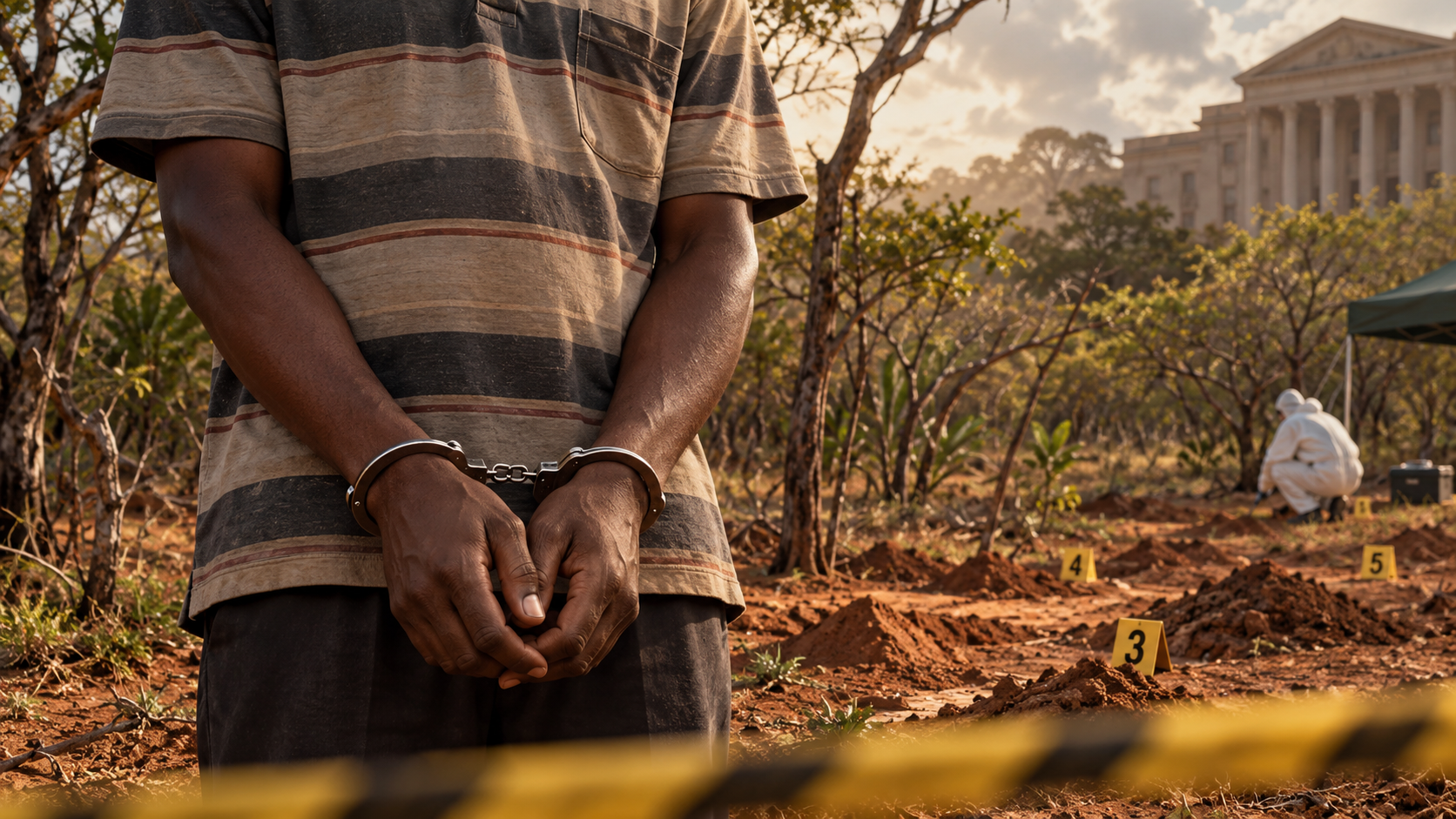
Kenya’s Starvation Cult Verdict: What the Evidence Revealed About Shakahola
The Graves, the Survivors and the Confession: Inside Paul Mackenzie’s Murder Case
A Kenyan court has convicted the preacher over 191 deaths, while the wider investigation into hundreds of forest burials continues.
Paul Mackenzie has been found guilty of murder over the deaths of 190 children and one adult in Kenya’s Shakahola starvation cult case. The verdict was delivered on 19 October 2026, more than three years after investigators began uncovering mass graves near Malindi.
The judgment concerns 191 deaths. The wider recovery of more than 400 bodies is a separate figure, and investigations into other deaths continue. Understanding that distinction is essential to understanding what the court has decided and what remains unresolved.
What Happened in Shakahola?
Mackenzie, a former taxi driver, founded Good News International Church in 2003. His preaching became increasingly apocalyptic, presenting starvation as a route to heaven before the world ended. Followers gathered in Shakahola Forest in Kilifi County, inland from Kenya’s Indian Ocean coast.
The Kenya National Commission on Human Rights later described a fasting regime in which children were supposed to die first, followed by women and men. Its investigation also documented allegations of armed enforcers who supervised fasting and dug graves. People who resisted or tried to escape were reportedly subjected to lethal violence, according to accounts received by the commission.
Those findings challenge any simple description of the deaths as a group of adults freely choosing to stop eating. They describe a controlled community containing children who depended on others for food, protection and medical care. The commission’s findings are distinct from the criminal court’s determination of individual guilt.
How the Investigation Developed
Police rescued 15 emaciated church members in the early stages of the discovery. Four died after reaching hospital. Survivors told investigators that Mackenzie had instructed followers to fast until death.
Searches then exposed shallow graves across the forest. Investigators faced two connected tasks: recovering people who could still be saved and establishing what had happened to those already buried. The scale of the recovery turned the inquiry into a prolonged forensic operation.
A Senate committee subsequently described restrictions on followers leaving the settlement and the destruction of identity cards and other personal documents. That destruction complicated efforts to put names to the remains.
The prosecution’s investigation brought together examinations of bodies, crime-scene records, forensic exhibits and statements from relatives. Its final submissions described about 400 recorded statements. These materials served different purposes: showing that deaths had occurred, connecting remains to the settlement and establishing responsibility for the conditions in which people died.
The Evidence of Starvation and Control
The prosecution relied on survivor and witness testimony, sermons, electronic material and the circumstances surrounding burials. Its argument was that these strands revealed a common plan, with different defendants performing different roles.
Forensic findings were important, but they did not provide a clear medical answer for every recovered body. Advanced decomposition left some causes of death undetermined. Prosecutors argued that the surrounding evidence allowed the court to draw conclusions even where a post-mortem examination could no longer establish the precise mechanism of death.
That distinction matters. A medical finding of starvation and a legal inference drawn from several forms of evidence are different things. The case did not rest on a claim that every body had yielded an identical, conclusive autopsy result.
The prosecution also argued that denying children food carried an obvious probability of death or serious harm. It sought to establish the defendants’ knowledge and actions, rather than asking the court to punish religious belief itself.
The Insider Who Admitted His Role
A major development came when co-accused Enos Amanya, also known as Hallelujah, pleaded guilty to 191 murder counts. The prosecution described him as a security enforcer and grave digger who helped maintain obedience within the settlement.
Amanya admitted involvement in deaths and burials, including those of his own children. His account offered evidence from someone inside the organisation, rather than an outside reconstruction of its activities.
An earlier court ruling addressed how his confession could be considered in the proceedings against the remaining defendants. Prosecutors sought to reopen their case for the limited purpose of allowing cross-examination of Amanya about the confession.
The issue was significant because an admission by one defendant does not, by itself, establish everyone else’s guilt. Evidence implicating other people must be assessed fairly, including its reliability and the opportunity to challenge it.
What the Defence Challenged
Mackenzie denied forcing victims to starve. His lawyers also challenged whether the prosecution had proved the identities of the deceased, their causes of death and a sufficient connection between each defendant and the killings.
They argued that uncertain medical findings could not simply be replaced by suspicion. They questioned whether natural causes and pre-existing conditions had been adequately excluded, and whether religious association was being treated as evidence of criminal responsibility.
These were substantial disputes about proof. The discovery of graves established a catastrophe, but a murder prosecution still required evidence linking unlawful deaths to the accused. The court has now convicted Mackenzie after hearing the competing cases. A complete account of its reasoning should distinguish the final judgment from arguments recorded earlier in the trial.
Why Earlier Warnings Still Matter
The human rights commission’s investigation went beyond the conduct of the sect. It examined the response of public authorities and questioned why earlier encounters with Mackenzie had failed to prevent the tragedy.
That institutional question survives the verdict. Prosecuting those responsible for deaths and investigating failures to protect vulnerable people serve different purposes. The missed warnings before the Fort Hood massacre offer another documented case in which later investigations examined what officials knew before mass violence occurred. The circumstances differ, but both require evidence about particular decisions rather than hindsight alone.
What Happens Next?
Sentencing is the next major issue following the conviction. A confirmed sentencing date or final punishment had not been established in the material checked for this article. The verdict should therefore not be presented as a sentence already imposed.
The court’s sentencing directions will determine the immediate timetable. Any challenge to the conviction would also need to be distinguished from the separate proceedings arising from the wider Shakahola investigation.
For families, legal progress does not resolve every practical question. Where remains have not been identified, relatives still need answers about who died and whether a body can be returned. The next developments to establish are the sentencing arrangements and the progress of identifying and investigating the other victims.
Sources
Reuters — Kenyan Starvation Cult Leader Found Guilty of Murder — Verdict on 19 October 2026, the 190 children and one adult covered, and the distinction from the wider recovery of bodies.
Daily Nation — Shakahola Cult, 400 Bodies, 191 Murder Counts: Key Issues in Mackenzie Case Ahead of Ruling — Prosecution submissions, investigation materials and defence challenges. Related trial coverage, Citizen Digital’s account of Amanya’s guilty plea and the published February 2026 confession ruling informed the evidence sections.
Kenya National Commission on Human Rights — Monitoring Findings of the Shakahola Tragedy — The commission’s March 2024 findings on fasting, enforcement and institutional responsibility. Early rescue and document-destruction details are also supported by Associated Press coverage of the charging proceedings.
Next Reads
The Fort Hood Massacre: The Warnings Before Nidal Hasan Killed 13 People — How official investigations examined warning signs and institutional decisions before mass violence.
Why Did Nidal Hasan Become Radicalised? The Fort Hood Killer’s Path to Mass Murder — A separate examination of extremist belief and the limits of explaining an offender’s motivations.
Every Major Assassination Attempt and Plot Against Donald Trump Explained — A chronology distinguishing established crimes, court outcomes and unresolved allegations.
