

How the Iran War Could Spiral Into a Global Crisis
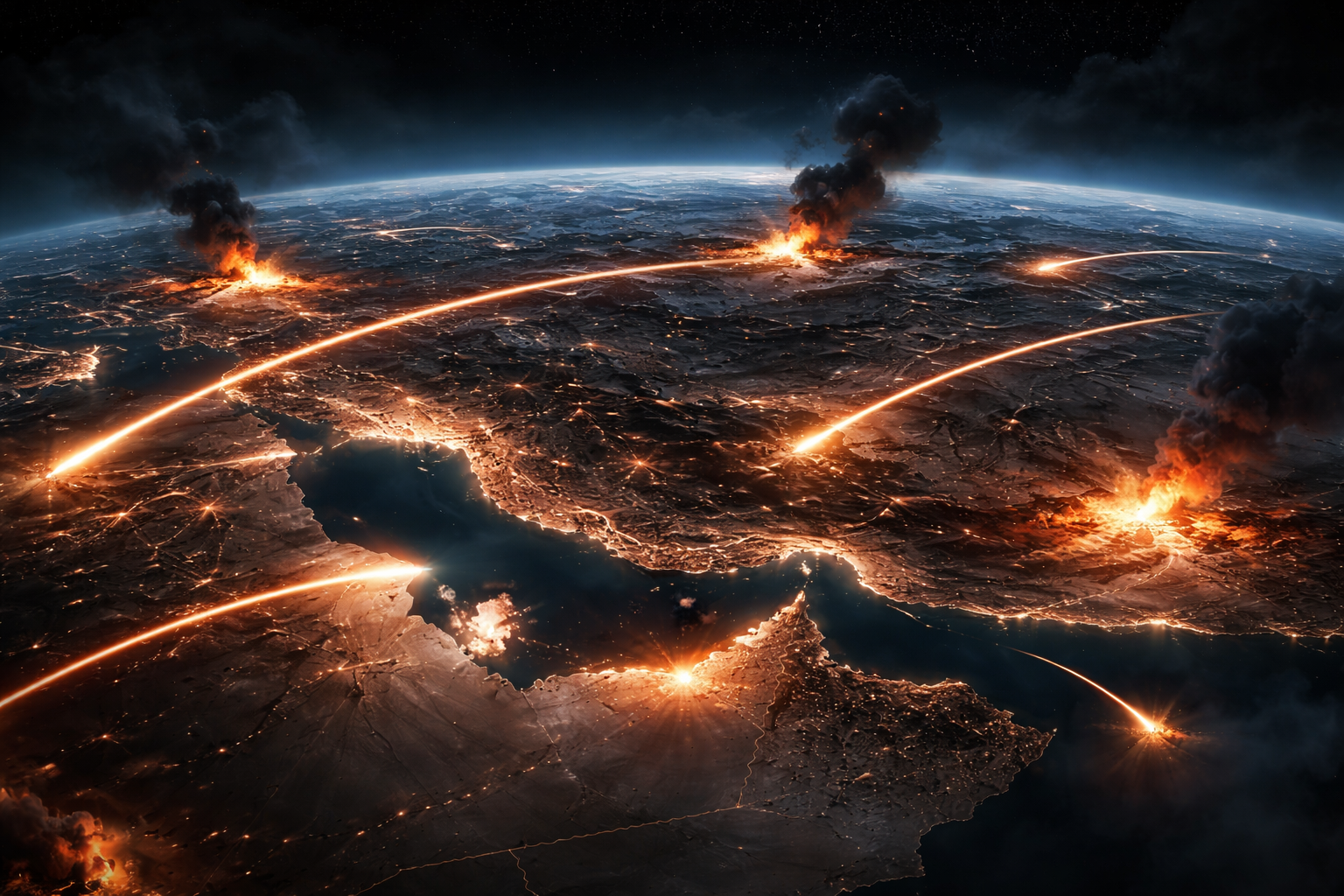
The Iran War Is Expanding — Could It Trigger a Global Conflict?
Could the Iran War Spiral Into a Global Conflict? The Escalation Paths Now Worrying Analysts
The Middle East has entered one of its most volatile military crises in decades. As of early March 2026, coordinated strikes by the United States and Israel on Iran have triggered retaliation across the region, raising urgent questions about whether the conflict could spread beyond a regional war.
Iranian missile and drone strikes have already reached multiple countries in the Gulf, while militia groups aligned with Tehran have opened new fronts against Israel.
The scale and geography of the violence have prompted analysts to ask a larger question: if more states are drawn in, could the war evolve into something far bigger than a regional confrontation?
One overlooked hinge may determine the answer: whether the conflict remains centered on Iran and Israel—or begins directly involving multiple great powers.
The story turns on whether outside powers intervene militarily in ways that transform a regional war into a multi-power confrontation.
Key Points
The war began with large-scale U.S. and Israeli strikes on Iranian targets on 28 February 2026, escalating long-running tensions over Iran’s nuclear and missile programs.
Iran has retaliated with missile and drone attacks across the region, including strikes on Bahrain, Qatar, and other Gulf locations hosting U.S. forces.
Iranian-aligned groups such as Hezbollah have opened additional fronts against Israel, widening the battlefield, which has raised concerns among several Gulf states and European leaders about the potential for a broader regional war.
Several Gulf states and European leaders warn the conflict risks expanding into a broader regional war.
The key escalation risk is direct involvement by additional major powers or large-scale attacks on global energy infrastructure.
How the War Began
The immediate crisis traces back to Operation Lion’s Roar, the coordinated U.S.–Israeli strikes launched on 28 February 2026 against military and nuclear-related sites across Iran.
The operation targeted facilities linked to Iran’s missile program, military infrastructure, and political leadership networks. It followed years of tension over Iran’s nuclear activities and the collapse of diplomatic negotiations earlier in 2026.
Within days, Iran began retaliating.
Missiles and drones struck targets in Israel and several Gulf countries hosting U.S. military bases. Some attacks damaged energy infrastructure and shipping facilities, while others targeted American installations directly.
The war quickly moved beyond a bilateral confrontation.
By the end of the first week, the conflict had already spread across multiple theaters:
Israel and Iran exchanging direct strikes
Iranian attacks on U.S.-linked targets in the Gulf
Hezbollah opening a northern front from Lebanon
U.S. forces striking Iranian-backed militias in Iraq and Syria
In practical terms, the war had already become regional.
The Expanding Battlefield
The Middle East’s security architecture means conflicts rarely remain contained.
Iran maintains a network of allied armed groups across the region—from Lebanon to Iraq to Yemen. Analysts often refer to this network as Tehran’s “axis of resistance.”
When Iran is attacked, these groups can respond independently, widening the conflict.
That pattern is already visible. Hezbollah has launched rockets toward northern Israel, while Israeli forces have carried out strikes inside Lebanon.
Meanwhile, Iranian missile strikes against Gulf states have targeted countries hosting U.S. forces or cooperating with American military operations.
This web of alliances makes escalation unpredictable. Each additional actor introduces new incentives, red lines, and political pressures.
The more actors become involved, the harder it becomes to control the conflict’s trajectory.
What Most Coverage Misses
Much of the discussion about a “global war” focuses on dramatic scenarios involving superpowers.
But the most likely escalation pathway is more gradual and structural.
The real risk is cumulative regional involvement.
If Gulf states, Israel, Iran, Hezbollah, Iraqi militias, and U.S. forces all remain active participants, the conflict can evolve into a multi-front regional war without any formal declaration.
That dynamic creates pressure on outside powers.
Russia and China both have strategic interests tied to Iran, energy security, and global shipping routes. Even limited intelligence sharing, arms transfers, or naval deployments could turn a regional war into a broader geopolitical confrontation.
In other words, global involvement may not start with dramatic troop deployments. It could emerge step by step through support, deterrence, and counter-moves.
Why Global Powers Are Watching Closely
Three strategic factors explain why the conflict matters far beyond the Middle East.
Energy
The Persian Gulf remains the world’s most important oil transit corridor.
Any disruption to shipping lanes such as the Strait of Hormuz would affect global energy markets almost immediately.
Iran has previously threatened to target regional oil infrastructure during conflicts, a move that could drive economic shock worldwide.
Military Alliances
The United States maintains extensive military infrastructure across the Gulf, including naval and air bases.
Iranian attacks on facilities hosting American personnel have already raised the risk of deeper U.S. involvement.
Once American casualties mount, political pressure in Washington for escalation typically increases.
Great-Power Rivalry
The conflict unfolds during an era of intense geopolitical competition.
Russia maintains strategic ties with Iran, while China relies heavily on Middle Eastern energy supplies.
Neither power is likely to intervene directly unless the conflict expands dramatically. But even indirect involvement—through arms transfers, intelligence support, or diplomatic backing—could deepen global polarization around the war.
The Escalation Scenarios Ahead
Several plausible pathways could determine how far the conflict spreads.
The first is containment.
In this scenario, the fighting remains limited to Israel, Iran, and regional militias. External powers provide support but avoid direct confrontation.
The second is regional war.
More Gulf states could become active participants, either after direct attacks or through alliance commitments with Washington.
The third is great-power involvement.
If Russian or Chinese interests are threatened—or if Western intervention expands dramatically—the conflict could shift into a broader geopolitical crisis.
At that point, the war would no longer be defined by Middle Eastern rivalries alone.
The Signposts That Will Decide the War’s Scale
The coming weeks will reveal whether the conflict stabilizes or spirals outward.
Several developments would signal dangerous escalation:
sustained attacks on Gulf energy infrastructure
large-scale U.S. troop deployments into combat operations
major naval confrontations in the Persian Gulf
direct military support for Iran from external powers
For now, analysts emphasize that a global war remains unlikely—but not impossible.
The Middle East has often been the trigger point for wider geopolitical crises.
Whether this conflict becomes another such moment will depend less on the battles already underway than on the decisions made by the outside powers now watching it unfold.
