India’s ‘Cockroach’ Protest Leader Released After Fresh Delhi Detention
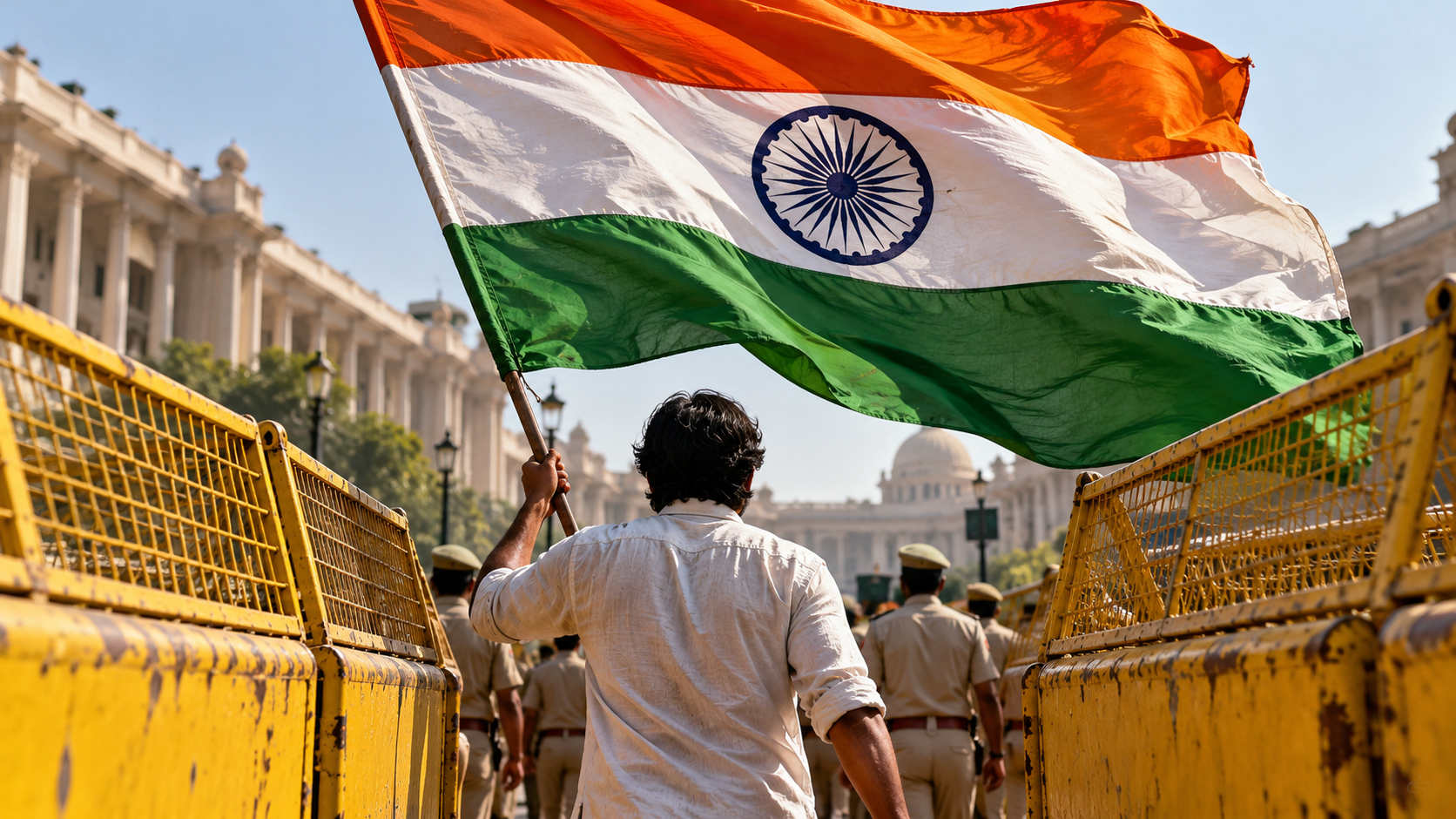
Indian Youth Leader Released After Police Stop Planned Flag Protest
Abhijeet Dipke Released on Conditions After Second Detention in a Week
Abhijeet Dipke’s conditional release follows another police intervention against a youth movement challenging electoral-roll changes and restrictions on demonstrations.
Abhijeet Dipke, founder of India’s Cockroach Janta Party, was released on Saturday, 17 October, a day after police detained him ahead of a planned demonstration in New Delhi.
His release follows a fresh confrontation between Delhi Police and the youth-led movement. Supporters have been demanding the resignation of Chief Election Commissioner Gyanesh Kumar and challenging restrictions on their ability to protest in the capital.
Dipke’s legal affairs head, Ratna Singh, confirmed his release subject to conditions. The development concerns Dipke’s latest detention. It should not be read as the release of every organiser caught up in the week’s police action.
A Flag March Stopped Before It Began
Friday’s planned “Lehra Do Tiranga” demonstration was to take place at Central Park in Connaught Place. Its organisers called on supporters to display the Indian national flag.
Delhi Police said the location was not a designated protest venue and that the relevant municipal permission had not been granted. Authorities had imposed restrictions on public assemblies in central Delhi.
Police used preventive powers against Dipke before he could lead the gathering. Student leader Neha Bora, president of the All India Students’ Association, was also detained and subsequently released.
Singh challenged the legality of Dipke’s arrest. She alleged failures of due process, including difficulties for his lawyers in reaching him. Those are allegations from his legal representative, rather than findings established by his release.
The distinction matters. Leaving custody does not itself settle whether the police acted lawfully, whether the restrictions were justified or whether any subsequent proceedings will continue.
What a Peace Bond Means
Dipke was brought before a special executive magistrate at Mandir Marg and released after signing another peace bond.
Such a bond is an undertaking to maintain public peace. It is a preventive legal measure, rather than a sentence imposed after a criminal conviction. Dipke had already signed a bond following his earlier detention during the previous weekend’s mobilisation.
The fresh proceedings drew on India’s Bharatiya Nagarik Suraksha Sanhita, the criminal procedure code. Its preventive provisions allow authorities to act against an anticipated breach of peace, subject to legal requirements and scrutiny.
A previous bond does not create immunity from another arrest. Equally, the existence of preventive powers does not establish that their use in a particular case was justified. That requires examination of the grounds, procedure and evidence.
The Electoral Dispute Behind the Campaign
The movement’s broader campaign concerns revisions to India’s electoral rolls. More than 130 million names have been removed during the exercise.
Campaigners argue that the changes favour Prime Minister Narendra Modi’s Bharatiya Janata Party. The Election Commission denies favouring any party and says voters wrongly removed can re-enrol. The BJP rejects claims of manipulation.
The number of deletions alone cannot establish political intent or show that every removed entry represented an eligible voter. The substantive questions concern which entries were removed, why they were removed and whether eligible people can obtain effective correction.
These are questions about the institutions that make elections meaningful. They require evidence about the revision process, beyond either protesters’ accusations or official assurances.
Jantar Mantar and the Limits of Public Space
Friday’s demonstration also followed action against fellow CJP leaders Saurav Das and Ashutosh Ranka. They had been remanded to five days of judicial custody after attempting a protest at Jantar Mantar earlier in the week.
The authorities had removed the location’s designation as an authorised protest site. Police allegations against the organisers included trespass and disobedience of orders. Remand is custody during proceedings, not a conviction.
Amnesty International called for their release and challenged the restrictions on assembly. Its India board chair, Aakar Patel, argued that public spaces must remain available for peaceful demonstrations.
Authorities identified alternative venues, including Ramlila Maidan, Burari Ground and CBD Ground. Amnesty’s objection went beyond whether another ground existed: access and proximity to the institutions being addressed also shape whether a demonstration can be heard.
That leaves a concrete question after Dipke’s release: where can the movement hold its next demonstration with permission, and what conditions will govern it?
Sources
Reuters — India’s ‘Cockroach’ Movement Founder Released a Day After Detention — 17 October 2026; release confirmation, electoral dispute and the Election Commission’s response.
The Indian Express — Why CJP’s Abhijeet Dipke Was Made to Sign Another Peace Bond: What the Law Says — 17 October 2026; preventive proceedings, peace bonds and the distinction between the organisers’ cases.
Amnesty International — India: Release CJP Leaders Arrested After Attempting Peaceful Protests at Jantar Mantar — 14 October 2026; the organisation’s statement on custody, alternative venues and peaceful assembly.
Next Reads
How Democracies Collapse: The Warning Signs, Ranked — Examines electoral administration, institutional safeguards and selective enforcement.
Mass Arrests in London: Inside the Law, Backlash, and Free Speech Fight Behind the Palestine Action Protest Crackdown — A separate national case involving the legal boundaries of protest.
Deepfake Democracy: How AI Could Warp UK, US And Global Elections in the 2030s — Explores another source of pressure on trust in electoral systems.
