

Iran Missiles Launched Toward Israel: A Regional War Edges Closer to Full Escalation
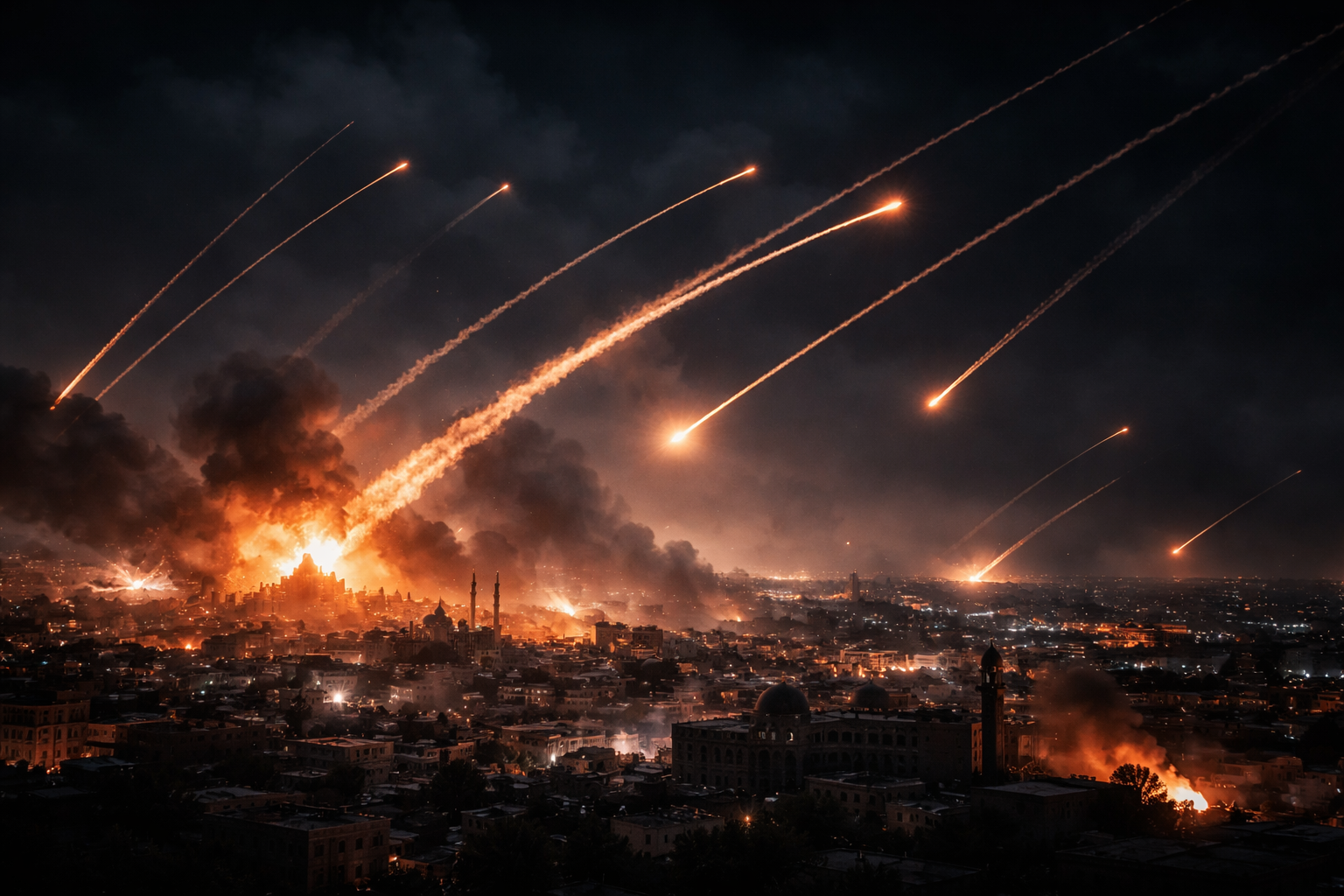
Iran Missiles Strike Toward Israel as War Expands Across Middle East
Reports of missiles launched toward Israel—linked directly or indirectly to Iran—mark another escalation in an already expanding regional war. What’s happening is no longer a contained exchange. It is a widening, multi-front conflict involving Iran, Israel, the United States, and proxy forces across the Middle East.
Crucially, this is not just about whether missiles were launched. It's about who is firing the missiles, how often, and what that means for control, escalation, and deterrence limits.
The overlooked hinge: Iran may not need to fire every missile itself anymore.
The story turns on whether the conflict becomes a direct Iran–Israel war or a sustained proxy-led escalation that is harder to contain.
Key Points
Missiles have been launched toward Israel in recent hours and days, with both Iran and Iran-backed groups involved in repeated attacks.
Yemen’s Houthi forces have now joined the conflict, firing ballistic and cruise missiles at Israeli targets.
Israel continues intercepting many incoming missiles, but some have caused casualties and infrastructure damage.
Iran’s broader strategy includes striking regional targets beyond Israel, including Gulf states and US-linked assets.
The conflict is expanding across multiple fronts, increasing the risk of uncontrollable escalation.
Global economic risks are rising due to threats to key shipping routes and oil supply chains.
What Just Happened—and Why It Matters Now
Missile launches toward Israel are no longer isolated events. They are part of a sustained pattern of attacks that have intensified over recent days.
Recent reports confirm fresh barrages of missiles aimed at Israeli territory, triggering air raid sirens and forcing civilians into shelters.
At the same time, Iran-backed Houthi forces in Yemen have entered the war directly, launching missiles and drones toward Israeli targets—some intercepted, others still under assessment.
This matters because it shifts the conflict from a bilateral confrontation into a networked war. Multiple actors are now firing into the same battlespace.
How the Conflict Reached This Point
The current escalation traces back to coordinated US and Israeli strikes on Iran’s nuclear and military infrastructure earlier in 2026.
Iran responded with waves of missile and drone attacks—initially direct, then increasingly through allied groups.
Over the past month:
Iran has launched repeated missile barrages toward Israel
Israel has struck Iranian military and industrial targets
Proxy forces—including Hezbollah and now the Houthis—have joined the fight
This has created a feedback loop: strike → retaliation → broader involvement.
By late March, the conflict is no longer linear. It is layered.
The Multi-Front War Taking Shape
What makes this moment more dangerous than earlier exchanges is geography.
Attacks are now coming from:
Iran itself
Yemen (Houthis)
Lebanon (Hezbollah)
Potentially Iraq and Syria-based militias
This spreads Israel’s defensive systems thin and complicates response decisions.
Even when missiles are intercepted, the volume and direction of attacks increase the probability of leaks—missiles that get through.
Recent strikes have already injured civilians and damaged residential areas in Israel.
Consequences: Who Gains, Who Loses
Iran gains:
Strategic depth by using proxies
Plausible deniability in some attacks
Pressure on Israel across multiple fronts
Israel gains:
Justification for continued strikes on Iranian infrastructure
Stronger alignment with US military support
But both sides lose in one key way: control.
The more actors involved, the harder it becomes to manage escalation.
Real-World Stakes: Beyond the Battlefield
This conflict is no longer just military.
It is already affecting:
Oil markets, due to threats to the Strait of Hormuz
Global shipping, particularly through the Red Sea
Civilian populations across Israel, Lebanon, and Iran
Reports indicate that the war's expansion has resulted in the deaths of over 3,000 people across the region.
Even limited missile exchanges now carry global economic consequences.
What Most Coverage Misses
The key shift is not just that missiles are being fired—it’s how the responsibility is being distributed.
Iran is increasingly operating through a network of aligned forces rather than acting alone.
This changes the strategic equation in three ways:
First, it reduces the cost of escalation for Iran. Proxy forces can act without triggering immediate full-scale retaliation against Tehran.
Second, it complicates Israel’s response. Striking Yemen, Lebanon, or other regions risks widening the war further.
Third, it increases unpredictability. Different groups have different incentives, timelines, and thresholds.
This is no longer a simple two-player conflict. It is a system.
What Happens Next
There are three plausible paths from here.
One: Controlled escalation
Missile exchanges continue but remain below the threshold of full regional war.
Two: Direct confrontation
Iran and Israel move into sustained direct strikes, potentially drawing in more US forces.
Three: System-wide escalation
Multiple proxy fronts ignite simultaneously, overwhelming defenses and triggering a broader Middle East war.
The signals to watch:
Frequency and scale of missile launches
Whether Israel begins striking deeper into Iran
Direct US military involvement beyond support roles
Expansion of attacks on global shipping routes
This moment is not defined by a single missile launch.
It is defined by how many actors now have the capability—and willingness—to launch the next one.
