Iran Signals It Will Strike Gulf Infrastructure — And The War Just Got Bigger Than Anyone Admits
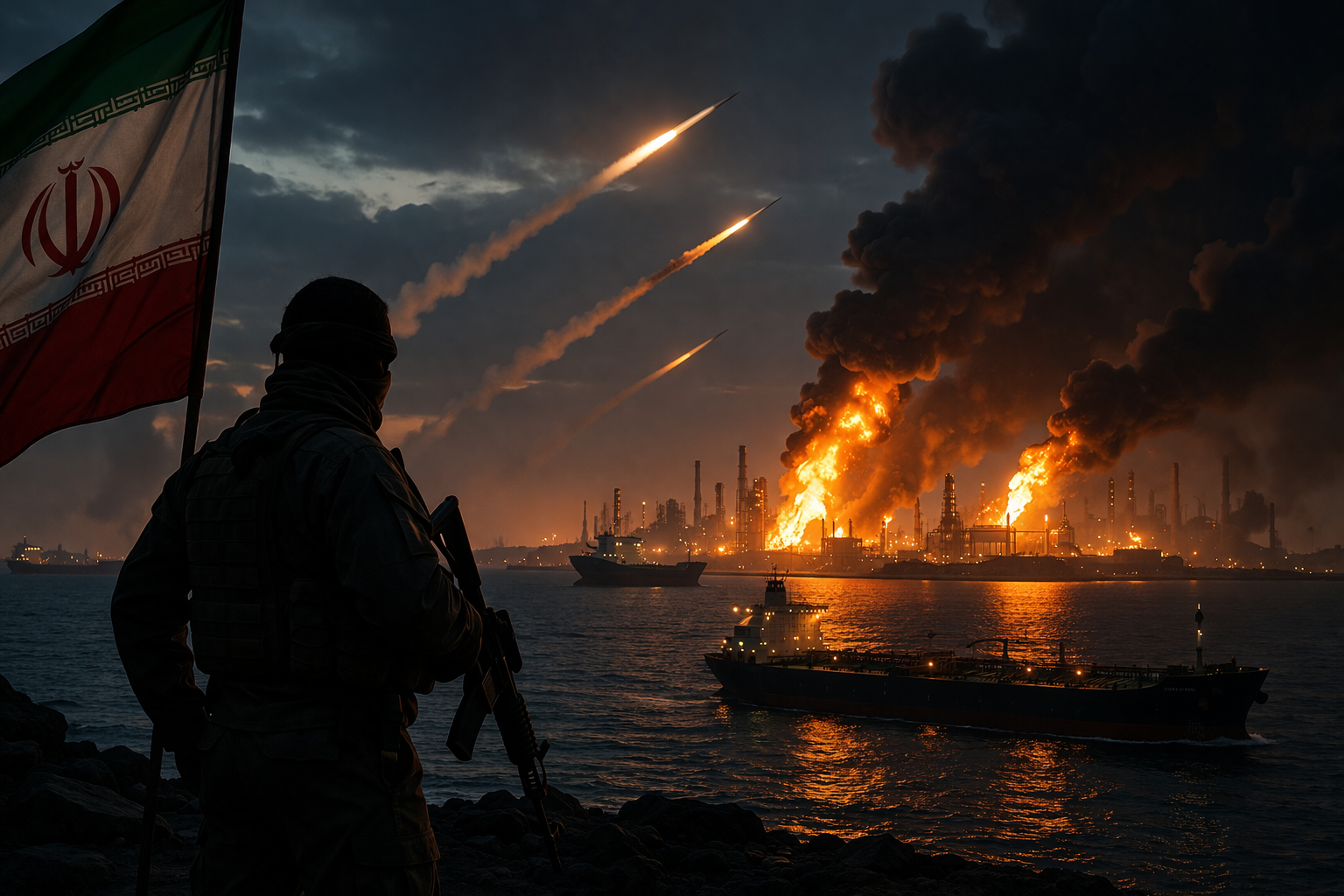
Iran Drops Restraint Warning — Gulf Infrastructure Now In The Crosshairs
A shift from retaliation to regional pressure marks a dangerous new phase—where energy, water, and global stability are all on the line
This Is The Moment The War Stops Being Contained
Iran has signaled it may no longer hold back from striking infrastructure in neighboring Gulf states—and that single shift changes the entire meaning of the conflict.
What was, until now, a brutal but largely contained exchange between Iran, the United States, and Israel is beginning to spill outward.
Energy facilities. Water systems. Ports. Power grids.
The message is clear: if Iran's infrastructure suffers damage, the region's infrastructure will also face consequences.
That is not just retaliation.
That is escalation by design.
From Military Targets To System Targets
This war is no longer just about military assets.
It is about systems — the interconnected infrastructure that keeps entire countries functioning.
Recent developments already show this direction of travel:
Iran has warned it could target energy and water infrastructure across Gulf states
Attacks and threats have already extended to oil facilities, shipping, and desalination plants
Gulf states have faced missile and drone strikes on economic assets
And now the restraint is explicitly being reconsidered.
This matters because Gulf countries are uniquely vulnerable.
They rely heavily on:
Oil and gas export infrastructure
Desalination plants for fresh water
Centralised power systems
Disrupt any of these, and you don’t just damage assets.
You destabilize entire populations.
Why Iran Is Expanding The Threat
At first glance, this looks like escalation.
But strategically, it is leverage.
Iran cannot match the United States or Israel in conventional military power.
So it shifts the battlefield.
Instead of trying to win militarily, it raises the cost of the war for everyone else.
That includes countries that:
Host US bases
Support Western operations
Depend on regional stability
The logic is brutal but effective:
If Iran suffers, everyone suffers.
And suddenly, neutral or cautious Gulf states are no longer bystanders.
They become stakeholders under pressure.
What Media Misses
Most coverage treats this as another step in a tit-for-tat escalation.
It isn’t.
This is a structural shift.
The conflict is moving from:
Direct confrontation
toSystem-wide disruption
That means the real target is not just countries.
It is the global system those countries sit inside.
Because Gulf infrastructure is not local.
It is global.
The Global Risk Is Already Visible
The Strait of Hormuz is the clearest example.
Roughly 20% of the world’s oil supply moves through it.
And it is already effectively disrupted.
Tanker traffic has collapsed
Shipping firms have suspended operations
Energy markets are destabilizing.
Now add infrastructure targeting to that equation.
Oil terminals, refineries, and pipelines are not just national assets.
They are global choke points.
Reuters analysis already warns the world is unprepared for the scale of disruption, with losses potentially exceeding 10% of global supply
This is no longer just a regional conflict.
It is an economic shock in progress.
Why Gulf States Are In A Dangerous Position
Gulf countries did not choose this war.
But they are now exposed to it.
And critically:
They have already been targeted indirectly
Their missile defence systems are being stretched
Their infrastructure is highly concentrated and vulnerable
Analysts have warned they were “put at enormous risk without their consent””
That creates a dangerous dynamic.
Because the more they are threatened, the more they may feel forced to respond.
And that risks pulling them directly into the conflict.
What Happens Next
Three paths now exist—none of them stable.
1. Controlled Escalation
Iran continues targeting infrastructure selectively, raising pressure without triggering full regional war.
2. Regional Spillover
A major strike hits a Gulf energy or water system, forcing direct retaliation.
This is the tipping point scenario.
3. System Shock
Multiple infrastructure disruptions trigger the following:
Energy shortages
Water crises
Economic instability across continents
At that point, the war stops being a military conflict.
It becomes a global crisis.
The Real Meaning Of This Moment
The most dangerous wars are not the ones that expand loudly.
They are the ones that expand quietly—by changing what is being targeted.
That is what is happening here.
The shift toward infrastructure means:
Civilian systems are now part of the battlefield
Neutral actors are being pulled into the conflict
Global consequences are no longer hypothetical
And once that shift happens, it is very hard to reverse.
Because you are no longer fighting over territory.
You are fighting over stability itself.
