Iran War Enters a More Dangerous Phase as Hormuz Threats, Nuclear-Site Risk, and a Weeks-Long Campaign Collide
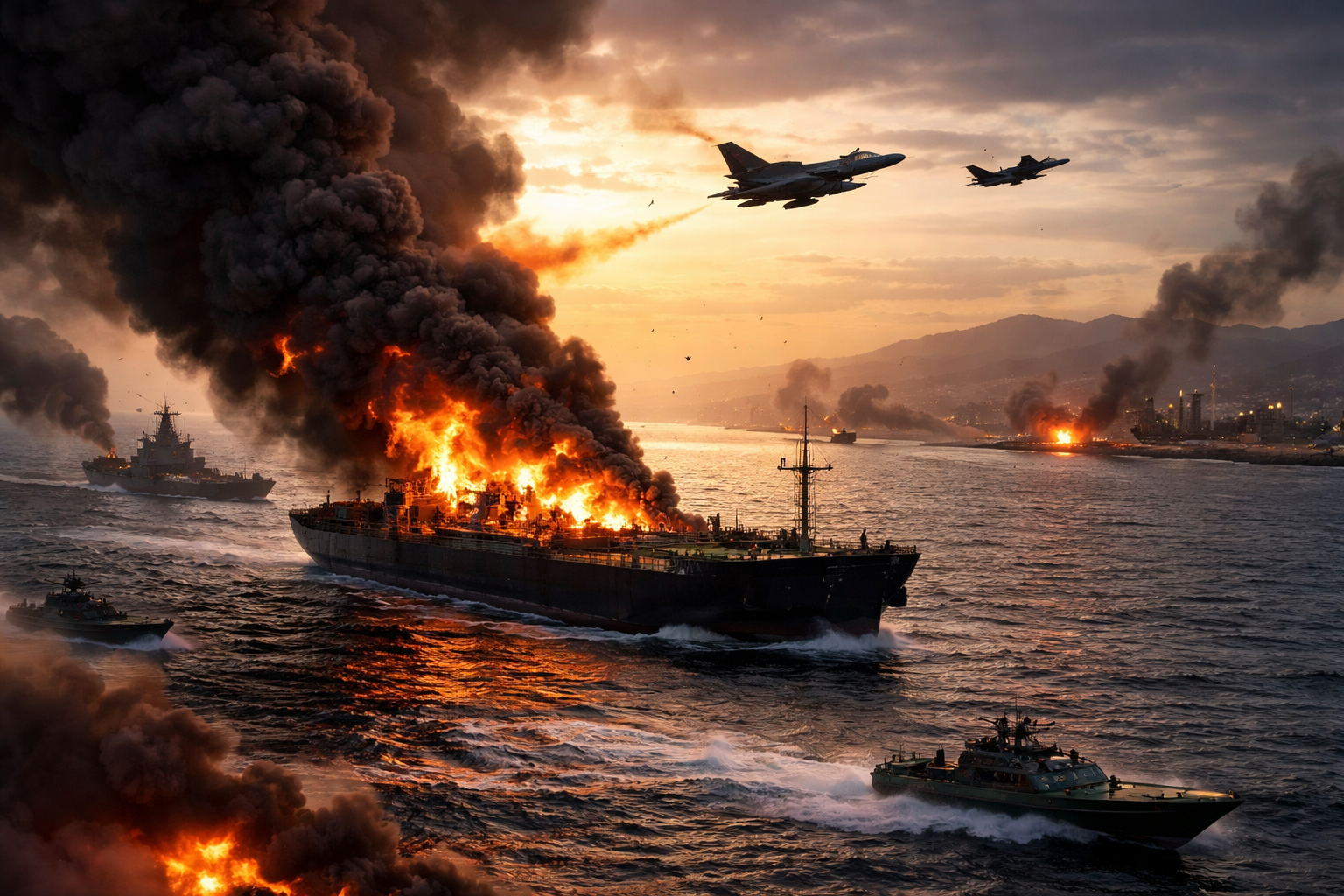
The Iran war has entered a more dangerous phase because the battlefield is no longer defined only by strikes inside Iran or missile exchanges with Israel. It now runs through the Strait of Hormuz, Gulf host states, energy flows, and the safety of nuclear infrastructure.
That shift matters because wars become harder to contain when geography itself starts working against de-escalation. Once shipping lanes choke, outside powers evacuate staff, and combat edges closer to sensitive nuclear facilities, the cost of miscalculation rises fast.
The immediate question is no longer just who can strike whom. It is whether the conflict can be kept below the threshold where regional governments, energy markets, and global shipping are forced to treat this as a systemic crisis rather than a severe but still limited war.
The story turns on whether regional access and maritime pressure give Iran enough leverage to widen the war without needing a clean military breakthrough.
Key Points
Iran has threatened to close the Strait of Hormuz and attack ships trying to pass through it, turning a military confrontation into a direct threat to one of the world’s most important energy chokepoints.
A fuel tanker was reported ablaze in the Strait after a drone strike, underlining that disruption is no longer hypothetical.
Israel has signaled it is prepared for a campaign that could last weeks rather than days, which raises the odds of sustained regional spillover.
The IAEA has confirmed damage to entrances at Iran’s Natanz enrichment plant, while separate concern has grown around the Bushehr nuclear power plant after Russian evacuations.
Energy and shipping markets are already reacting, with oil and gas shipping costs surging and Asian buyers beginning to adjust refining activity.
The next phase will depend less on a single dramatic strike and more on whether shipping, host-state tolerance, and nuclear-site risk keep compounding at the same time.
The current war escalated sharply after U.S. and Israeli strikes on Iran on February 28, 2026, opening a new phase of confrontation. Tehran responded with missile and drone attacks, and the conflict quickly spread from a bilateral military exchange into a wider regional emergency.
Two places now matter more than almost any others. Natanz, one of Iran's most important uranium enrichment sites, suffered bombings at its entrances, according to the IAEA. The second is the Strait of Hormuz, the narrow waterway through which more than 20% of global oil consumption normally passes.
That distinction is crucial. Natanz speaks to the war’s original nuclear logic. Hormuz speaks to escalation leverage. One is about degrading capability; the other is about raising the price of continued war for everyone else.
Political and Geopolitical Dimensions
The political geometry of this war has become harsher. Iran does not need to defeat the United States or Israel outright to create pressure. It needs to make the region feel unsafe enough that Gulf states, shipping firms, insurers, and large energy buyers start acting as if the costs of hosting and alignment are becoming unacceptable.
Israel’s signal that it is ready for a weeks-long campaign changes the timeline. It suggests that leaders in Jerusalem are not framing this as a short punitive burst but as a sustained operation, which in turn gives Tehran an incentive to lean harder on indirect leverage points such as shipping disruption and pressure on host countries.
Several scenarios now look plausible. One is controlled escalation: continued strikes, elevated shipping risk, but no full closure of Hormuz. Another is widening regional coercion, where Gulf states become more vocal about limiting how their territory is used. A third is diplomatic compression, where outside powers push for a pause because market and nuclear risks rise too quickly. Signposts would include changes in Gulf government messaging, fresh evacuation orders, and any visible military moves around Hormuz.
Economic and Market Impact
The fastest real-world feedback loop is economic. Shipping costs for oil and gas have surged, tankers have been stranded or damaged, and analysts are already focusing on whether flows through Hormuz can remain reliable even without a formal, airtight closure.
That distinction matters because markets do not need a total shutdown to reprice risk. If shipowners hesitate, insurers raise rates, and buyers scramble to secure alternative cargoes, the effect can spread well before physical shortages become universal. Reuters reported Chinese refiners beginning run cuts as Middle East flows tightened, which shows the shock is already moving down the chain from geopolitics into industrial decisions.
The most likely short-term scenarios are prolonged high shipping premiums, stop-start flows through the Gulf, and sharper price swings tied to headlines about attacks or military posturing. The signposts are straightforward: tanker queues, additional vessel damage, refinery throughput cuts, and official mitigation steps from large consuming states.
Technological and Security Implications
The war’s security danger is no longer only about missiles and drones in the abstract. It is now also about critical infrastructure under stress. The IAEA’s confirmation that entrances to Natanz were bombed sharpens concern about verification, access, and the line between damaging facilities and destabilizing the monitoring regime around them.
Bushehr raises a different but equally serious alarm. Rosatom said the plant itself was not being targeted but also warned that explosions were being heard only kilometers away and began evacuating non-essential personnel and family members. That does not mean a nuclear disaster is imminent. It does mean the margin for error has narrowed around a site where even near-miss risks change international calculations.
Possible next paths include a continued focus on military and access points away from the most sensitive nuclear infrastructure, a drift toward broader infrastructure pressure, or emergency diplomacy centered on nuclear-site deconfliction rather than a full ceasefire. The signposts would include new IAEA statements, further evacuations, or any public red lines from Russia and other external powers over site safety.
What Most Coverage Misses
The most important hinge is not simply whether Iran can hit back harder. It is whether Iran can make the region itself less usable to its adversaries.
That sounds abstract until the pieces are lined up. U.S. power in this theater depends on access, basing, transit routes, and the confidence of states that host forces while trying to preserve domestic stability and economic normality. Israel’s military pressure can be intense, but the broader coalition pressure starts to wobble if the surrounding geography becomes politically and commercially toxic.
This is why Hormuz matters more than the usual oil-price cliché. It is not just a market story. It is a leverage story. If Iran can make global shipping, Gulf airspace, and host-state calculations deteriorate together, it changes the bargaining environment even without a decisive battlefield victory.
That also explains why the war has become more dangerous now. Not because one side suddenly discovered a dramatic new weapon, but because the conflict is moving into systems that are harder to shield and harder to restore quickly once confidence breaks.
Why This Matters
In the next 24 to 72 hours, the most exposed actors are Gulf host states, commercial shipping firms, refiners dependent on Middle East crude, and civilians living near expanding strike zones. Their problem is not only physical damage. It is also uncertainty: uncertainty about routes, insurance, retaliation, and what counts as a protected site.
Over the longer term, the conflict could reshape three things at once: the durability of U.S. regional access, the premium attached to Gulf energy security, and the political room for any future nuclear monitoring arrangement with Iran. The events to watch now are any fresh military announcements on Hormuz, further IAEA findings around Natanz, and any public shift by Gulf governments from quiet alarm to open pressure for containment.
Real-World Impact
A shipping manager in the Gulf now has to price voyages not just around fuel and demand but around drone risk, route delays, and the chance that a vessel becomes trapped by a closure threat that may be partial, improvised, or politically contested.
A refinery buyer in Asia may face a different problem: crude is still globally traded, but the path, timing, and insurance cost of getting the right barrel have become far less predictable. That is how geopolitical shock turns into narrower margins and operational cuts.
A family in a Gulf capital may not see frontline combat, yet still feel the war through airspace disruption, public security alerts, and the sense that their city has become part of a retaliation map rather than a safe remove from it.
A diplomat trying to lower the temperature is now dealing with a harder equation than before: it is easier to stop a single exchange of fire than to rebuild confidence once shipping, host-state politics, and nuclear-site alarms are all moving at once.
The Next Threshold to Watch
The next threshold is not a headline-grabbing declaration alone. It is whether multiple stress points start reinforcing each other: a more persistent maritime squeeze, more visible pressure on host countries, and fresh alarm around sensitive nuclear infrastructure.
If that triad hardens, this war will look less like a violent episode and more like the opening of a regional reordering. If it breaks, there is still space for a brutal but more limited conflict. The signposts are already visible, and they will decide whether March 2026 is remembered as the moment this crisis truly crossed into a different historical category.
