Why the UK-US Special Relationship Looks Broken
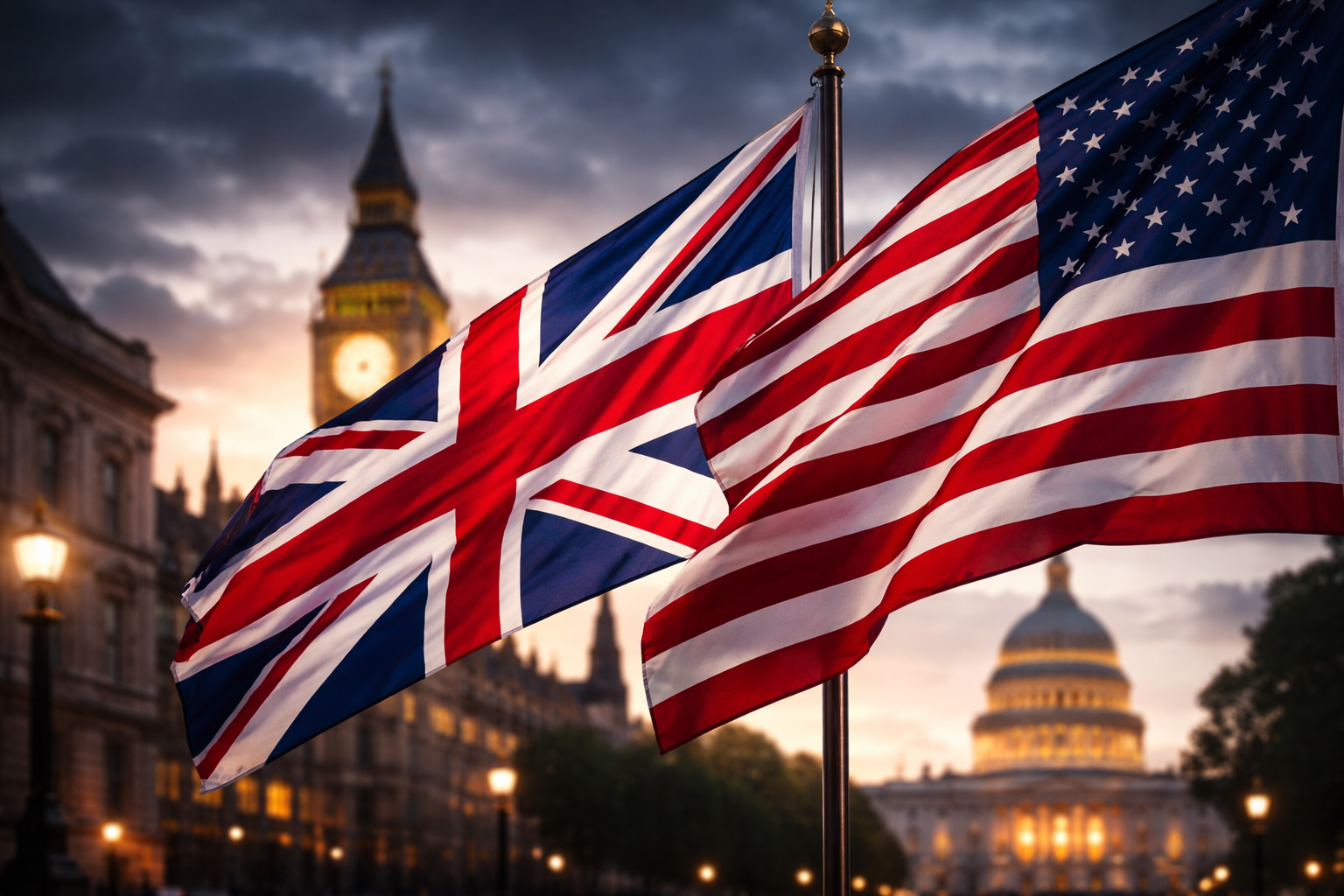
The UK-US Special Relationship Is Fraying — And Iran Exposed the Crack
The UK-US special relationship has not ended in the literal sense.
The two countries still share intelligence, operate a joint military base at Diego Garcia, and remain deeply tied through NATO and defense planning. But as of 3 March 2026, the old political idea behind it — that Britain gets unusual trust, unusual access, and unusual exemption from American pressure — looks badly damaged.
That is why Donald Trump’s claim that the relationship is “not what it was” matters beyond the usual clash of egos. His criticism came after Keir Starmer refused to back a broader US offensive on Iran at the outset, insisting instead on legality, strategy, and limited defensive cooperation. The rupture is visible because it touches the part of the alliance that always mattered most: whether London still aligns quickly when Washington wants action now.
The deeper issue is not whether the two states still cooperate. They do. The deeper issue is whether Britain is still treated as an exceptional ally rather than a useful ally. On trade, on military basing, and on geopolitical disputes from Greenland to Iran, that exceptional status now looks weaker than it did even a few months ago.
The story turns on whether the alliance still grants Britain meaningful privileged status when US interests harden.
Key Points
Trump publicly said the UK-US relationship is “not what it was” after Starmer initially refused to support broader US offensive strikes on Iran and delayed permission for wider use of British bases.
Starmer later allowed limited use of UK bases for defensive purposes after Iranian-linked attacks widened and a British base in Cyprus came under threat. Still, he drew a line against open-ended offensive alignment.
The tension landed after an already difficult year in which Britain had to negotiate tariff relief rather than receiving any automatic US exemption, even as both sides celebrated a trade deal.
Trump has also attacked Starmer over the Chagos deal and Greenland-related disputes, showing that even core strategic questions are no longer insulated from US pressure.
The alliance is therefore not dead in operational terms. It is weakened in political meaning. Britain still matters to Washington, but the presumption of special treatment looks far less secure.
The phrase “special relationship” has always meant more than simple friendship.
In practice, it referred to close intelligence sharing, military cooperation, nuclear coordination, diplomatic access, and a long-standing British government practice of presenting the US tie as the central external pillar of national security. Diego Garcia, the UK-US base in the Indian Ocean, remains one of the clearest symbols of that arrangement.
That framework survived Iraq, Afghanistan, and repeated personality clashes between leaders because the underlying machinery stayed intact. Even in 2025, Trump and Starmer were publicly praising the relationship during a state visit and presenting a tariff deal as proof that the alliance could still produce concrete economic gains. But even that deal showed the limits of British leverage: tariffs were reduced in some sectors, yet a blanket 10% US tariff remained in place.
The immediate trigger for the latest rupture was Iran. After US and Israeli strikes on Iran at the end of February 2026, Starmer resisted joining a broader offensive campaign and argued against what he called “regime change from the skies.” Britain later shifted to permit limited defensive use of bases as Iranian retaliation widened, but the early hesitation became the political fact that mattered in Washington.
Political and Geopolitical Dimensions
Trump and Starmer are not arguing only about tactics. They are arguing about what alliance discipline now means. Trump appears to want public, rapid, visible backing from close allies in crises that he defines as strategically urgent. Starmer is trying to preserve room for legal caution, domestic legitimacy, and narrower British participation. That difference may sound procedural. In reality, it goes to the heart of whether London is still willing to act as Washington’s first political partner in war.
One scenario is managed repair. Britain keeps stressing its defensive role, Washington cools the rhetoric, and practical cooperation resumes under a more limited formula. Signs would include fewer public attacks from Trump and new joint statements focused on regional deterrence rather than regime change.
A second scenario is continued erosion. In that version, each new disagreement becomes evidence that Britain is no longer a dependable first responder for US strategy. Signs would include repeated White House comparisons between Britain and other European allies, and more US attempts to work around London when speed matters.
A third scenario is partial European rebalancing. If Washington becomes more coercive toward allies, Starmer may lean further into coordination with France, Germany, the EU, and NATO structures to spread risk. Signs would include more E3-style diplomacy and stronger joint European messaging on legality, escalation, and trade retaliation.
Economic and Market Impact
The trade story matters because it strips away romance. In a truly special relationship, Britain would expect some insulation from American tariff pressure. Instead, London had to negotiate specific relief for cars, steel, aluminum, and aerospace while still accepting a broader tariff burden. That is not how privileged exception works. That is how transactional bargaining works.
For UK ministers, the risk is strategic dependence without strategic protection. Britain remains close enough to be affected by US policy shocks, but not close enough to be shielded from them. For business, that means uncertainty persists even when leaders celebrate deals. The next question is whether future disputes — over semiconductors, critical minerals, digital regulation, or defense procurement — follow the same pattern.
A softer scenario is selective stabilization, in which both sides continue to cut narrow-sector deals that protect politically important industries. A harsher one is that Britain discovers its diplomatic warmth buys fewer concrete concessions than it once did. Signs will show up first in tariff schedules, procurement rules, and carve-outs.
Technological and Security Implications
Operationally, the alliance still matters enormously. Intelligence, basing, deterrence, and military logistics remain dense and real. London still presents Diego Garcia as a strategic contribution to transatlantic security, and Parliament is moving legislation tied to the Chagos agreement. That is hard infrastructure, not sentimental branding.
But security ties are now being dragged into open political bargaining. Trump’s attacks on the Chagos arrangement and his pressure over military access during the Iran crisis show that even areas once treated as stable strategic ground can become negotiating terrain. When that happens, alliance reliability starts to depend more on leader-to-leader mood and less on inherited trust.
One path from here is institutional resilience. The systems endure even if the slogans fade. Another is politicized security, where every crisis reopens arguments about access, burden sharing, and loyalty. The signposts are simple: whether basing rights remain routine, whether public pressure escalates before private mechanisms are exhausted, and whether Britain keeps legal and political caveats attached to support.
Social and Cultural Fallout
The special relationship has always depended partly on public consent. That consent looks thinner in Britain when US military action is associated with legal ambiguity or memories of Iraq. Reuters reported that UK officials explicitly invoked lessons from 2003, and public opinion has leaned against the US strikes on Iran. That matters because British governments now face sharper domestic penalties for appearing too automatic in support of Washington.
This does not mean anti-Americanism has taken over British politics. It means the cultural prestige of standing close to Washington is weaker than it used to be, especially when the White House is confrontational, transactional, or dismissive of allied constraints. In that environment, a Prime Minister gains less at home from proving loyalty and loses more if the policy goes wrong.
What Most Coverage Misses
What most coverage misses is that the real break is not rhetorical. It is structural. The special relationship used to imply a presumption of exception: Britain might disagree with America, but it expected privileged consultation, privileged access, and often privileged economic or diplomatic handling. The recent record points instead to conditional, issue-by-issue bargaining.
That changes the meaning of every public clash. If Britain still had a genuine exceptional status, a dispute over Iran would look like a serious but temporary quarrel inside a protected alliance. Because Britain has already had to bargain for tariff relief, defend its Chagos policy under US pressure, and push back against tariff threats linked to Greenland, the Iran rupture looks less like an exception and more like the latest proof that the old exemption has thinned out.
That is why the phrase “the special relationship is over” has force right now, even if it overstates the operational reality. The alliance is not disappearing. The myth of automatic privilege may be.
Why This Matters
In the short term, the people most affected are policymakers, military planners, exporters, and British industries exposed to US tariffs. Over the next 24 to 72 hours, the immediate questions are whether the Iran crisis widens, whether US criticism of Starmer intensifies, and whether Britain’s limited support line holds. Over the coming weeks, watch for changes in US base-access requests, fresh tariff arguments, and any movement on the Chagos legislation.
Over the longer term, the stakes are bigger. Britain has built a large share of its postwar foreign policy identity around closeness to Washington. If that closeness no longer produces a reliable strategic benefit, London will face a harder choice: double down on the US link anyway, or build a more European and more self-protective model of alliance management.
Real-World Impact
A Midlands manufacturer selling into a US supply chain may hear leaders celebrate a bilateral deal, then find that baseline tariffs still distort margins and hiring plans. The relationship still sounds special on television, but the invoice says otherwise.
A military family connected to RAF operations in Cyprus may see the alliance in more concrete terms: defensive deployments rise, threat levels harden, and Britain draws closer to a conflict it initially sought to limit.
A civil servant working on strategic policy may have to write two versions of every contingency plan: one assuming deep US cooperation, the other assuming sudden public pressure, tariff leverage, or political escalation from Washington.
A British voter watching all this may conclude that alliance with America is still necessary, but no longer sentimental. That is a major shift in political psychology.
The Alliance After the Myth
The better question is not whether the UK and the US will stop working together. They will not. The better question is: what kind of relationship survives when the old language no longer matches lived reality?
If the next phase is transactional, Britain will need more than warm words and summit photographs. It will need clearer red lines, stronger European coordination, and a colder assessment of when US alignment yields real gains and when it merely exposes. Washington, for its part, will have to decide whether it still values Britain as a uniquely useful ally or merely as one ally among several.
That is the fork in the road now visible in public. Watch the Iran file, the tariff file, and the Chagos file. If all three continue to become tests of British compliance rather than proof of British privilege, March 2026 may be remembered as the month when the special relationship stopped being a strategic assumption and became a historical slogan.
