Iran’s President Appears as War Pressure Mounts Inside the Country
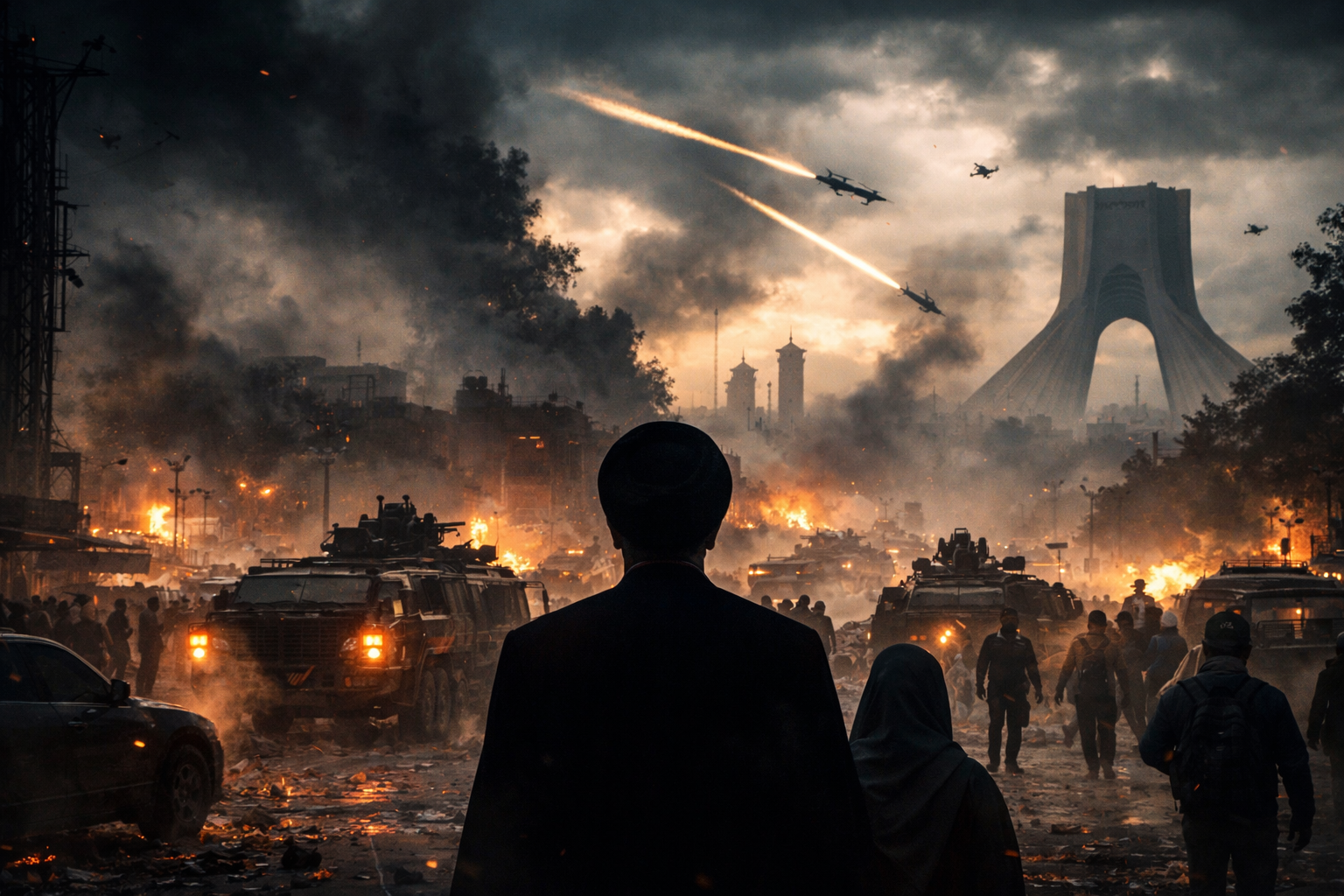
Public Calm, Private Panic? Iran’s War Signals Are Colliding
Iran Shows Strength—But Evacuation Warnings Tell Another Story
Iran’s leadership is trying to project control in the middle of a rapidly escalating war—but the signals coming out of the country point in two different directions at once.
On one hand, the Iranian president has made visible public appearances and statements designed to reassure the population and show continuity of government. On the other, evacuation warnings, rising civilian disruption, and leadership absences suggest a system under severe strain.
The real story lies in the contrast between public confidence and behind-the-scenes instability.
The story turns on whether Iran’s leadership can maintain internal control while sustaining an external war across multiple fronts.
Key Points
Iran’s president has appeared publicly to signal stability amid intensifying conflict and internal pressure.
Evacuation warnings—both inside Iran and regionally—indicate credible fears of imminent strikes or escalation.
Senior leadership visibility remains inconsistent, raising questions about command continuity.
Civilian disruption is accelerating, with evacuations, infrastructure damage, and travel collapse.
The war has already spread beyond Iran’s borders, hitting energy routes and global supply chains.
The next phase hinges on whether Iran prioritizes internal control or external escalation.
A Leader Trying to Look in Control
Iran’s president stepping into the public eye is not accidental—it is a calculated signal.
In wartime, visible leadership serves three purposes:
Reassure the population
Deter internal dissent
Signal resilience to foreign adversaries
This task is especially critical now because Iran’s political system has already taken a major shock. The assassination of Supreme Leader Ali Khamenei in late February created a sudden power transition, with a new leadership structure still consolidating authority.
At the same time, reports suggest the new supreme leader had not made regular public appearances in the early phase of the war, fueling speculation about internal stability.
So when the president appears publicly, it’s doing more than addressing the nation—it’s filling a visibility gap at the top of the system.
Evacuation Warnings: A Signal of Imminent Risk
While public messaging emphasizes control, evacuation warnings convey a different message.
Iran has issued evacuation warnings beyond its borders, including threats tied to major regional infrastructure and ports—often a precursor to strikes.
Inside Iran, evacuations have already occurred around hospitals, industrial areas, and suspected military targets following strikes.
Foreign governments have evacuated citizens across the region as the war disrupts airspace and transport networks.
In military terms, evacuation warnings are rarely symbolic. They typically indicate:
Expected incoming strikes
High-confidence intelligence of targeting
Attempts to reduce civilian casualties before escalation
That means the situation is not stabilizing—it is preparing for further escalation.
The War Has Already Spilled Beyond Iran
This is no longer a contained conflict.
Recent developments show:
Missile exchanges between Iran and Israel
Strikes on energy infrastructure across multiple countries
A partial blockade of the Strait of Hormuz disrupting global oil flows
Rising civilian casualties and displacement
The scale is already significant:
Thousands killed since late February
Major energy disruptions worse than recent global crises
Global markets reacting to supply shocks
This matters because it shifts the purpose of public appearances.
The president is no longer just speaking to Iran—he’s performing for the following:
Domestic stability
Regional allies and enemies
Global observers watching for signs of regime weakness
What Most Coverage Misses
The key dynamic isn’t just war—it’s internal control under wartime stress.
Most reporting focuses on missiles, strikes, and geopolitics. But the more decisive factor may be whether Iran’s leadership can maintain authority at home.
Here’s the mechanism:
Leadership decapitation (the killing of the supreme leader) creates a temporary legitimacy gap
War increases pressure on resources, infrastructure, and public morale
Evacuations and disruptions make that pressure visible to civilians
Public appearances are used to counter that visibility
If the public begins to see a mismatch—leaders saying “control” while reality shows disruption—the risk shifts from external war to internal instability.
That is the real hinge.
The Civilian Reality Is Getting Harder to Hide
For ordinary people, the war is already tangible:
Evacuations from hospitals and urban areas
Disrupted travel and stranded populations
Infrastructure damage and energy instability
Rising economic pressure from global oil shocks
Even outside Iran, the effects are spreading:
Fuel shortages in parts of Europe
Global shipping disruptions
Increased security warnings worldwide
This matters because wars are not just fought on battlefields—they are sustained by civilian tolerance.
What Happens Next: Control vs Escalation
There are now three realistic paths:
1. Controlled escalation
Iran maintains internal stability while continuing external strikes and deterrence.
2. Internal strain forces restraint
Rising disruption and pressure push leadership toward negotiation or de-escalation.
3. Loss of control accelerates crisis
If internal cohesion weakens, the conflict becomes less predictable—and more dangerous.
The key signals to watch:
Frequency of leadership appearances
Expansion of evacuation zones
Civil unrest or information blackouts
Changes in military targeting patterns
A Regime Balancing Image and Reality
Iran’s president appearing in public is not proof of stability—it is evidence that stability needs to be shown.
At the same time, evacuation warnings and widening disruption suggest the system is under increasing pressure.
The contradiction is the story.
In modern conflicts, control is not just about military strength—it’s about whether a government can maintain credibility with its own people while under sustained stress.
And right now, that balance looks increasingly fragile.
