Is Trump’s Deadline Extension A Bluff? — Or It Is A Pressure Tactic With An Exit Ramp
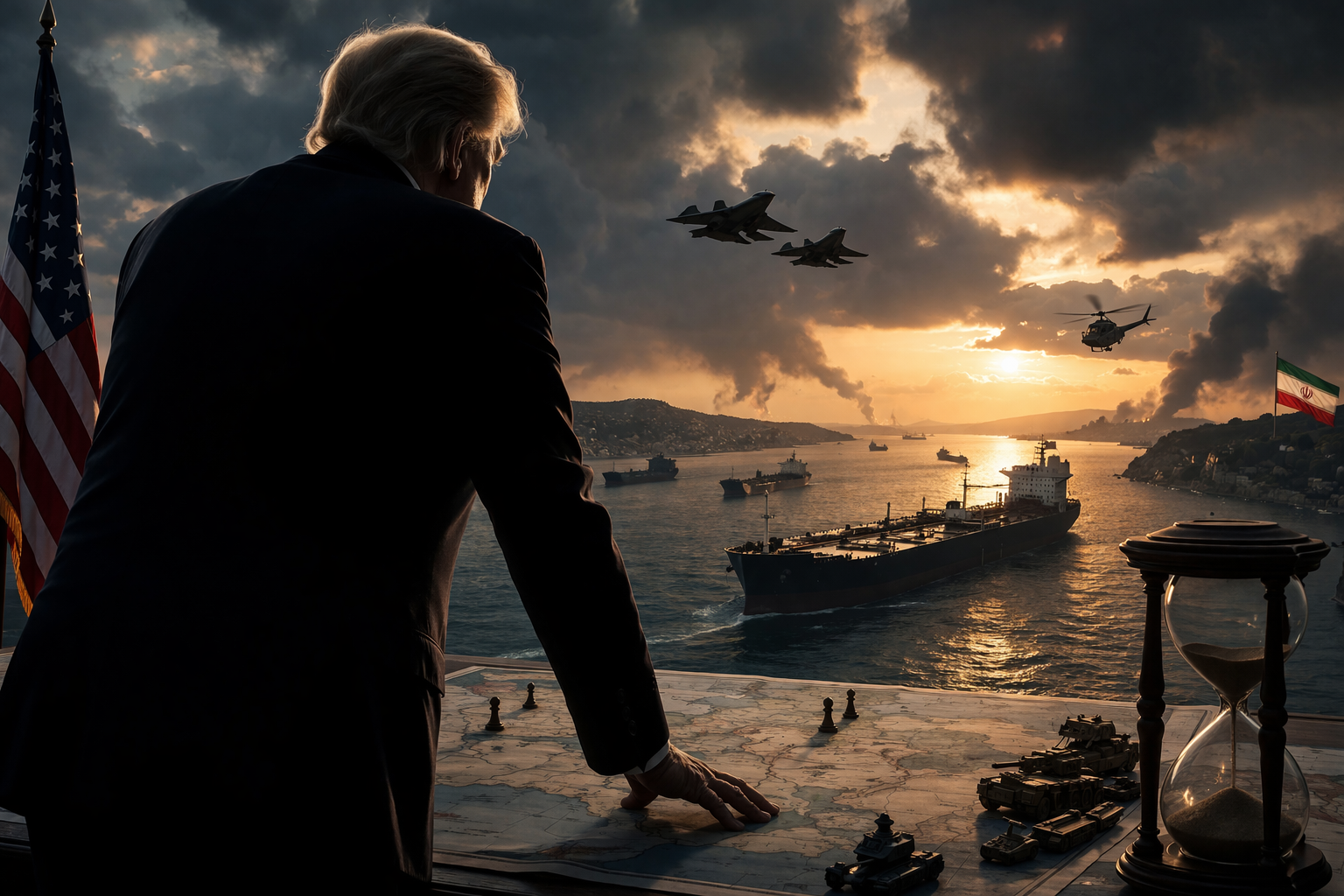
Trump Extended His Iran Deadline — But That Does Not Mean The Threat Was Empty
The two-week extension does not read like a fake threat. It reads like brinkmanship designed to frighten Iran, calm markets, and preserve Trump’s ability to claim either peace or force as a win.
The extension changes the clock, not the logic.
Was Donald Trump bluffing when he extended his Iran deadline? Not exactly.
The cleaner read is harsher and more useful: the move looks less like an empty threat and more like coercive brinkmanship that stopped short of immediate execution because it opened a better lane. Trump had publicly threatened major attacks if Iran did not meet his demand on the Strait of Hormuz by 8 p.m. Eastern on April 7. Then, shortly before that deadline, he agreed to suspend bombing for two weeks after Pakistani mediation and after presenting the pause as part of a possible deal framework. Reuters reported that Trump tied the suspension to Iran fully and safely reopening the strait, while also saying Tehran had submitted a 10-point proposal he viewed as a workable basis for further talks.
That matters because a bluff is usually a threat you never intended to carry out. This situation does not look like that. It looks like a real threat used to generate leverage, followed by a pause once an off-ramp appeared.
Why The “Bluff” Label Is Too Simple
When the deadline shifts and the strike fails to occur, people often label it as a bluff. That is understandable. But in crisis politics, leaders often set brutal deadlines not because the exact time matters, but because the pressure does.
In this case, the deadline clearly had a significant impact. It intensified diplomatic activity, pulled Pakistan into direct mediation, forced public clarification from the White House, and helped produce a two-week ceasefire arrangement tied to reopening one of the most important shipping lanes in the world. Reuters reported that Pakistan formally sought a two-week extension, the White House confirmed Trump was aware of the proposal, and Trump then accepted a suspension of bombing linked to reopening the Strait of Hormuz.
That is not proof the threat would definitely have been carried out in full. However, it strongly indicates that the threat served as leverage rather than mere theatrics.
The Real Test Is Whether Trump preserved the threat.
The strongest argument against the “pure bluff” theory is simple: Trump did not really renounce the threat. He delayed it.
This distinction is crucial. A bluff collapses when the threat disappears and everybody knows it. Here, the structure of pressure remained in place. The bombing pause was conditional. The demand around the strait remained. The two-week window was explicitly framed as time to finish negotiations, not to forget the threat existed. Reuters reported that Trump described the ceasefire as “double-sided” and said the pause was meant to finalize a broader agreement. AP similarly described the move as a diplomatic off-ramp rather than a clean reversal.
So the more accurate question is not, “Was it fake?” It is, “Did Trump convert an immediate strike threat into rolling conditional pressure?” The answer looks like yes.
Markets Reacted Like The Risk Had Been Real
One of the clearest signs the threat was not dismissed as empty posturing is how markets behaved.
Before the pause, the looming deadline and the threat to the Strait of Hormuz had driven major anxiety over energy disruption. Stock futures shot up and oil prices fell after Trump announced the two-week ceasefire. Reuters reported U.S. crude fell sharply, with one report showing WTI down roughly 16% to the mid-$90s, while broader markets rallied on relief that immediate escalation had been avoided. AP likewise reported a sharp drop in oil and a jump in U.S. stock futures after the delay.
Markets are not moral judges, but they are adept at pricing perceived risk. They responded as though the danger had been real enough to matter and the postponement was meaningful enough to reprice.
What Media Misses
The lazy framing is that either Trump blinked or Trump was bluffing all along.
The better framing is that he may have done what coercive leaders often try to do: escalate to the edge, create fear of imminent action, then claim success if the other side yields even partially or if diplomacy offers a face-saving pause. In that model, moving the deadline does not prove weakness. It can be the intended mechanism of pressure itself.
That does not make the strategy wise. It does not make it stable. And it definitely does not make it less dangerous. In fact, it may be worse than a simple bluff, because it means the threat was serious enough to move markets, alarm governments, and remain available for reuse later. Reuters and AP both indicate the extension came only after intense pressure, mediation, and an apparent opening from Iran, not because the administration suddenly declared its ultimatum meaningless.
Why Trump Had Reasons To Pause Even If He Meant It
Practical reasons can still delay a serious threat.
First, the diplomatic lane improved. Pakistan intervened, and Trump publicly pointed to a possible negotiating basis from Iran. Reuters reported that he referenced Tehran’s 10-point proposal as workable enough to justify a pause.
Second, the economic cost of immediate escalation was becoming harder to ignore. The crisis around the Strait of Hormuz had already shaken energy markets, and any major attack risked a bigger global shock. Reuters reported that roughly one-fifth of global oil and gas shipments move through the strait and that the ceasefire announcement triggered a major relief rally.
Third, a pause gives Trump something he values politically: optionality. He can claim he was tough enough to force movement but restrained enough to take peace if it appears. That is a far stronger political position than either full retreat or immediate uncontrolled escalation.
The Best Argument That It Still Might Be Partly Bluff
To be fair, there is a weaker version of the bluff argument that deserves consideration.
AP noted that Trump has extended deadlines before, and repeated deadline movement can reduce credibility over time. If adversaries begin to believe every ultimatum will end in another extension, the pressure value falls. That is the real danger for Trump: not that this specific extension proves he was bluffing, but that repeated extensions can eventually train opponents to stop fearing the clock.
So yes, “bluff” is a reasonable word here. It is just incomplete. The more precise conclusion is that the bluff may be a credible threat whose credibility decays if overused.
What Happens Next
The next phase matters more than the deadline itself.
The most likely next phase is intensified negotiation under the cover of a temporary ceasefire, with the Strait of Hormuz becoming the central test of whether de-escalation is real. Reuters and AP both report that the two-week pause is tied to reopening the strait and broader talks.
The most dangerous next phase is that the extension merely delays a larger strike package if Trump concludes Iran is stalling. Because he preserved the structure of the threat, a failed negotiation could make the next deadline even more combustible.
The most underestimated next phase is reputational. If this pause produces even partial concessions, Trump will argue the threat worked. If it fails, critics will argue the extension exposed limits in his coercive strategy. Either way, the argument over whether it was a bluff will quickly become secondary to whether it changed Iranian behavior at all.
The Real Verdict
So, was Trump’s deadline extension a bluff?
Not in the clean, simple sense.
It looks more like a real escalation threat that was always meant to create room for either a deal or a delay on terms he could still sell as strength. That is not softness. It is not quite surrender. It is brinkmanship with a trapdoor beneath it.
And that is why the extension matters. If the extension had been a pure bluff, the danger would have been mostly reputational. But if it were a pressure tactic with force still in reserve, the danger would be strategic. The clock moved, but the threat did not disappear. It just changed shape
