Israel Hits Iran’s Energy Core as War Enters New Phase
The Strike That Could Disrupt Global Supply Chains
law andIsrael Hits Iran’s Largest Petrochemical Hub as War Expands Into Energy Warfare
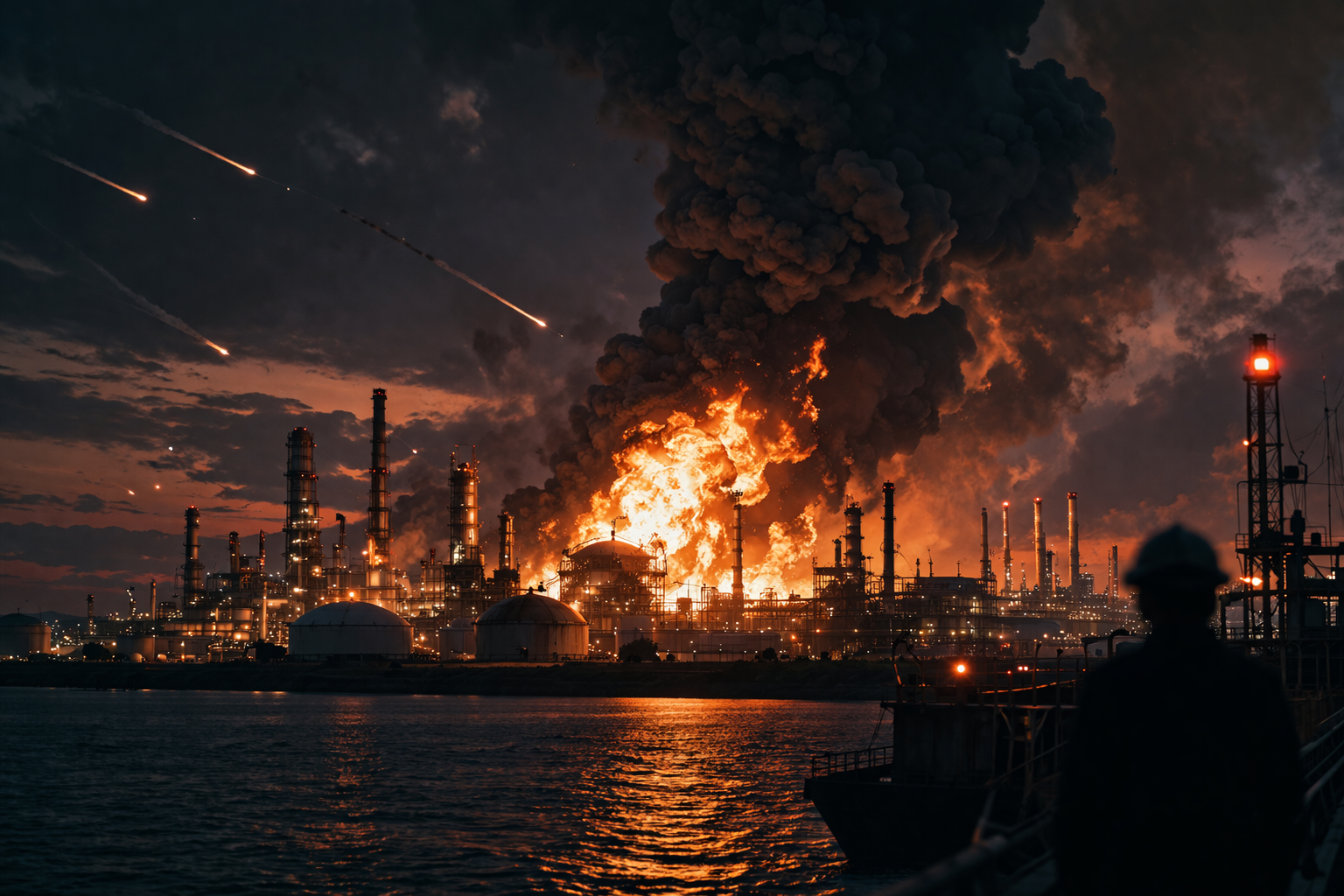
Israel has struck Iran’s largest petrochemical complex in Asaluyeh, a critical node in the country’s energy system and a major pillar of global petrochemical supply. The attack marks a sharp escalation in the 2026 Iran war—shifting the conflict decisively toward economic infrastructure and energy disruption, just as U.S. pressure on Tehran intensifies.
The strike targeted facilities responsible for roughly half of Iran’s petrochemical production, with associated systems supplying power and industrial gases also hit, causing widespread disruption.
It comes at a highly sensitive moment: U.S. President Donald Trump has issued a deadline for Iran to reopen the Strait of Hormuz, one of the world’s most important oil routes, or face further escalation.
The result is a convergence of military pressure, economic targeting, and global energy risk.
The story turns on whether attacks on Iran’s energy backbone force strategic concessions—or trigger a wider regional economic war.
Key Points
Israel struck the Asaluyeh petrochemical hub, which accounts for a significant share of Iran’s export capacity.
The attack targeted not just production but supporting infrastructure like power and oxygen supply systems, amplifying disruption.
The strike aligns with broader U.S. pressure on Iran to reopen the Strait of Hormuz under threat of further escalation.
Iran has warned of retaliation, including potential attacks on regional energy infrastructure.
Energy markets face rising volatility as supply risks increase across the Gulf.
The conflict is increasingly targeting economic capacity rather than purely military assets.
A ceasefire proposal exists but remains uncertain, with both sides escalating in parallel.
Why Asaluyeh Matters More Than a Typical Strike
Asaluyeh is not just another industrial site. It sits at the heart of Iran’s energy economy, linked to the massive South Pars gas field—the largest in the world.
This region processes and exports petrochemicals used globally in plastics, fertilizers, and industrial supply chains. Damage here does not stay local. It moves into:
manufacturing costs
agricultural inputs
global trade flows
Earlier strikes had already degraded Iran’s petrochemical capacity. This latest attack compounds that damage, reportedly hitting a system that underpins up to 85% of export capability when combined with previous strikes.
This is no longer symbolic targeting. It is structural.
The Strategic Shift: From Military Targets to Economic Chokepoints
The war has moved into a new phase.
Early strikes focused on military assets, leadership, and nuclear-linked infrastructure. Now the focus is broader:
oil
gas
petrochemicals
logistics
That shift changes the nature of the conflict.
Military targets degrade capability.
Economic targets degrade endurance.
By hitting energy infrastructure, Israel is applying pressure not just to Iran’s military, but to
state revenue
industrial output
domestic stability
This aligns with a wider campaign that increasingly resembles economic warfare by military means.
The Trump Deadline and the Hormuz Pressure Point
The timing is not accidental.
The strike lands just as Donald Trump has escalated pressure on Iran to reopen the Strait of Hormuz—a route that carries a significant portion of the world’s oil supply.
Iran closed or restricted the strait in response to earlier attacks. The U.S. response has been explicit:
Reopen it—or face expanded strikes on infrastructure.
This creates a feedback loop:
Iran restricts oil flow
U.S. threatens infrastructure
Israel hits energy assets
Iran threatens retaliation
Each move increases the stakes.
Regional Spillover Is Already Underway
Iran has not kept its response contained.
Recent reports indicate Iranian-linked or direct strikes on energy infrastructure in Gulf states, including Kuwait, Bahrain, and the UAE.
This matters because the Gulf is not just a regional energy hub—it is the global energy hub.
If attacks spread across:
Saudi Arabia
UAE
Qatar
shipping lanes
The impact moves from “regional conflict” to “global economic shock.”
What Most Coverage Misses
Most reporting focuses on the scale of the strike. The more important point is the type of infrastructure targeted.
Petrochemical facilities are not easily or quickly replaced.
Unlike military equipment, which can be relocated or replenished, petrochemical complexes are
geographically fixed
capital intensive
deeply integrated into pipelines and utilities
Destroying or disabling supporting systems—like electricity and industrial gas supply—can halt entire production chains even if the core plant survives.
That means the real impact is not just physical damage. It is a systemic shutdown.
This also creates a lagging effect.
Markets may not react fully on day one. But as supply disruptions ripple through manufacturing and trade, secondary impacts can amplify over weeks.
The Escalation Risk Is Now Structural
This strike increases the probability of a different kind of escalation.
Not just more attacks—but broader categories of targets.
Three thresholds are now in play:
Energy infrastructure becoming a primary battlefield
Regional spillover across Gulf states
Global economic consequences driving political responses
There is also a legal and political dimension.
Targeting infrastructure tied to civilian supply chains raises questions under international law, and has already drawn criticism from some governments and institutions.
But those constraints appear secondary to strategic objectives on both sides.
What Happens Next
The conflict now faces a clear fork in the road.
One path leads toward containment:
a ceasefire agreement
partial reopening of Hormuz
stabilization of energy flows
The other path leads toward expansion:
continued strikes on energy systems
retaliation across the Gulf
sustained disruption to global supply
The immediate signals point toward continued escalation.
Iran has rejected conditional ceasefire proposals tied to reopening Hormuz.
Israel has signaled further strikes are coming.
The U.S. has maintained its deadline pressure.
The question is no longer whether energy infrastructure will be targeted again.
It is how far that targeting spreads—and whether it crosses the line into a full-scale economic war that the global system cannot easily absorb.
