Pakistan Strikes Afghanistan Again As Border Crisis Enters A More Dangerous Phase
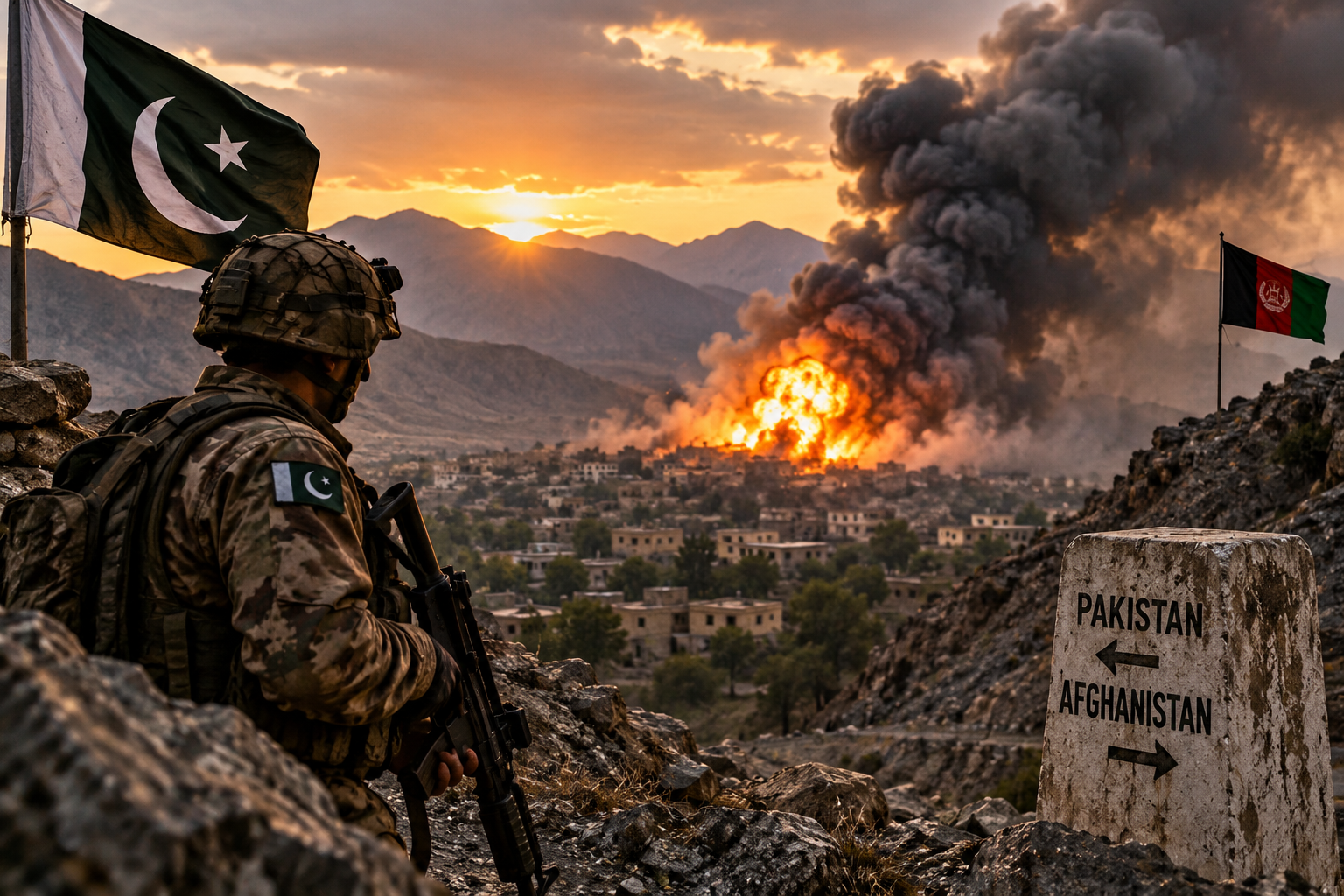
Pakistan-Afghanistan Crisis Escalates After Fresh Airstrikes Hit Two Provinces
Afghanistan Reports Civilian Deaths After Pakistani Strikes
Pakistan says it struck militant hideouts in two Afghan provinces overnight, while Kabul says the attacks killed nine civilians and wounded 11 more.
Pakistan has launched another round of airstrikes inside Afghanistan, hitting targets in Kunar and Helmand as the confrontation between the two neighbours moves into another dangerous phase.
Pakistan’s Information Ministry said the strikes were based on intelligence and targeted militant hideouts, weapons stockpiles and networks linked to attacks inside Pakistan. It said initial reports indicated that 22 militants had been killed.
Afghanistan’s Taliban authorities gave a sharply different account. They said nine civilians, including women and children, were killed and 11 people were wounded.
Neither side’s casualty figures had been independently reconciled at the time of publication.
The immediate argument is therefore familiar. Pakistan says it is acting against armed groups that use Afghan territory to attack Pakistan. Afghanistan says Pakistani forces are violating its sovereignty and killing civilians.
What has changed is the frequency and scale of the confrontation.
Strikes Hit Kunar And Helmand
The latest Pakistani operation targeted locations in Kunar in eastern Afghanistan and Helmand in the south.
Pakistan described the attacks as part of its continuing campaign against militant networks it says are operating from Afghan soil. The government said weapons stockpiles were destroyed and described the strikes as calibrated.
Afghan authorities condemned the attacks and summoned Pakistan’s chargé d’affaires in protest.
The competing casualty claims matter because civilian deaths have repeatedly become a trigger for retaliation.
Pakistan says it does not deliberately target civilians. Afghan officials have repeatedly accused Pakistani forces of hitting homes and populated areas during cross-border operations.
That dispute has become one of the defining features of the conflict. Every new strike now creates two battles at once: the military confrontation itself and the fight over what was actually hit.
The Crisis Has Been Building For Weeks
This is not an isolated attack.
Pakistan carried out strikes inside Afghanistan on 21 September, saying it had killed militants in Kunar and Paktika. Afghan authorities said civilians were among the dead, while the United Nations later confirmed civilian casualties from that round of attacks.
Three days later, Pakistan said it struck 10 locations across Afghanistan after alleged drone attacks against Pakistani territory.
That escalation followed the interception of drones near Kohat and the Torkham border. Afghanistan denied responsibility for launching them.
The pattern has since become increasingly difficult to contain.
Pakistani forces accuse Afghan territory of being used by militants preparing attacks across the border. Afghan forces accuse Pakistan of violating Afghan airspace and supporting armed groups operating against the Taliban government.
Taylor Tailored previously examined how Pakistan’s strikes on 10 Afghan sites after alleged drone incursions exposed the central problem: both governments increasingly dispute not only how they should respond, but who started each round.
That creates a dangerous environment in which military action can begin before the underlying facts are agreed.
Pakistan Says Militants Are Using Afghanistan As A Base
The deeper dispute centres on militant groups operating around the frontier.
Pakistan has long accused the Afghan Taliban government of allowing Tehreek-e-Taliban Pakistan, or TTP, and other armed groups to organise from Afghan territory.
The TTP is separate from Afghanistan’s Taliban movement, but the two have historical and ideological links. Pakistan says militants have used safe areas across the border to plan attacks against Pakistani police, soldiers and government installations.
Kabul rejects the accusation that it permits Afghan territory to be used for attacks against Pakistan.
That argument has become more intense as militant violence inside Pakistan has risen.
A major attack on a police facility and mosque in Kohat in September killed more than 20 people. The assault increased pressure on Islamabad to show that it could disrupt the networks behind attacks on its security forces.
Taylor Tailored’s report on the Kohat police compound and mosque attack showed why domestic security pressure is now feeding directly into the border crisis.
The basic logic is simple. A major attack inside Pakistan creates pressure for retaliation. If Islamabad believes the organisers are based in Afghanistan, Pakistani military action can quickly cross the frontier.
Afghanistan then faces its own pressure to respond.
Afghanistan Is Making Its Own Accusations
Kabul is not only rejecting Pakistan’s claims.
Afghanistan’s defence authorities have accused armed fighters of crossing into Afghan territory from Pakistan.
In recent days, Afghan officials said their forces killed dozens of fighters in Nuristan province and captured others after an attempted incursion. They alleged that some of the fighters had links to Islamic State and received support from Pakistan.
Pakistan has rejected or disputed similar accusations in the past.
This creates an unusual situation in which both governments accuse the other of harbouring or enabling armed groups.
Each side therefore presents its military actions as defensive.
Pakistan says it is striking threats before they can attack Pakistani territory. Afghanistan says it is defending its sovereignty from Pakistani strikes and armed incursions.
Without a trusted mechanism for establishing responsibility, almost any militant attack can become the beginning of another state-to-state confrontation.
Civilian Casualties Are Becoming Central
The human cost of the fighting is no longer a secondary issue.
United Nations monitoring has documented more than 1,100 civilian deaths and injuries inside Afghanistan from cross-border armed violence during 2026.
Earlier in the year, one period of intense fighting between late February and early March caused 185 verified civilian casualties in Afghanistan. Fifty-six people were killed and 129 were injured.
Women and children made up more than half of those casualties.
The latest claims from Kunar and Helmand therefore arrive against a much larger background of civilian harm.
If Afghanistan’s account of nine civilian deaths is confirmed, political pressure on the Taliban government to respond could rise again.
If Pakistan’s account is correct and the targets were militant facilities, Islamabad will argue that the strikes demonstrate its ability to hit armed networks across the frontier.
The problem is that both interpretations can drive escalation.
Civilian casualties can create demands for retaliation. Successful militant strikes can encourage further military operations.
The Border Has Become A Cycle Of Action And Retaliation
Pakistan and Afghanistan share a frontier of roughly 2,600 kilometres.
The border cuts through communities, trade routes and areas where militant groups have operated for decades.
Relations were once very different.
Pakistan supported the Afghan Taliban during years of conflict with the former Afghan government and Western forces. When the Taliban returned to power in Kabul in 2021, many expected relations between the two governments to improve.
Instead, the relationship deteriorated.
Pakistan became increasingly frustrated by TTP violence. Afghanistan resisted Pakistani demands over militant activity and rejected military action inside its territory.
The result has been a cycle that is becoming harder to interrupt.
A militant attack occurs in Pakistan.
Islamabad blames networks based in Afghanistan.
Pakistan strikes across the border.
Afghanistan condemns the attack and sometimes responds militarily.
Border posts exchange fire, drones appear or armed groups attempt to cross.
The next incident then becomes the justification for the next operation.
Taylor Tailored identified the same danger earlier this year when Pakistan-Afghanistan tensions moved beyond routine border friction. The central issue remains the same: neither government has yet demonstrated a reliable way to stop armed actors from producing the next trigger.
Why Kunar Matters
Kunar has repeatedly appeared in Pakistan’s military calculations.
The mountainous eastern province borders Pakistan and has long been difficult terrain for governments to control completely.
Armed groups can use valleys, mountain routes and remote settlements to move between areas while remaining difficult to monitor.
That geography makes Kunar strategically important, but it also makes verification difficult.
Claims about who was present at a target, whether civilians were nearby and which armed group controlled a location can be hard to establish quickly.
This is one reason casualty narratives often diverge immediately after a strike.
Helmand presents a different geography but another security problem. The southern province is vast and has long been associated with insurgency, trafficking routes and armed networks.
Striking two distant provinces in one operation therefore sends a broader message.
Pakistan is signalling that it is prepared to act beyond one narrow section of the frontier if it believes militant infrastructure is present.
What Happens Next
The immediate question is whether Afghanistan retaliates.
Recent clashes show that both governments are willing to use force, but neither has obvious incentives to allow the confrontation to become an unrestricted war.
Pakistan faces serious militant threats inside its own borders and does not need a prolonged conventional conflict with Afghanistan.
Afghanistan’s Taliban government faces economic pressure, humanitarian needs and internal security challenges of its own.
Yet restraint is difficult when both governments believe the other side is failing to control armed threats.
Three developments now matter.
The first is whether independent evidence confirms civilian casualties from the latest strikes.
The second is whether Afghan forces respond directly against Pakistani military positions.
The third is whether another militant attack inside Pakistan is linked, fairly or otherwise, to networks operating across the border.
Any one of those could restart the cycle within hours.
For now, the latest airstrikes show that the Pakistan-Afghanistan crisis has not stabilised.
It has become a repeated pattern of militant violence, disputed attribution, airstrikes, border fighting and retaliation.
The danger is not only that one operation becomes larger than intended.
It is that repeated limited operations gradually become the normal state of relations between two neighbouring countries that no longer trust each other’s account of where the next attack is coming from.
Sources
Reuters — Pakistani airstrikes kill 9 in Afghanistan, Taliban say — Supports the 1 October strikes, locations, competing casualty claims and wider escalation context.
Associated Press — Pakistani airstrikes in Afghanistan kill 9 civilians, Kabul says; Pakistan says only militants hit — Supports the competing Pakistani and Afghan accounts, casualty figures and civilian-harm context.
United Nations Assistance Mission in Afghanistan — Update on Civilian Casualties in Afghanistan — Supports verified civilian casualty figures from earlier 2026 cross-border fighting and the humanitarian-law context.
Next Reads
Pakistan Strikes 10 Sites Inside Afghanistan After Drone Incursion Claims As Border Crisis Escalates — The immediate background to the latest strikes and the role of disputed drone attacks.
“Open War” Rhetoric Meets Real Risk: Pakistan–Afghanistan Tensions at a New Threshold — Explains the deeper escalation risks and why militant control remains the central unresolved issue.
Pakistan Mosque Attack Kills At Least 21 After Suicide Car Bomb And Gunfire — Shows the domestic security pressure driving Pakistan’s increasingly aggressive cross-border response.
