Sweden Hit By Five-Player Illness Outbreak Before Crucial Bosnia Clash
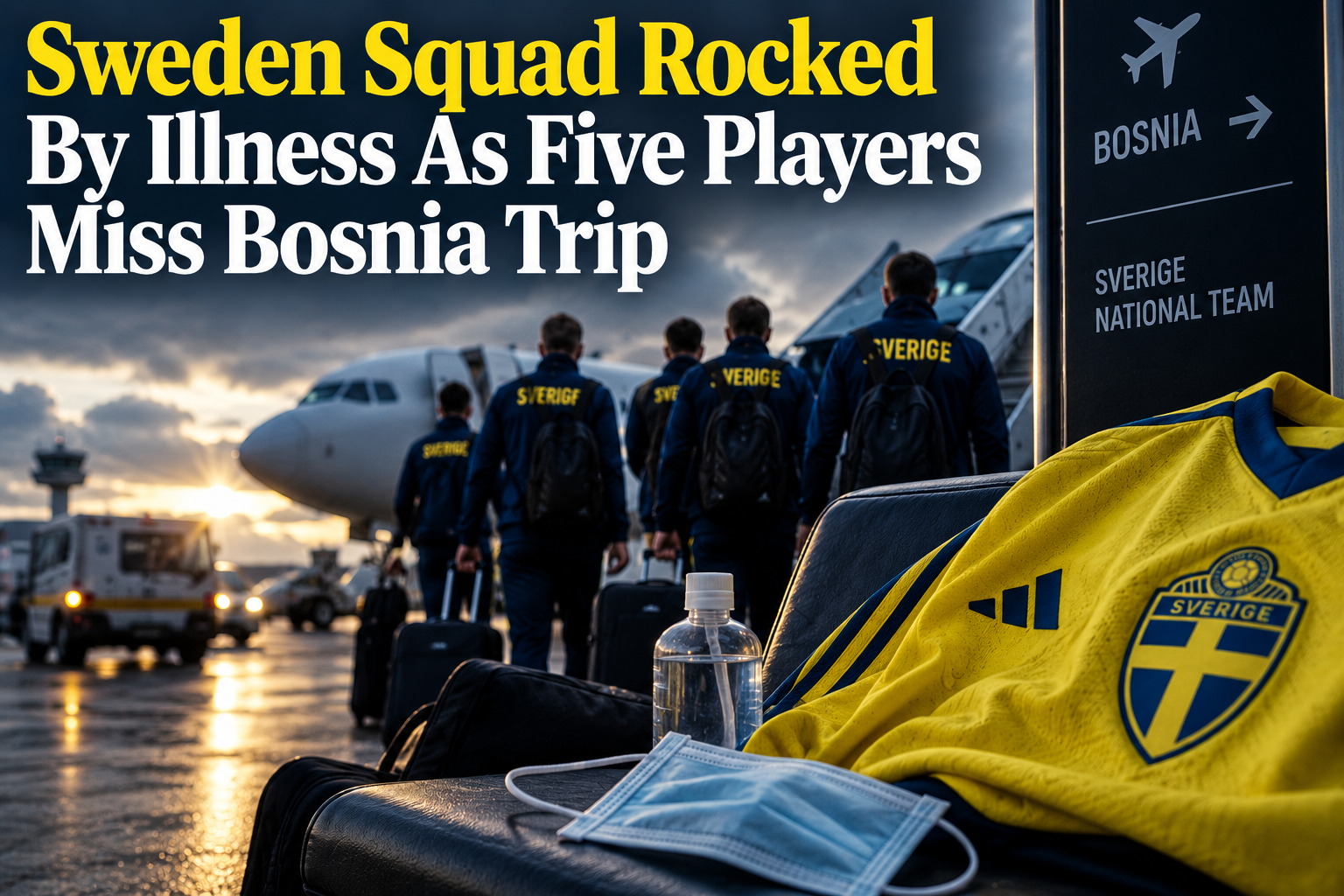
Graham Potter Hit By Major Sweden Setback As Five Players Fall Ill
Sweden Lose Key Players Before Bosnia Clash
Two of Sweden’s scorers against Poland are among five players ruled out of the trip to Zenica after illness spread through the camp.
Sweden’s perfect start to the Nations League has been hit by a sudden sickness wave, with five players unable to travel for Friday’s match against Bosnia and Herzegovina.
Yasin Ayari, Benjamin Nygren, Gustaf Lagerbielke, Elliot Stroud and Patrik Wålemark have all remained behind. Sweden’s medical staff are taking precautions to reduce the risk of the illness spreading further through Graham Potter’s squad.
The timing is awkward. Sweden have won their opening two matches in League B Group 4 and go into the Bosnia fixture with maximum points, but several of the missing players had become important parts of Potter’s side.
Five Players Missing At Once
The scale of the problem became clear on Thursday.
Ayari, Nygren, Lagerbielke, Stroud and Wålemark did not make the journey to Bosnia. Team doctor Jonas Werner said precautions were being taken to protect the remaining players.
There has been no confirmed diagnosis identifying one specific virus or infection behind all five cases. Earlier in the week, the first affected players were described as having cold-like symptoms and were kept apart from team-mates.
That distinction matters. A cluster of illness inside a football squad can spread quickly because players train, eat, travel and recover in close proximity, but there is not yet evidence to label this as influenza, Covid-19 or another specific infection.
For Potter, the practical issue is simpler. Five available options have disappeared from the travelling group in the space of a few days.
Sweden Have Lost Two Players Who Scored Against Poland
The absences are not confined to fringe members of the squad.
Nygren and Ayari both scored in Sweden’s 3–1 victory over Poland on Monday. Nygren opened the scoring after eight minutes before Ayari restored Sweden’s lead in the second half. Viktor Gyökeres then completed the victory.
Wålemark also started that match and supplied the cross for Gyökeres’ goal.
That means three players directly involved in Sweden’s attacking output against Poland are now missing from the Bosnia trip.
Nygren had started alongside Gyökeres in attack, while Ayari had been used centrally in midfield. Their absence removes both continuity and technical quality from a team that had found an effective balance in its first two Nations League fixtures.
Potter still has attacking options, but the illness wave forces changes that would not otherwise have been necessary.
Alexander Isak Is Already Out
The situation is made more difficult by Alexander Isak’s earlier withdrawal from the international camp.
The Liverpool striker left after suffering a minor thigh problem and will not take part in the remaining matches of the international window.
Sweden therefore arrive in Bosnia without one of their highest-profile forwards and with another five players now unavailable through illness.
That creates a depth problem rather than simply one missing starter.
The national side entered this window with a relatively large group because four Nations League matches were being played across eleven days. That planning now looks important. Injuries had already affected the original squad before the illness outbreak developed.
The strain on international squads is one of the wider themes around the modern calendar. Taylor Tailored has previously examined how injury fears can reshape major tournaments, and Sweden are now dealing with a compressed version of that problem during a single international window.
Potter Must Rebuild A Winning Side
The frustration for Sweden is that the team had momentum.
They opened their Nations League campaign by beating Romania 2–1, then defeated Poland 3–1. Six points from six put them in control of the group before the two away matches that complete this window.
Potter had also begun to settle on combinations across the pitch.
Against Poland, Nygren played alongside Gyökeres. Ayari started in midfield. Wålemark was selected on the right and rewarded that decision by creating the third goal.
That structure cannot simply be repeated in Zenica.
Players such as Lucas Bergvall, Hugo Larsson, Sebastian Nanasi, Williot Swedberg, Alexander Bernhardsson and Besfort Zeneli give Potter alternatives across midfield and the attacking positions. Eric Smith was also added to the group as availability problems began to mount.
The question is not whether Sweden can field a strong eleven. They can.
The harder issue is how much the enforced changes affect the rhythm of a side that had just produced its best result of the new Nations League campaign.
Bosnia Now Becomes A Different Test
Bosnia and Herzegovina were already likely to present a different challenge from Sweden’s opening home fixtures.
Sweden now have to manage that away match with reduced depth and with the possibility that further illness could affect the squad.
Medical precautions will therefore matter almost as much as tactical preparation over the final hours before kick-off. Keeping symptomatic players away from the travelling group reduces exposure, but international camps make complete separation difficult once players have spent days together.
The uncertainty also affects substitutions. A manager who loses several squad members before kick-off has fewer ways to change shape or protect tired players late in a match.
That could become more important because Sweden are not finished after Bosnia.
They travel again to face Romania on 5 October, meaning Potter must consider not only Friday night but the condition of his squad across the remainder of the window.
Sweden Still Hold The Advantage
The illness outbreak is a genuine setback, but it does not erase Sweden’s strong start.
The team have already collected six points and scored five goals across their first two Nations League fixtures. Potter has also inherited a group with significant top-level experience despite the absences.
Sweden’s wider football position has changed sharply over the past year, with new managers and new club environments affecting several key internationals. That sits within a broader period of upheaval across European football, including the managerial and structural changes reshaping the Premier League.
For Sweden, however, Friday’s task is immediate.
Potter must decide how to replace two recent goalscorers, compensate for the loss of Wålemark’s width and creativity, and protect a squad that has already been weakened by injury.
If the remaining players stay healthy, Sweden still have enough quality to compete in Zenica.
What has changed is the margin for error.
A team that travelled into this international window with momentum and depth is now one further illness away from another selection problem. The next significant update may therefore come not from Potter’s tactical plans, but from Sweden’s medical staff.
Sources
Reuters — Sweden hit by sickness wave ahead of Bosnia clash — Confirms the five players who did not travel, medical precautions, Isak’s absence and the Nations League context.
Swedish Football Association — Highlights: Sweden 3–1 Poland — Confirms the Poland result, scorers, Wålemark’s assist and Sweden’s six-point start.
Swedish Football Association — Potter’s Nations League Squad — Confirms the wider squad, player clubs and pre-existing availability issues.
Next Reads
World Cup 2026 Visa Disputes, Ticket Controversies And Injury Fears Intensify — Explains how injuries and availability can reshape international tournament planning.
Premier League Enters Extraordinary New Era As Football’s Old Order Is Torn Apart — A wider look at the managerial and squad changes affecting many of Europe’s leading players.
Who Will Win the Premier League? Title Odds, Transfers and Full Statistical Forecast — Includes analysis of Liverpool and Alexander Isak within the changing 2026/27 Premier League picture.
