Trump Blinks At The Brink: Iran Strike Deadline Pulled Back Hours Before War
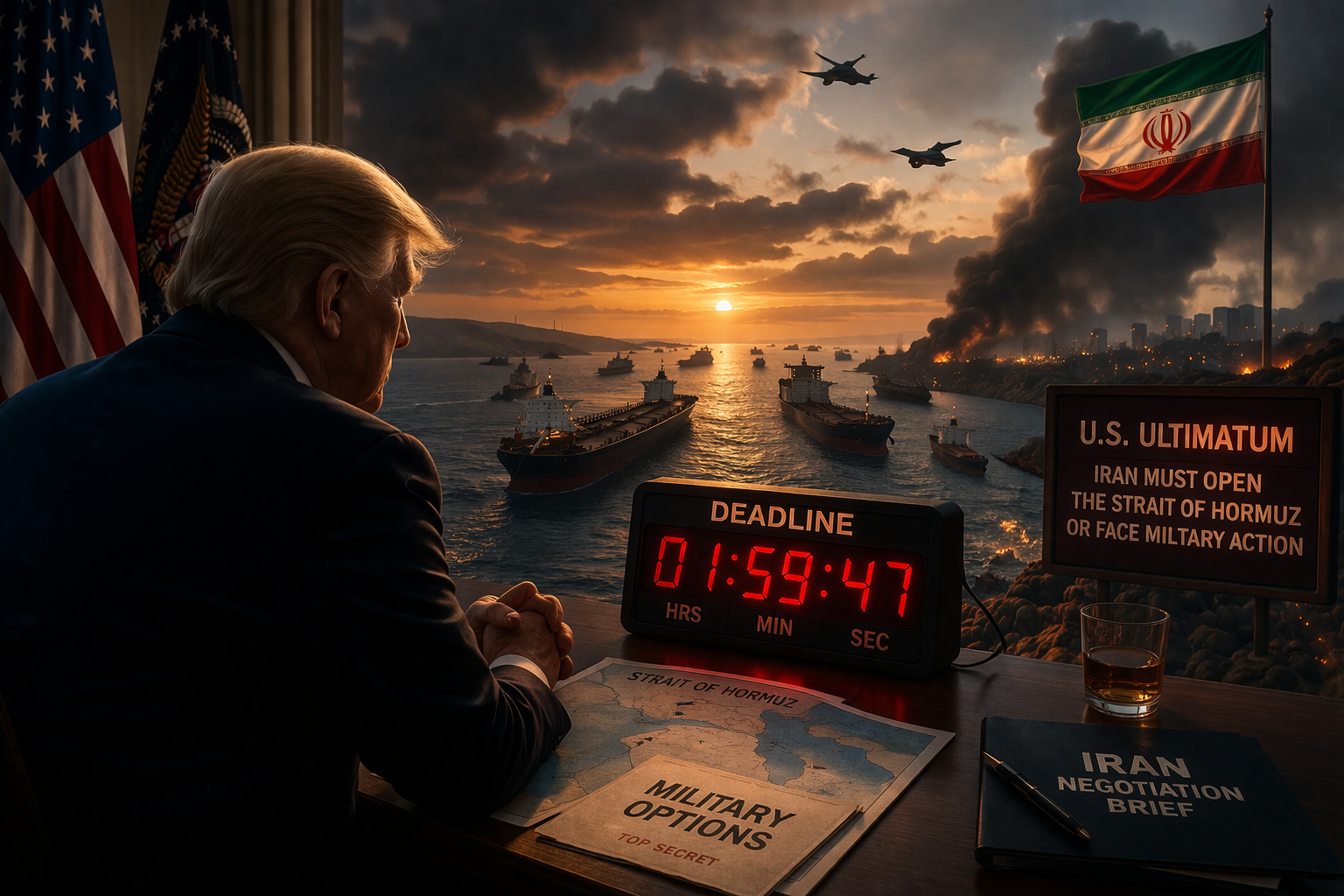
Trump Delays Iran Strike Deadline In Last-Minute Power Play
Hours after escalation, the US rewrote the timeline—and possibly the outcome.
The Moment Everything Was Supposed To Ignite
For weeks, the countdown had been clear.
A hard deadline.
A public threat.
A promise of overwhelming force.
If Iran did not reopen the Strait of Hormuz — a route carrying roughly 20% of the world’s oil — the United States would strike. Markets braced. Oil surged. Governments scrambled.
And then, with less than two hours remaining, it changed.
Donald Trump pushed the deadline back.
Not by hours. By two weeks.
What Actually Happened
The shift wasn’t subtle. It was a complete pivot.
The US agreed to a two-week ceasefire window
Iran signalled it would allow controlled passage through the Strait of Hormuz
Pakistan stepped in as a key mediator
Military action—once imminent—was suspended
This wasn’t a delay for logistics. It was a deliberate recalibration.
The original deadline had been framed as non-negotiable. The reversal shows it never truly was.
Why The Deadline Was Pushed Back
On the surface, it looks like de-escalation.
Underneath, it’s leverage.
Trump’s strategy followed a familiar pattern:
Create maximum pressure
Force a visible concession
Pause at the last possible second
The threat worked — at least partially.
Iran moved on Hormuz access.
Global markets immediately reacted.
Oil prices dropped sharply as supply fears eased.
This wasn’t weakness. It was timing.
The Real Stakes Were Never Just Military
Most coverage focuses on “war vs no war.”
That’s too shallow.
The real pressure point was always economic.
The Strait of Hormuz controls a critical share of global energy flow
Oil price spikes were already feeding inflation risks
A prolonged blockade would ripple through every major economy
This is why the reaction was instant:
Stock markets surged
Oil prices plunged
Investor sentiment flipped in hours
The deadline wasn’t just about Iran.
It was about the global system.
What Media Misses
What Media Misses
The narrative says Trump “backed down.”
That’s not what happened.
He escalated to the edge—and stopped exactly where leverage peaks.
If he had struck:
He loses negotiating flexibility
Risks a wider regional war
Locks in long-term instability
By delaying:
He keeps pressure alive
Gains concessions without committing
Extends the negotiation window on his terms
The deadline wasn’t meant to be met.
It was meant to force movement.
And it did.
Why This Is Still Extremely Dangerous
The ceasefire is not peace.
It’s a pause.
Key realities remain:
Iran has not agreed to a full settlement
Talks are fragile and conditional
Military options remain fully active
Regional players (including Israel) are still involved
Even Iran has signaled the conflict is not over.
This is not a resolution.
It’s controlled tension.
What Happens Next
Three paths now define the next phase:
1. The Managed Deal
Negotiations succeed. Hormuz stabilizes. Conflict de-escalates.
2. The Extended Standoff
Deadlines keep shifting. Pressure continues. No resolution.
3. The Snapback Escalation
Talks fail — and the next deadline is real.
History suggests the third option can’t be ruled out.
The Deeper Pattern
This is the pattern emerging in 2026 geopolitics:
Deadlines as tools, not endpoints
War threats as negotiation frameworks
Markets reacting faster than governments
Diplomacy happening in compressed time windows
Everything is accelerated.
Everything is more volatile.
And everything now hinges on how close leaders are willing to go to the edge—without falling over it.
The Line That Matters
The world didn’t step back from war.
It paused on the edge of it.
And the fact that it came down to hours tells you everything:
This isn’t stability.
It’s controlled instability — one deadline at a time.
