

Trump Just Reminded Washington Who Actually Runs The Republican Party
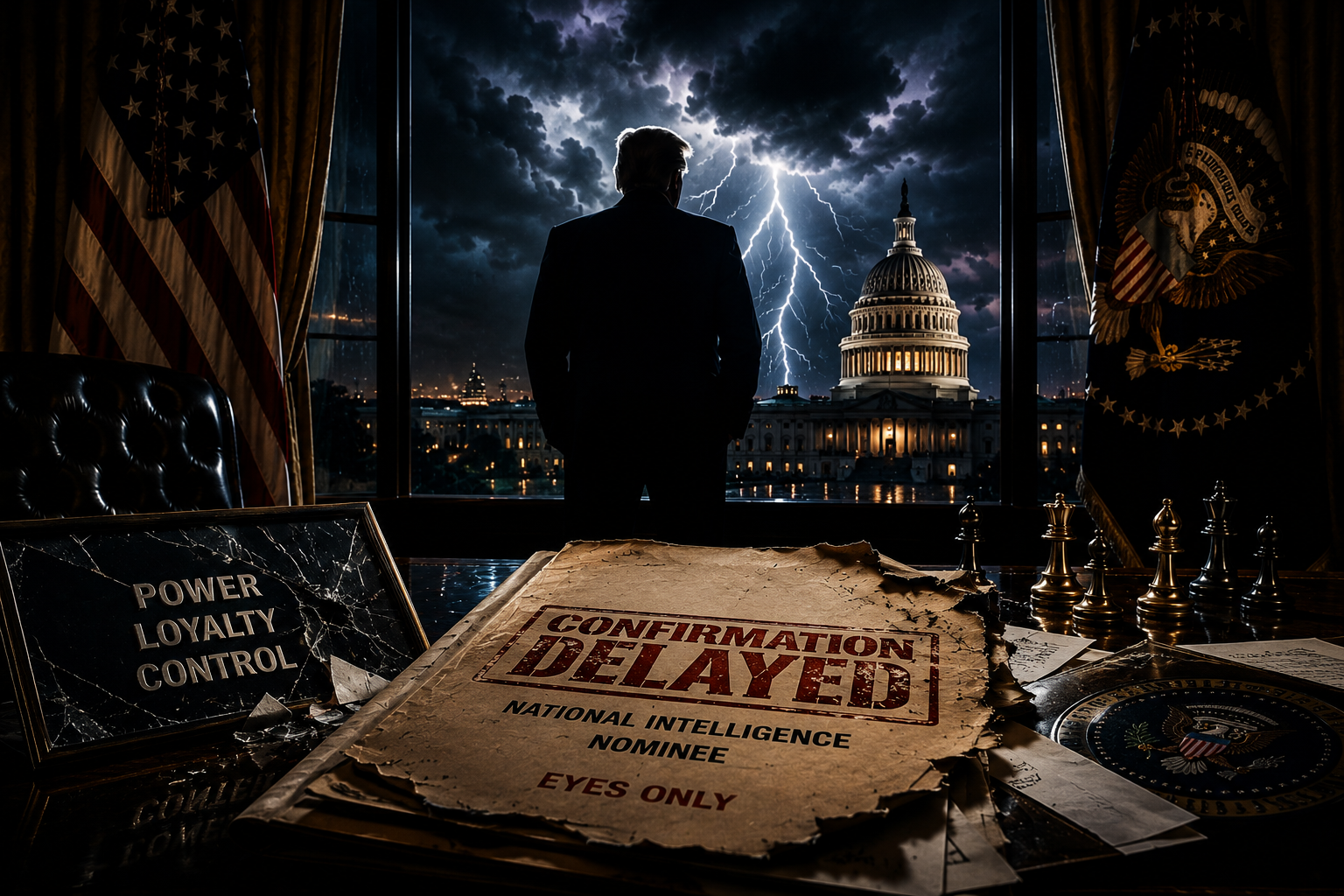
Why Trump Delayed His Own Nominee And Shook Washington
Trump Blew Up His Own Intelligence Nomination And Sent A Message To Congress
Trump Stopped A Process That Was Supposed To Be AutomaticWashington expected Jay Clayton's confirmation hearing to be little more than a formality. Republicans wanted a permanent intelligence chief confirmed quickly, Democrats appeared willing to move forward, and the Senate Intelligence Committee was preparing to advance the nomination.
Then Donald Trump intervened.
Just hours before the hearing, Trump announced that Clayton's confirmation process would not proceed. Senate Republicans were forced to postpone the hearing after Trump directed Clayton not to appear. What looked like a routine appointment instantly became one of the most significant political battles in Washington.
This Was Never Really About Jay Clayton
The obvious interpretation is that Trump was unhappy with the timing of the confirmation.
The deeper interpretation is more interesting.
Trump has argued that Clayton should remain in his current role until a replacement is approved. He has also linked intelligence-related legislation to broader political priorities, including voter identification requirements and election-related reforms. In effect, he has bundled several separate battles together and forced Congress to deal with them as one package.
Critics see chaos.
Supporters see leverage.
From Trump's perspective, there is little value in giving Congress something it wants if he receives nothing in return.
Why Trump Supporters Will Applaud This
Trump's political brand has always been built around rejecting the traditional rules of Washington.
Most presidents try to avoid confrontation with their own party whenever possible. Trump often does the opposite. He has repeatedly shown a willingness to create short-term disruption if he believes it strengthens his negotiating position later.
For supporters, this latest move fits that pattern perfectly.
The argument is simple: if intelligence legislation, surveillance powers, and key appointments are all important to Congress, then why should the White House give ground without securing movement on priorities that matter to Trump voters?
That logic explains why many grassroots supporters are likely to see this not as self-sabotage but as strategic pressure.
Senate Republicans Were Clearly Not Expecting This
The reaction inside the Republican Party suggests many lawmakers expected a smoother process.
Several Republican senators openly expressed frustration after the hearing was postponed. Intelligence Committee Chairman Tom Cotton described the delay as regrettable despite continuing to praise Clayton as a qualified nominee. Other Republicans warned the decision could complicate broader negotiations taking place in the Senate.
That reaction reveals something important.
The establishment wing of the Republican Party often prefers incremental progress, stable negotiations, and predictable outcomes.
Trump's political style is fundamentally different.
He frequently views unpredictability as an advantage rather than a weakness.
The Real Battle Is FISA
The nomination fight has become intertwined with a larger dispute surrounding Section 702 of the Foreign Intelligence Surveillance Act.
This surveillance authority has been the subject of intense debate for years. Supporters argue it provides critical intelligence capabilities. Critics argue it creates opportunities for abuse and insufficient oversight.
Trump has signaled that he does not want reauthorization to move forward independently of other legislative priorities. That position dramatically raises the stakes because intelligence leadership, surveillance authorities, and election legislation are now connected in a way many lawmakers never expected.
This is why the story matters far beyond one confirmation hearing.
The nomination is merely the pressure point where several larger political battles have collided.
The Bigger Message To Washington
The most important takeaway may not be what happened to Jay Clayton.
It may be what happened to Congress.
For years, Washington operated on the assumption that once a president nominated someone and Senate leadership agreed, the machinery would continue moving forward.
Trump effectively demonstrated that he is willing to halt the machinery entirely.
Whether people approve of that approach depends largely on their view of Trump himself. But the political signal is unmistakable. Trump is reminding both parties that his administration intends to dictate the terms of negotiation rather than simply participate in them.
That is a very different model of presidential leadership from the one Washington has become accustomed to.
Why This Could Matter Beyond One Nomination
The immediate question is whether Clayton's confirmation hearing is rescheduled.
The more important question is whether this becomes a template.
If Trump continues linking appointments, legislation, surveillance powers, and election reforms together, Congress may find itself negotiating with a White House that refuses to compartmentalize issues.
That would make every major legislative fight more complicated.
It would also give the White House additional leverage over lawmakers who prefer cleaner, narrower negotiations.
Whether that strategy succeeds remains uncertain. But its intention is clear.
Trump did not simply delay a nominee.
He reminded Washington that in his view, appointments, intelligence, elections, and legislation are all part of the same larger contest for political power. And by stopping his own nominee's confirmation process, he showed he is still willing to disrupt the system if he believes it strengthens his position.
