Trump Orders Iran And Israel To Stop Shooting. Will Anyone Listen?
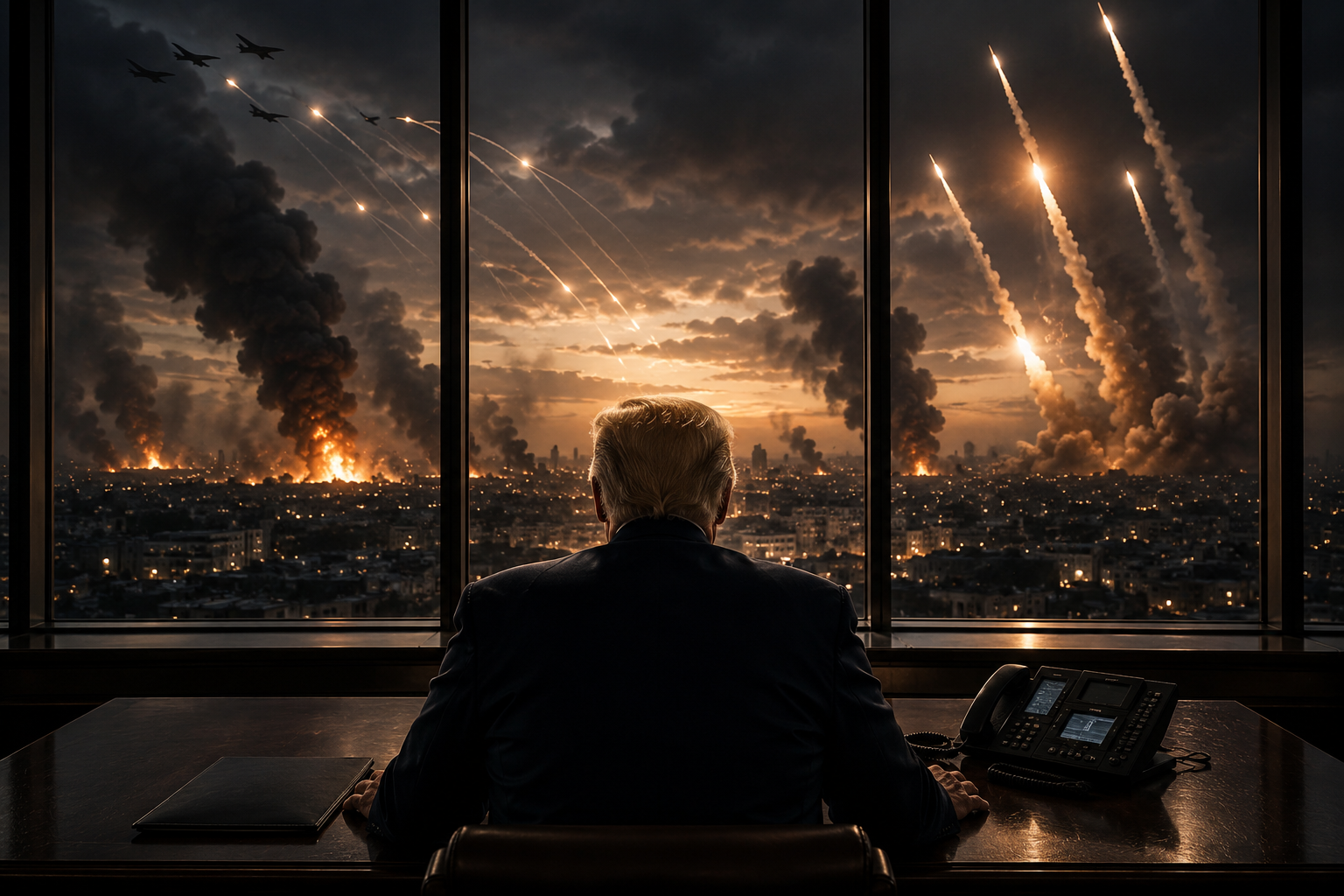
Trump Says “Stop Shooting” As Israel-Iran Crisis Threatens To Spiral Again
Trump’s Message Was Short. The Stakes Are Enormous.
When Donald Trump posted that Israel and Iran must “immediately stop shooting,” the message contained just a handful of words. Yet behind that brief statement sits one of the most dangerous geopolitical confrontations of 2026. Trump's intervention came as both countries exchanged fresh military strikes despite ongoing efforts to prevent a wider regional conflict.
The significance is not the wording itself. It is the fact that a sitting US president felt compelled to issue such a direct and public appeal. That alone tells us how rapidly events have been moving and how concerned policymakers are about the possibility of escalation. Reports indicate Trump has been actively pressuring both sides to avoid further military action while attempting to keep diplomatic channels open.
The Problem Is That Both Sides Believe They Have A Reason To Fight
This crisis is not unfolding in a vacuum. Israel argues that military action is necessary to deter future threats and maintain strategic security. Iran insists that its responses are justified retaliation against actions it views as violations of previous understandings and ceasefire arrangements.
That creates the central problem facing any peace effort. Neither side sees itself as the aggressor. Both see themselves as responding to previous actions. In that environment, every missile strike becomes both an attack and a justification for the next attack.
History shows that conflicts become especially dangerous when both participants believe they are acting defensively. Each new round of violence feels reasonable from inside the decision-making process, even as the overall situation becomes increasingly unstable.
Trump Appears Determined To Keep Negotiations Alive
The White House position appears clear. Trump has repeatedly signalled that he wants negotiations rather than a prolonged military confrontation. Public comments suggest he believes diplomatic progress remains possible and that recent violence should not completely derail wider discussions involving Iran and regional security arrangements.
Several reports indicate Trump has personally communicated with Israeli leadership while also pushing for broader negotiations involving Iran. In some remarks, he suggested that peace discussions remain active despite the military exchanges.
The challenge is obvious. Diplomatic negotiations require trust, patience and political flexibility. Missile exchanges create the exact opposite environment. Every explosion strengthens hardliners who argue that compromise is weakness and that force is the only language opponents understand.
Why The Markets Are Watching Closely
This is not simply a Middle East story. It is a global economic story.
Every time tensions rise between Israel and Iran, investors immediately begin calculating potential consequences for energy markets, shipping routes and regional stability. The Strait of Hormuz remains one of the world's most important energy chokepoints, meaning any serious escalation has implications far beyond the region itself.
Even temporary disruptions can trigger uncertainty in oil markets. That uncertainty then feeds into inflation expectations, business planning and broader market sentiment.
This is why world leaders are paying such close attention. The consequences of failure would not remain confined to the immediate combatants. They would spread through financial markets, diplomatic alliances and global supply chains.
The Real Question Is Not What Trump Wants
The real question is whether the political incentives on the ground support de-escalation.
Trump can demand an end to hostilities. International leaders can encourage restraint. Negotiators can continue talking behind closed doors. None of that automatically changes the calculations being made in Jerusalem or Tehran.
Political leaders often face competing pressures. They must balance international expectations against domestic political realities, military assessments and national security concerns. What appears rational from a diplomatic perspective may look unacceptable from a domestic political perspective.
That is why ceasefires often appear strongest on paper just before they face their greatest test in reality.
What Happens Next Could Define The Rest Of 2026
There are reasons for cautious optimism. Multiple reports suggest both sides have indicated a willingness, at least temporarily, to halt further strikes. Public statements from various actors continue to reference ceasefires, negotiations and diplomatic solutions.
But there are also reasons for caution. The latest exchange of strikes happened after previous efforts at de-escalation. That reality demonstrates how quickly the situation can deteriorate when trust is low and military forces remain active.
Trump's demand may ultimately be remembered as the moment the crisis began cooling down. It may also be remembered as a warning that arrived just before another escalation.
At the moment, nobody can say for certain which outcome is more likely.
What is clear is that a conflict involving Israel and Iran is no longer just a regional issue. It has become a test of diplomacy, deterrence, leadership and geopolitical stability. And for now, the entire world is watching to see whether anyone actually stops shooting.
