Trump Unleashes Third Night Of Strikes As US-Iran War Escalates
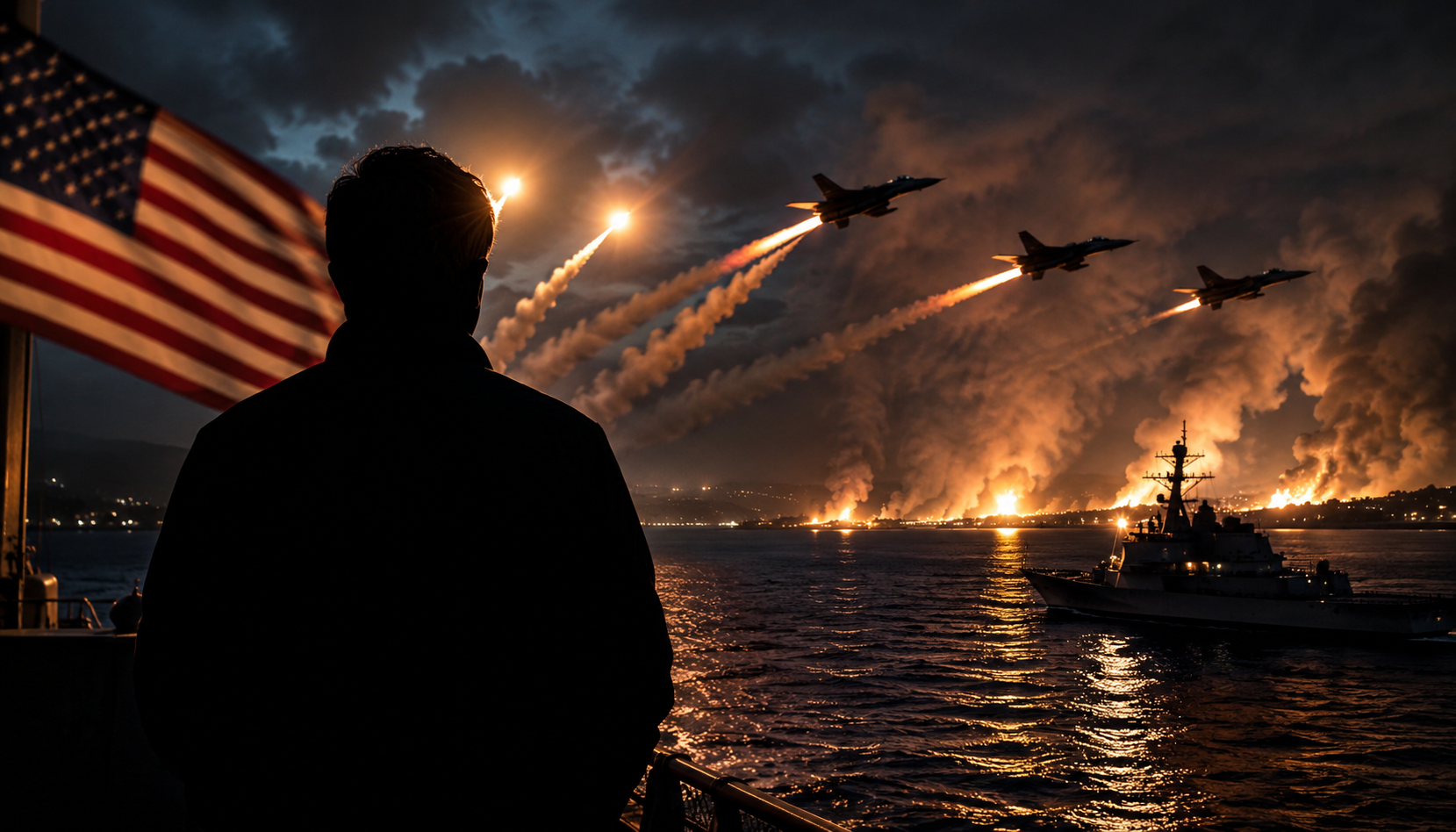
Three Nights Of Fire: America Expands Its Military Assault On Iran
US Bombards Iran Again As Third Night Of Strikes Raises Wider War Fears
The United States has launched a third consecutive night of military strikes against Iran, dramatically escalating its campaign to suppress Iranian attacks and establish control over the strategically vital Strait of Hormuz.
US Central Command said the latest operation began on Monday evening and targeted Iranian forces and military infrastructure considered capable of threatening civilians, American personnel and commercial shipping.
The new attacks reportedly struck air-defence systems, missile and drone capabilities, radar installations and naval assets positioned around the Strait of Hormuz. American fighter aircraft, naval forces and unmanned attack systems have all been involved in the expanding campaign.
The strikes represent the third successive night of direct American attacks against Iranian territory, demonstrating that President Donald Trump is no longer treating the latest confrontation as a limited exchange of retaliatory fire.
Instead, Washington appears to be pursuing a sustained operation designed to weaken Iran’s ability to control the Strait of Hormuz and repeatedly attack international shipping.
Commercial Ship Attack Triggers Latest Retaliation
The Pentagon said the latest round followed an alleged attack by Iran’s Islamic Revolutionary Guard Corps on the M/V GFS Galaxy, a Cyprus-flagged container ship travelling through the Strait of Hormuz.
According to US officials, Iranian forces targeted the commercial vessel despite repeated warnings that attacks against civilian shipping would provoke an American military response.
US forces launched the retaliatory operation at approximately 7.15pm Eastern Time, striking Iranian military assets associated with the attack and the wider threat to maritime traffic.
Iran has repeatedly disputed Washington’s description of events in the Gulf, accusing the United States of violating previous ceasefire arrangements and attempting to impose military control over sovereign Iranian waters.
However, the Trump administration insists Tehran has repeatedly broken the terms of a June memorandum that was intended to reopen the strait, reduce hostilities and create a pathway towards a broader nuclear agreement.
Trump has now declared that the ceasefire is effectively over, although American officials have indicated that diplomatic communications with Tehran have not completely stopped.
Trump Moves To Reimpose Maritime Blockade
The renewed air campaign comes alongside Trump’s announcement that the United States will resume enforcing a maritime blockade against Iran.
The blockade is scheduled to begin on Tuesday, July 14, and is expected to cover Iranian ports, oil terminals and coastal areas. Ships attempting to enter or leave Iranian-controlled facilities without authorisation could be intercepted, diverted or seized.
Neutral vessels travelling through the Strait of Hormuz to destinations outside Iran would not automatically be prohibited, according to a maritime advisory. Nevertheless, the prospect of American warships deciding which vessels may enter or leave Iranian territory represents an enormous military and legal escalation.
Trump has also suggested charging eligible commercial ships a fee for American protection while passing through the strait.
The President has portrayed the United States as the only power capable of guaranteeing freedom of navigation through the waterway, arguing that countries dependent on Gulf energy exports should contribute towards the cost of American military protection.
Critics are likely to question whether Washington possesses the legal authority to impose such charges or effectively regulate international passage through one of the world’s most important maritime routes.
Iran Retaliates Across The Region
Iran has responded to the American strikes with missile and drone attacks directed at US military positions and regional partners.
Reported targets have included facilities in Bahrain, Kuwait, Qatar and Jordan. American forces have also intercepted Iranian projectiles and unmanned systems approaching bases and allied territory.
The expanding geographical reach of the exchanges increases the danger that one miscalculation could pull several Gulf states directly into the war.
Iranian officials have warned that military attacks on Iranian territory will receive what Tehran describes as an “eye-for-an-eye” response. State media has presented the retaliation as proof that Iran remains capable of striking American interests despite months of damage to its military infrastructure.
The United States, meanwhile, says Iranian forces have continued to threaten merchant vessels, launch missiles and deploy drones even after suffering extensive losses during earlier phases of Operation Epic Fury.
US officials claim previous strikes significantly reduced Iran’s naval, missile and command capabilities. However, the repeated need for further operations shows that Tehran retains enough mobile weapons, drones and coastal assets to continue disrupting the region.
Strait Of Hormuz Becomes Central Battlefield
The confrontation is increasingly centred on the Strait of Hormuz rather than Iran’s nuclear programme alone.
The narrow waterway connects the Persian Gulf with the Arabian Sea and carries a substantial proportion of global seaborne oil and liquefied natural gas exports.
Any prolonged disruption could raise shipping insurance costs, delay energy deliveries and push global oil and fuel prices higher. Commercial operators may also avoid the region entirely if Iranian attacks and American military interceptions become routine.
That gives Iran a powerful form of economic leverage. Tehran may be unable to defeat the United States conventionally, but even intermittent attacks against tankers or container ships can create global financial consequences far exceeding the cost of the weapons used.
Washington’s apparent strategy is therefore to remove Iran’s ability to exploit that vulnerability.
Recent American attacks have targeted missile systems, air defences and IRGC speedboats positioned near the strait. The latest campaign appears intended to create an operational zone in which Iranian forces cannot approach commercial shipping without being detected and destroyed.
Nuclear Sites Could Be Targeted Next
The most dangerous possibility is that the campaign expands beyond coastal military assets.
Trump has indicated that further action could include attacks against fortified Iranian nuclear facilities. American officials have reportedly considered striking a heavily protected site known as Pickaxe Mountain as part of a broader effort to prevent Iran rebuilding its nuclear and missile programmes.
An attack on such a facility would mark a significant expansion of the current mission.
Strikes against boats, radar stations and missile launchers can be presented as immediate defensive action. An assault on a deeply buried nuclear complex would resemble a strategic attempt to permanently reshape Iran’s military capabilities.
It would also increase the likelihood of wider Iranian retaliation against US bases, Gulf energy infrastructure, Israel and European interests.
Diplomacy Remains Alive But Severely Weakened
Regional mediators including Qatar, Egypt and Pakistan are reportedly still attempting to prevent the confrontation from developing into a full-scale war.
Yet each night of strikes makes a return to the June agreement more difficult.
Washington says Iran must stop attacking shipping and accept restrictions on its nuclear and military programmes. Tehran argues that it cannot negotiate while American aircraft are bombing Iranian territory and US forces are preparing to blockade its ports.
Both sides insist the other must de-escalate first.
The third consecutive night of American strikes therefore represents more than another retaliatory operation. It signals that the Trump administration is attempting to enforce its demands through sustained military pressure while leaving Tehran with a stark choice: accept American terms or face an expanding campaign against its remaining military and economic infrastructure.
For now, neither side appears ready to retreat.
The Strait of Hormuz is becoming the central battlefield in a conflict capable of disrupting global trade, destabilising several governments and triggering a much larger regional war.
SEO Title: US Launches Third Night Of Strikes On Iran As Hormuz Conflict Escalates
SEO Description: The United States launches a third consecutive night of strikes on Iran as Trump expands military operations and prepares a Strait of Hormuz blockade.
Spotify Description: The United States has launched a third consecutive night of strikes against Iran as President Trump intensifies military operations around the Strait of Hormuz. We examine the targets, Iran’s retaliation, the planned maritime blockade and the growing risk of a wider regional war.
