Can You Develop Type 1 Diabetes Later in Life?
What Can A High Blood Sugar Reading Tell You About Its Cause?
An adult can develop type 1 diabetes at any age. The condition occurs when the immune system damages the pancreatic cells that make insulin. A high blood glucose reading can alert a clinician to diabetes. The reading on its own cannot identify the biological process that put the glucose there. This distinction matters because a person who is severely short of insulin can become dangerously unwell.
If you are unusually thirsty, passing urine more often, very tired or losing weight without trying, seek an urgent GP appointment or contact NHS 111. If suspected diabetes is accompanied by vomiting, abdominal pain, deep breathing, fruity-smelling breath, sleepiness or confusion, diabetic ketoacidosis is a concern. Follow NHS emergency advice and call 999 or go to A&E for suspected DKA, including if you have never been diagnosed with diabetes. Do not wait for a routine blood test.
Why An Adult Diagnosis Can Be Surprising
The familiar picture of type 1 is a child becoming ill over days or weeks. That picture alerts many parents to danger. It can mislead an adult who assumes that their age excludes the same condition. Some adults with autoimmune diabetes retain enough insulin production for symptoms to develop more gradually. The first consultation may resemble other, much more common presentations of high blood glucose.
Insulin allows the body to use and store energy and helps regulate the release of glucose by the liver. When insulin is severely deficient, glucose accumulates in the blood. The kidneys excrete glucose and water follows it. That helps explain the combination of frequent urination and persistent thirst. Losing fluid and energy also helps explain why a person can feel exhausted and lose weight even though glucose is plentiful in the bloodstream.
In type 2 diabetes, insulin resistance and a progressive inability to produce enough insulin for the body’s needs are important mechanisms. People with type 2 may eventually require insulin. Someone with adult-onset type 1 may still make some at diagnosis. The fact that a person uses insulin, or that they once managed without injections, cannot by itself establish the original type.
Why A Finger-Prick Test And HbA1c Answer Different Questions
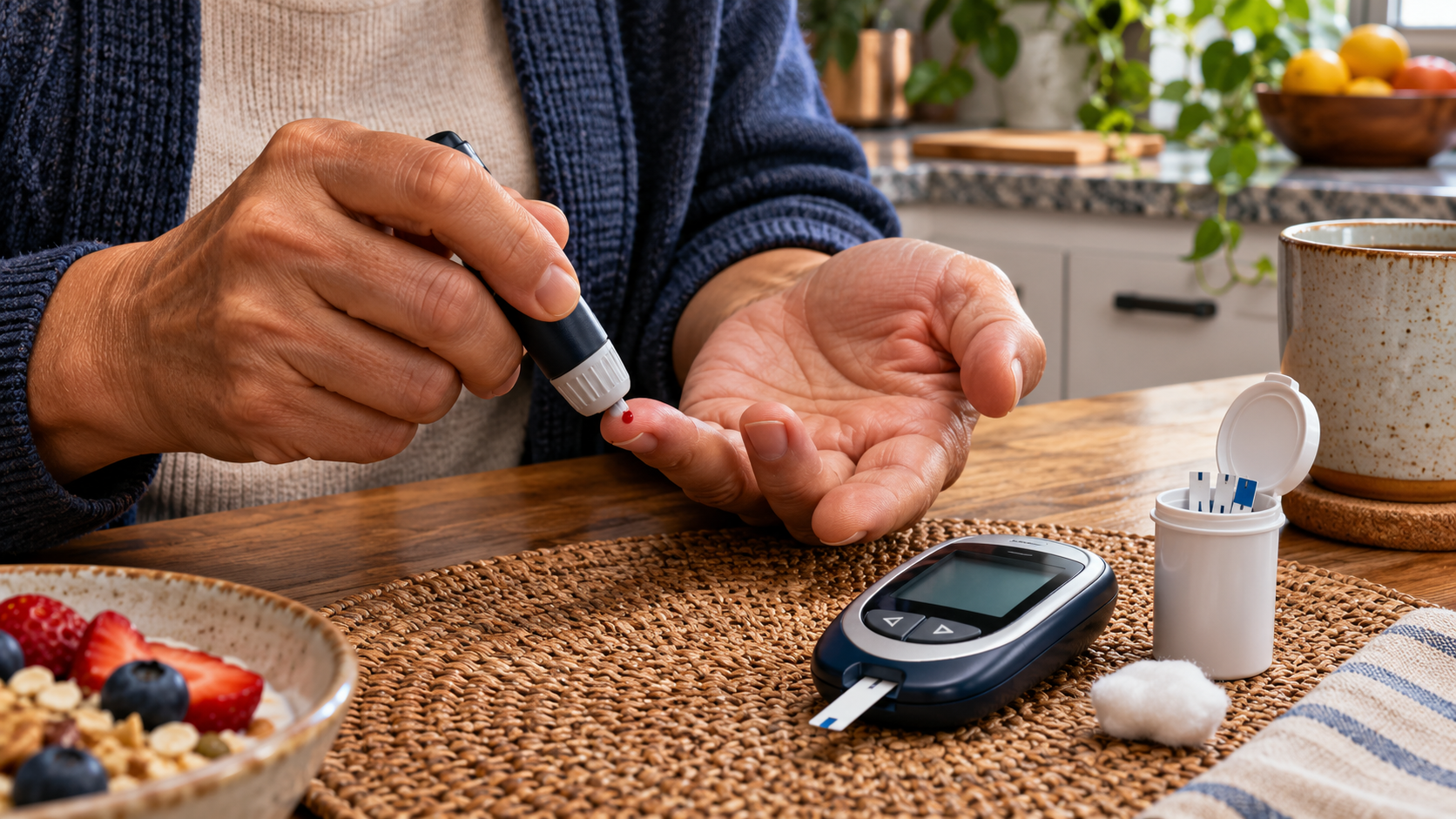
A finger-prick glucose measurement provides information about the moment the sample is taken. A clinician can use prompt testing and assessment to decide how urgently someone needs treatment. A sample sent for HbA1c measures the proportion of haemoglobin that has become glycated and reflects glucose exposure over a longer period. A rapidly developing problem may not be fully represented in that average.
Neither test measures the immune attack directly. Two adults could have a similar glucose reading while one is producing appreciable insulin and the other is approaching severe deficiency. That is why clinicians consider symptoms, timing, weight change, ketones, medical history and clinical appearance. NICE advises against using age or body mass index alone to distinguish type 1 from other forms.
The urgent decision and the classification decision run to different timetables. When type 1 is suspected a patient may need same-day specialist assessment and treatment. The right response to uncertainty is to keep investigating while protecting the patient. Waiting for a laboratory result to settle the exact label can be dangerous if the person is already running short of insulin.
What Autoantibodies And C-Peptide Add
Diabetes-specific autoantibodies can support the diagnosis of autoimmune diabetes. NICE recommends measuring these in adults initially diagnosed with type 1, with the choice and interpretation handled by the clinical team. A negative result does not automatically settle the question in favour of type 2. Timing and the particular tests performed matter.
C-peptide provides another kind of information. When the pancreas makes its own insulin, it also releases C-peptide. Measuring C-peptide alongside glucose can therefore help assess endogenous insulin production. NICE suggests considering a non-fasting measurement paired with blood glucose if antibody results are negative and classification remains uncertain. It is not a universal first test that every symptomatic person should arrange before asking for help.
Early in autoimmune diabetes, surviving cells may still produce insulin. A test can be analytically correct and still leave a clinician uncertain about what the pancreas will be capable of later. A revised diagnosis can reflect new information about the course of illness. It need not imply that a laboratory made a mistake.
What People Mean By LADA
Latent autoimmune diabetes in adults is a term used for a more slowly developing autoimmune presentation. The name is useful to someone whose experience falls between the familiar stories of a childhood emergency and a routine type 2 diagnosis. It describes why an adult may initially appear to manage without insulin before their needs change.
A label found online cannot determine an individual’s treatment. Diabetes has other possible causes, including pancreatic disease and certain medicines. A clinician may revisit classification if the history is unusual or the response to treatment differs from expectations. Someone who feels more unwell after a provisional diagnosis should seek reassessment rather than waiting for a planned review or changing medication independently.
Why One Person’s Type 1 Can Look Different From Another’s
The language of types describes mechanisms. The symptoms that bring someone to a consultation reflect how far those mechanisms have developed, the person’s remaining insulin production and what else is happening at the time. An infection or another physical stress can make an existing glucose problem much more apparent. An adult who felt reasonably well a short time ago may be surprised at how quickly they now feel unwell.
Think about the difference between a measure of concentration and a measure of production. Measuring glucose is like finding the water level behind a dam: it tells you something important about the current state. It cannot by itself establish why the level changed. Autoantibodies supply evidence relating to an immune process. C-peptide helps answer how much insulin the body is making in the circumstances of a particular sample. Ketones answer a more urgent question about what fuel the body is using and whether there is cause for concern.
These are not competing tests in which one “better” number replaces all the others. They are observations made for different decisions. A person who needed immediate assessment because of symptoms has not wasted anyone’s time if later tests establish a type other than the one originally suspected. Conversely, a borderline or inconclusive classification result does not mean the symptoms that prompted the consultation were imaginary.
What To Bring To A Conversation About A Possible Misclassification
A timeline is more informative than a guess at a diagnosis. When did thirst or waking to urinate begin? Was weight loss intentional? Have there been recent infections, medicines or periods of vomiting? If treatment has already begun, how have readings and symptoms changed, and what instructions were given should they worsen? A clinician can use that information without requiring the patient to decide whether the word type 1, type 2 or LADA belongs on the form.
Tell the clinician about any previous results that were obtained elsewhere. The date and circumstances matter: a glucose reading after a meal, a fasting laboratory measurement and an HbA1c result are not interchangeable. If there are records, bringing them can avoid relying on a remembered number without its unit. There is no need to collect a perfect diary before seeking help. Feeling acutely unwell takes priority over writing a history.
It is equally reasonable to ask what will happen next if classification remains uncertain. Is a specialist team involved? Who will communicate results? Which symptoms should trigger urgent assessment before the next planned appointment? A good answer provides a route back into care as well as a provisional explanation for the present results.
The Human Cost Of Assuming Age Settles It
A parent who has seen a child diagnosed may recognise the pattern in a colleague decades older. The colleague may dismiss it because nobody in their family has type 1, because they have always associated diabetes with a different body shape or because a busy week seems a plausible explanation for fatigue. Public awareness that depends on a childhood photograph alone can leave precisely that adult without a reason to act.
The aim of recognising adult-onset disease is not to persuade everybody who is tired that they have diabetes. The combination of new symptoms and their progression matters. The ability to obtain timely clinical assessment matters more than selecting the correct diagnostic category at home. A person can describe being thirsty, tired and suddenly much thinner with complete accuracy without knowing anything about antibodies. That is enough information to begin asking for help.
What Happens Once An Adult Has A Diagnosis?
A diagnosis brings practical questions that the word “type” alone cannot answer. Someone newly starting insulin needs individual teaching about how and when to use it, monitoring, low glucose, illness and the points at which to seek urgent help. Their diabetes team can discuss methods of monitoring, day-to-day routines, work and activity. The goal is to make treatment usable in the person’s actual life. A night-shift worker, a parent caring for a toddler and a retired adult living alone may have quite different practical needs.
One source of misunderstanding is the apparent improvement that can follow initial treatment. Symptoms driven by very high glucose may ease, and insulin requirements can change as the person stabilises. An apparent improvement in how the body is managing glucose does not give a safe basis for stopping prescribed insulin. Changes belong with the diabetes team, particularly in the early period when the person is learning what their readings mean.
Family and friends can help by learning the difference between low and high glucose, listening to the person’s own care instructions and knowing how to obtain emergency help. The most helpful response to an adult diagnosis may be to retire the question “Aren’t you too old for that?” altogether. A better question is what support the person needs to make the next week manageable. Recognising the right condition is the beginning of care, not the point at which a patient is expected to know how to do everything alone.
Why Ketones Change The Urgency
With insufficient insulin the body increasingly breaks down fat, producing ketones. If enough accumulate, the blood can become dangerously acidic. DKA requires urgent hospital treatment. It can be the first sign of type 1 diabetes and occasionally occurs in other circumstances too. A person does not need to own a glucose meter or know their ketone level to seek emergency care for concerning symptoms.
For someone already treated for diabetes, a clinical team may provide individual sick-day rules and guidance on checking glucose and ketones. Those instructions are specific to the person and their treatment. Advice given to a relative with a different type of diabetes may be inappropriate. For someone who has never been diagnosed, the priority is recognition and assessment, not acquiring home-testing equipment before making a call.
World Diabetes Day on 14 November offers a practical reason to remember the symptoms in adults as well as children. A raised glucose reading starts an investigation. Thirst, weight loss, frequent urination and a person becoming visibly unwell tell a clinician how urgently to act. Age alone should never be the reason that combination gets overlooked.
