From Electric Rickshaws to a Ban on Forever Chemicals
A Whole Country Just Won Prince William's Earthshot Prize. Here Are All Five 2026 Winners
A whole country, an electric rickshaw maker, a tiny Pacific island, a French campaign against "forever chemicals" and a Danish energy company that used to run on coal. Those are the five winners of the Earthshot Prize 2026, Prince William's environmental award, which were named at a ceremony in Mumbai, India, on the evening of Tuesday 17 November.
Each winner receives £1 million, roughly $1.3 million or €1.2 million at current exchange rates, to scale up its work. They were picked from 15 finalists across five categories, which the prize calls "Earthshots". This was the sixth awards ceremony, and the first in India.
The Earthshot Prize 2026 Winners at a Glance
Protect and Restore Nature: Bhutan. The Himalayan kingdom, recognised for writing forest protection into its constitution and for a new national programme to restore damaged land.
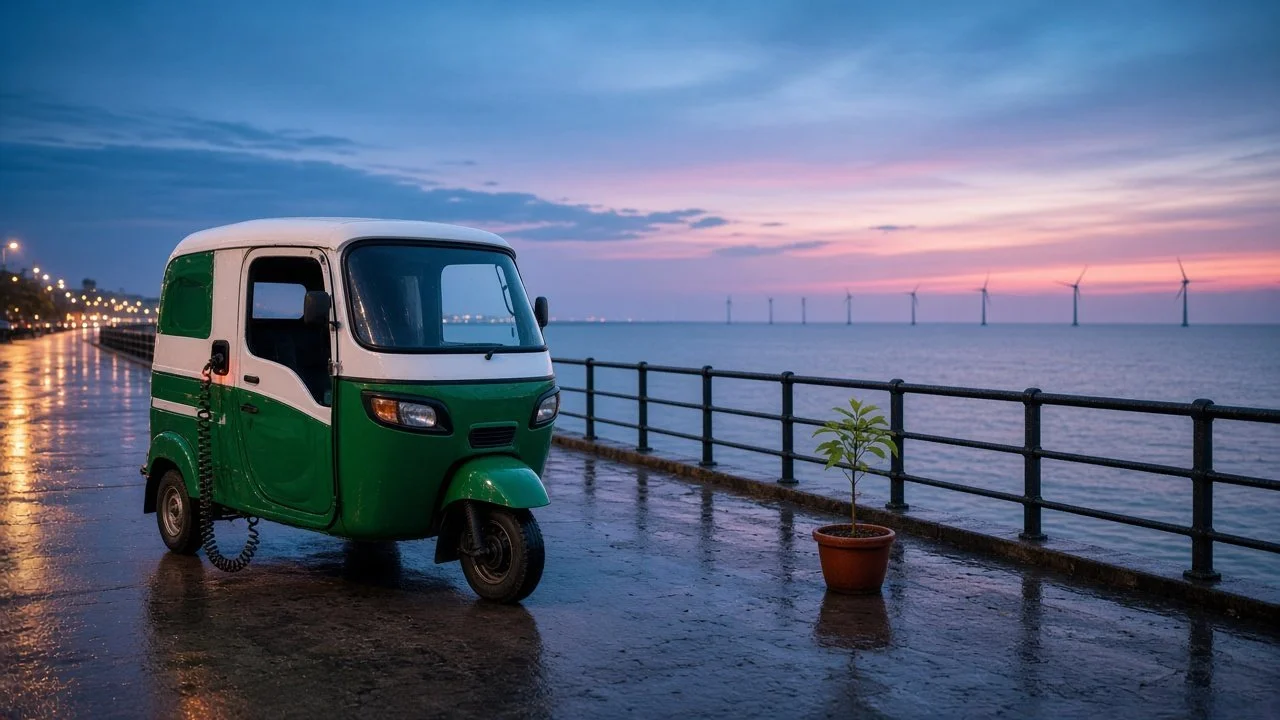
Clean Our Air: Mahindra Last Mile Mobility. An Indian manufacturer that has sold more than 400,000 electric three-wheelers and small vans, the vehicles that carry the "last mile" of trips in Indian cities.
Revive Our Oceans: Niue Ocean Wide Trust. A Pacific island fund that pays for the permanent protection of an area of ocean larger than the United Kingdom.
Build a Waste-Free World: PFAS-Free France. The coalition behind France's 2025 law restricting PFAS, the so-called forever chemicals.
Fix Our Climate: Ørsted. The Danish company that went from one of Europe's most coal-intensive utilities to the world's biggest builder of offshore wind farms.
The winners were confirmed by the Earthshot Prize and reported by the BBC, the Associated Press, The Independent and Euronews.
Protect and Restore Nature: Bhutan
Bhutan is the first entire country to win an Earthshot Prize, according to Euronews.
The case for it rests on its forests. Bhutan's constitution requires at least 60 per cent of the country to stay under forest cover forever. According to the Earthshot Prize, it currently keeps nearly 70 per cent of its land forested and protects more than half of it through a national network of protected areas. The prize says Bhutan now absorbs more carbon than it emits.
Those forests matter far beyond its borders. Bhutan has only around 800,000 people, but its Himalayan forests help regulate the rivers that about 1.6 billion people downstream in South Asia rely on for water. That is close to a fifth of humanity, a figure both the prize and the BBC highlighted.
The pressure is growing. The prize says nearly 2,000 of Bhutan's water sources are drying up, and forest fires affected almost 18,000 hectares of the country between 2021 and 2024.
The prize money will support Restore Bhutan, a programme the government launched in 2025 with the Bhutan Trust Fund for Environmental Conservation, the Bhutan Ecological Society, Conservation International and the country's forestry department. Its 2030 targets are to restore 50,000 hectares of degraded forest, farmland and urban land, deliver nearly 2 million tonnes of carbon dioxide savings and secure 133 billion litres of water.
Rather than relying on one-off grants, the programme combines blended finance with a mechanism called Jurisdictional REDD+, which pays for verified, country-wide reductions in forest loss.
Clean Our Air: Mahindra Last Mile Mobility
In Indian cities, three-wheeled auto-rickshaws and small vans carry people the last stretch to work and goods the last stretch to their door. Running on fossil fuels, they are a major source of urban air pollution.
The problem is that these vehicles are livelihoods. The Earthshot Prize says around 90 per cent are used commercially, so the only realistic route to cleaner air is to make electric models that drivers can afford to buy and run.
That is what Mahindra Last Mile Mobility, a Mumbai-based maker and one of India's biggest three-wheeler manufacturers, set out to do. It reorganised its supply chains to build electric three-wheelers and small commercial vehicles. It has now sold more than 400,000 of them, including more than 100,000 in a single year, the first time an Indian commercial vehicle maker has reached that scale, according to the prize.
The company reports that these sales have avoided more than 180,000 tonnes of carbon dioxide. Because electricity is cheaper than fuel, the prize says drivers' take-home income can rise by 25 to 30 per cent.
According to the Earthshot Prize and Positive News, electric models now make up about a third of India's three-wheeler category. Mahindra Last Mile Mobility's goal is one million electric vehicles on India's roads by around the end of the decade, and the prize money will help speed up rollout in Mumbai, Ahmedabad, Bengaluru and Delhi, tackling problems with parking, charging and policy.
Before the ceremony, Prince William drove the Princess of Wales along Mumbai's Bandra-Worli Sea Link promenade in one of the company's electric rickshaws to meet the finalists. "It was quite good fun, really good fun," he said as he stepped out, according to the BBC.
Revive Our Oceans: Niue Ocean Wide Trust
Niue is a single coral island in the South Pacific with about 1,700 residents. Its ocean territory covers 327,000 square kilometres, roughly the size of Vietnam and larger than the United Kingdom.
Protecting that much sea costs money every year, and small island nations usually depend on short-term grants. The Niue Ocean Wide Trust was set up to change that. It was founded by Niuean siblings Coral and Brendon Pasisi and their colleague Dr Josie Tamate.
Its tool is the Ocean Conservation Commitment. The trust calculated the real annual cost of looking after Niue's ocean and turned it into a contribution of NZ$250 per square kilometre per year over 20 years. Individuals, companies, governments and philanthropists can sponsor these commitments. The money builds a permanent endowment, with a target of NZ$32 million (about US$18 million).
All of Niue's waters are now managed as the Niue Nukutuluea Multipurpose Marine Park, and 40 per cent of them form a no-take zone where fishing and other extraction are banned.
The prize cites a 2023 survey that found fish biomass up 60 per cent, top predators up 45 per cent and coral cover up 10 per cent since 2016.
With the prize, the trust aims to raise a further US$10 million by 2028 and to help at least one more Pacific country adopt its model by then.
Build a Waste-Free World: PFAS-Free France
PFAS, short for per- and polyfluoroalkyl substances, are a family of thousands of synthetic chemicals prized for being non-stick, waterproof and heat-resistant. They are used in products from frying pans to rain jackets. The same chemical bonds that make them useful mean they barely break down, which is why they are known as "forever chemicals".
The Earthshot Prize says studies have linked exposure to fertility problems, liver and cardiovascular damage, thyroid disorders, some cancers and weaker responses to vaccines.
The French campaign began in 2022, when scientists alerted Nicolas Thierry, a member of the French National Assembly, to the scale of PFAS contamination. His team built a coalition of scientists, politicians, campaign groups including Générations Futures and Notre Affaire à Tous, and members of the public.
According to the Earthshot Prize, the National Assembly passed the law in February 2025 by 231 votes to 51. It came into force on 1 January 2026. Companies must now track and publicly report PFAS pollution, and a "polluter pays" levy funds clean-up, with the aim of ending industrial PFAS discharges into water within five years. Under the law, PFAS have been restricted in cosmetics, ski wax, consumer clothing, footwear and waterproofing sprays since this year, with most textiles following in 2030. Essential uses are exempt.
The prize calls it the world's first national law of its kind and says it is already encouraging Italy, the Netherlands and the UK to consider their own bans. PFAS-Free France's goal is to see the law fully enforced and similar bans adopted in five more major countries or regions by 2030. Thierry was among the winners pictured together after the ceremony.
Fix Our Climate: Ørsted
Twenty years ago, Ørsted was called DONG Energy and was one of the most coal-dependent utilities in Europe. It has since sold its oil and gas business, moved away from coal and rebuilt itself around offshore wind, an industry it helped to create with the world's first offshore wind farm in 1991.
According to the Earthshot Prize, Ørsted has cut its direct carbon emissions, known as Scope 1 and 2, by more than 98 per cent. It has built more offshore wind farms than any other company. In the UK alone, the prize says, its 12 operating offshore wind farms supply more than 7 per cent of the country's electricity.
By 2030, it aims to finish 8.1 gigawatts of new offshore wind capacity, including Hornsea 3 in the UK, which is set to become the world's largest single offshore wind farm. The prize says these projects should power around 17 million more homes and avoid more than 28 million tonnes of carbon dioxide a year.
"It surely hasn't been easy," Rasmus Errboe, Ørsted's chief executive, said, according to Euronews.
That is an understatement. Ørsted's US business has been badly hit. It took heavy write-downs in 2023 on its Ocean Wind projects off New Jersey, which were later cancelled. It raised about €8 billion from shareholders in 2025, and has had two projects under construction, Sunrise Wind and Revolution Wind, halted by stop-work orders from the Trump administration that were later lifted after legal challenges, according to reNEWS. In August, Errboe said the company "should have stepped back sooner" from the US. Windpower Monthly reported that Ørsted made a third-quarter loss of DKK 728 million (about €97 million) this year after further US impairments.
Its win is therefore a statement about a business model under strain. The judges are betting that Ørsted's turnaround, rather than its recent balance sheet, is the lesson other energy companies should learn.
3:17 PMTaylor Tailored
The Finalists Who Missed Out
Ten more organisations reached the final. All 15 finalists get access to the prize's network of investors, businesses and philanthropists, even without the £1 million. According to the Earthshot Prize, they were:
Protect and Restore Nature: the Indigenous Desert Alliance in Australia, which supports Indigenous people caring for 270 million hectares of desert, and the Yellowstone to Yukon Conservation Initiative, which reconnects a 2,100-mile stretch of mountains across Canada and the US for grizzly bears, wolves and caribou.
Clean Our Air: Satellites on Fire from Argentina, which uses artificial intelligence and satellite heat data to spot wildfires early, and AirQo, which builds low-cost air-quality monitors designed in Africa and used in cities across nine African countries.
Revive Our Oceans: the Zero Emission Maritime Buyers Alliance (ZEMBA), which brings together nearly 50 big cargo owners, including Amazon, IKEA and Nike, to commit to zero-emission shipping, and the City of Barcelona, which is restoring 1.8 kilometres of its Mar Bella seafront to cope with rising seas.
Build a Waste-Free World: the South Korea Zero Waste Movement Network, credited by the prize with helping to lift South Korea's food waste recycling rate from 2 per cent in 1995 to 95 per cent, and the Mother Earth Foundation, which runs community waste systems in the Philippines.
Fix Our Climate: Pula, which says its crop insurance reaches 24 million smallholder farmers across Africa, and Mahila Housing Trust in India, which uses reflective roof coatings to cool low-income homes by up to 5C and insures women's incomes against extreme heat.
How the Earthshot Prize Works
Prince William launched the Earthshot Prize through his Royal Foundation charity in 2020. The first awards were held at Alexandra Palace in London in 2021, followed by Boston, Singapore, Cape Town, Rio de Janeiro and now Mumbai.
The name comes from John F. Kennedy's "Moonshot" challenge to put astronauts on the Moon. The prize runs for ten years, until 2030, and has five fixed goals: Protect and Restore Nature, Clean Our Air, Revive Our Oceans, Build a Waste-Free World and Fix Our Climate.
Each year, hundreds of official nominators around the world submit thousands of candidates. The prize adds its own research and narrows the field to 15 finalists, three per category. One winner per category receives £1 million, so 50 winners will have been crowned by the end of the decade. This year's five bring the total to 30.
The prize money is not the whole point. The prize says it works with each finalist on a plan to expand and connects them with its "Global Alliance" of companies, investors and governments. It says its 75 finalists before this year have together avoided or captured more than 18 million tonnes of carbon dioxide and protected or restored 58 million hectares of land. These are the prize's own figures.
The 2026 ceremony will stream on Prime Video from 30 November, according to the Earthshot Prize.
What Was Prince William's Role?
William is the prize's founder and president, and he chose the winners with the Earthshot Prize Council. Its members include Queen Rania of Jordan, the actor Cate Blanchett, the chef José Andrés, the former UN climate chief Christiana Figueres, the climate activist Luisa Neubauer and the head of the World Trade Organization, Dr Ngozi Okonjo-Iweala.
He also gave the main speech. "Change is not only possible. It is already happening," he told the audience, adding that young people "are not waiting for someone else to find the answers" and calling them "the torchbearers of a global movement". The BBC reported him saying this decade was the moment when positive change "becomes irreversible".
The trip was significant for the Princess of Wales too. It was the couple's first official overseas tour together in four years, after her cancer treatment limited her travel, according to the BBC. She presented one of the awards and said the winners' work would "create seismic change that will improve lives for generations to come".
What Was New This Year
For the first time, the judges used the science of "positive tipping points" to help choose the winners. The idea, which the prize has developed with the University of Exeter, is to identify the solutions most likely to reach the point where change starts to drive itself, for example when electric vehicles become cheaper than petrol ones and sales take off without subsidies.
That helps explain this year's mix, which includes a national government and a large listed energy company. Each winner offers a model others could copy.
The Questions Worth Asking
Some readers will ask why a multinational energy company or a national government should compete with grassroots groups for £1 million. The prize's answer is that it rewards models others can copy.
Most of the impact figures in this article come from the Earthshot Prize or the winners themselves. Independent outlets have repeated them, but have not verified them. Reports do not always agree either: Euronews put Ørsted's installed capacity at more than 11 gigawatts, while the prize's own profile says more than 10.
What Happens Next
The winners now have money, a platform and a deadline. By 2030, Bhutan aims to have restored its 50,000 hectares, Niue to have completed its endowment, PFAS-Free France to have helped secure bans elsewhere, Mahindra to be near one million electric vehicles and Ørsted to have switched on Hornsea 3. Those targets will be the real measure of whether the Mumbai winners were the right choices.
Sources
The Earthshot Prize: 2026 Earthshot Prize Winners Crowned (17 November 2026). The official announcement: categories, prize money, project targets, the speech, the judging council, tipping points, the Prime Video stream.
The Earthshot Prize: 2026 Winners and Finalists, with profiles for Bhutan, Mahindra Last Mile Mobility, Niue Ocean Wide Trust, PFAS-Free France and Ørsted. The full finalist list and each winner's project detail.
The Earthshot Prize: About and Awards. How selection works, past host cities.
BBC News: William and Kate celebrate Earthshot Prize winners in Mumbai (17 November 2026). Winners, speeches, Catherine's role, the rickshaw quote.
Associated Press: Prince William presents Earthshot Prize winners with $1.3 million each (17 November 2026). The dollar conversion.
The Independent: The five Earthshot Prize winners awarded £1million each (18 November 2026). Winners and categories, the rickshaw ride.
Euronews: 'Change is possible': Danish offshore wind giant wins Earthshot Prize (17 November 2026). The euro conversion, Bhutan as the first country winner, Errboe's quote, Ørsted's capacity.
Positive News: 'Torchbearers of a global movement': Earthshot prize reveals its winners (19 November 2026). Corroboration of the winners' details.
reNEWS: Orsted CEO: We should have stepped back from US sooner (19 August 2026). Ørsted's US write-downs, rights issue and stop-work orders.
Windpower Monthly: US offshore wind hit sends Ørsted to Q3 loss (November 2026). The third-quarter loss.
Next Reads
PFAS Forever Chemicals: The Toxic Legacy We Can't Filter Away. Why the chemicals France has restricted are so hard to get rid of.
Why Are We Studying 'Forever Chemicals' in People's Bodies. What scientists find when they test human blood for PFAS.
Who Pays for Britain's £12 Billion Offshore Wind Farms, and When Could Households Benefit?. The economics behind projects like Hornsea 3.
Pacific Islands Turn US-China Rivalry Into Climate Cash as Superpowers Battle for Influence. How Pacific nations like Niue fund climate protection.
What Happens If The Oceans Keep Getting Hotter?. The stakes for this year's ocean projects.
Harry And Meghan's UK Return Could Trigger The Royal Family's Most Awkward Reunion Yet. The other royal story of the month.
