NASA Ordered Astronauts Into Emergency Shelter Mode On The ISS — Here’s Why Space Agencies Took No Chances
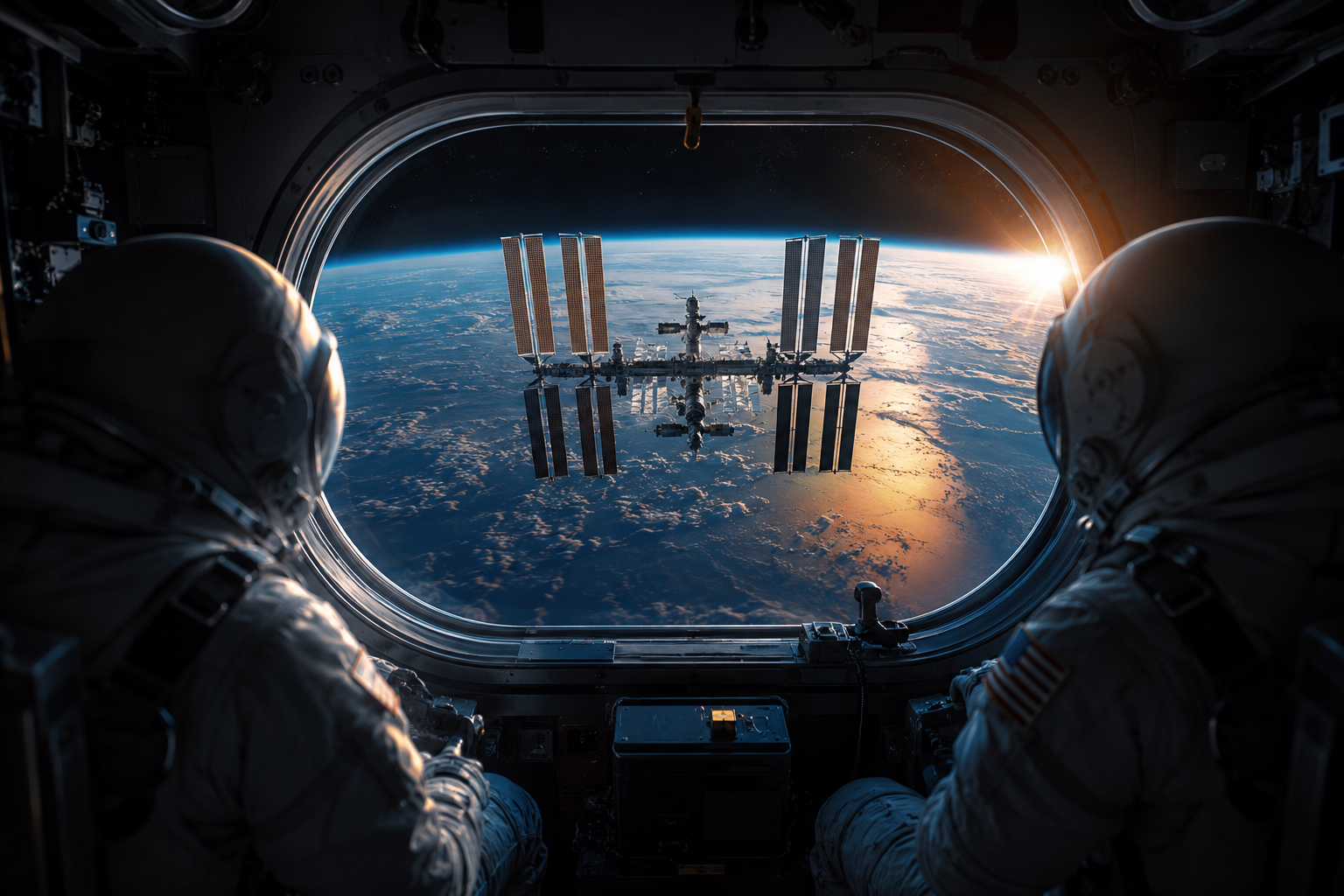
Astronauts Told To Prepare For Evacuation In One Of The ISS’s Most Unusual Moments
Rare ISS Evacuation Alert Sparks Global Attention As Air Leak Fears Escalate
Astronauts aboard the International Space Station were instructed to enter shelter mode and prepare for a possible evacuation after concerns emerged over a worsening air leak inside the station. The order was issued out of what NASA described as an abundance of caution, but the fact that the instruction was given at all immediately attracted global attention.
The crew entered a docked SpaceX Crew Dragon spacecraft and donned protective equipment while engineers monitored conditions and assessed repair efforts taking place in the Russian section of the station. For several hours, the possibility of a more serious escalation remained uncertain.
The situation ultimately stabilised and the shelter order was lifted, allowing astronauts to resume normal operations. Yet the incident has generated intense interest because evacuation preparations aboard the ISS remain exceptionally uncommon.
The Problem Has Been Building For Years
The source of concern was not a sudden collision or catastrophic failure. Instead, attention focused on a persistent air leak associated with the Russian Zvezda service module, an area that has experienced recurring structural concerns and repair efforts for years.
According to reports, the leak rate increased significantly, prompting renewed concern among engineers responsible for maintaining the orbiting laboratory. One leak was reportedly sealed while investigations continued into another. Russian repair work was later paused while additional measurements and data analysis took place.
The incident illustrates one of the biggest long-term challenges facing the ISS. While the station remains a remarkable achievement of international cooperation, it is also an ageing structure that has spent decades exposed to the harsh realities of space. Every year brings new maintenance challenges, and engineers constantly monitor systems for signs of degradation.
Why The Shelter Order Matters
What captured public attention was not simply the leak itself. It was the activation of what space agencies call "safe haven" procedures.
Under these protocols, astronauts move into their docked spacecraft so they can rapidly depart if conditions deteriorate. The spacecraft effectively becomes a lifeboat in orbit. If a leak becomes uncontrollable or structural integrity is threatened, crews can undock and return to Earth.
Such precautions are deliberately conservative. Space agencies prefer acting early rather than waiting for definitive proof of danger. In an environment where every breath of air is manufactured and every system depends on constant maintenance, caution is not optional.
That reality helps explain why the story spread so quickly. Most people rarely think about the risks astronauts face after launch. Events like this offer a reminder that life aboard the ISS remains fundamentally different from life anywhere on Earth.
The Bigger Question Hanging Over The ISS
The incident also reignites a broader discussion about the future of the International Space Station.
For more than two decades, the ISS has served as humanity’s permanent foothold in space. It has hosted scientific experiments, international cooperation, commercial partnerships and critical research that would be impossible on Earth. Yet the station is now operating far beyond the age originally envisioned by many of its designers.
As maintenance demands increase, space agencies face difficult decisions about extending operations, replacing ageing systems and eventually transitioning to successor platforms. Every unexpected leak, hardware issue or emergency procedure becomes part of that conversation.
The shelter order does not mean the station is in immediate danger. Quite the opposite. The response demonstrated that safety systems worked exactly as intended. However, it also highlighted how much effort is required to keep a decades-old orbital laboratory functioning safely hundreds of kilometres above Earth.
Why This Story Resonates Beyond Space Enthusiasts
There is a reason stories like this consistently attract attention.
Space exploration represents humanity at its most ambitious. The ISS circles Earth roughly every 90 minutes while carrying people who live and work in an environment that remains fundamentally hostile to human life. When something goes wrong, even temporarily, it captures the imagination because the stakes feel enormous.
The images alone are powerful. Astronauts sheltering inside a spacecraft, prepared to abandon the station if necessary, sound like scenes from a Hollywood thriller. Yet this was a real-world safety procedure carried out by highly trained professionals managing a genuine engineering problem in orbit.
For now, the immediate crisis appears to have passed. Astronauts have returned to normal duties, repair assessments continue, and international teams remain focused on understanding the underlying cause of the leak. But the incident serves as a reminder that space remains unforgiving, and that even routine missions can become breaking news in a matter of minutes.
