

Why China’s Research Spending Surge Changes Everything
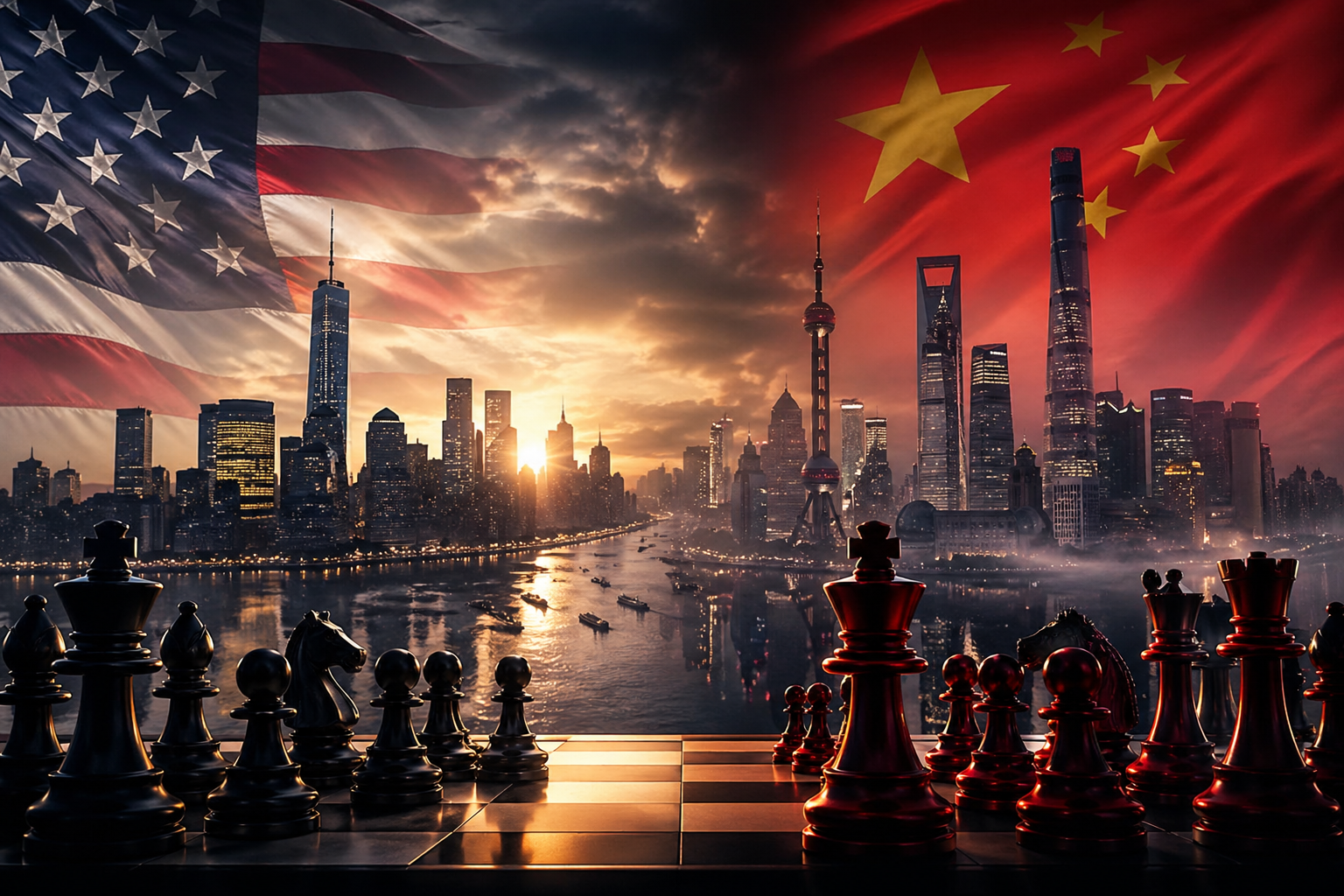
The Moment China Matched America In Science Spending
The Balance Of Scientific Power Has Shifted—And The Consequences Are Only Beginning
For decades, global scientific leadership followed a familiar script: the United States funded, discovered, and defined the future. Everyone else followed.
That script has now been rewritten.
China has overtaken the United States in total research and development spending when adjusted for purchasing power — crossing the symbolic and strategic threshold of $1 trillion.
This is not a marginal lead. It is a structural turning point.
Because in the modern world, whoever funds science at scale shapes the future — economically, militarily, and culturally.
What Actually Happened
The numbers are simple. The implications are not.
China’s R&D spending reached roughly $1.03 trillion (PPP adjusted)
The United States followed closely at around $1.01 trillion
This is the first time in modern history that thanother country has overtaken the USn total research investment.
And it did not happen slowly.
China’s R&D spending has grown at more than 14% annually over two decades, more than double the US growth rate over the same period.
A decade ago, China was still significantly behind. By 2023, it had already closed the gap to 96% of US levels (PPP-adjusted).
Now it has crossed.
That trajectory—not just the milestone— is the real story.
Why This Matters Now
Research spending is not just a budget line. It is a forward-looking map of power.
R&D determines:
Who leads in artificial intelligence
Who dominates semiconductor technology
Who controls biotech, quantum computing, and energy systems
Who sets global standards for the next generation of industries
China is not just spending more. It is spending with intent.
Its national strategy explicitly prioritizes the following:
AI integration across the economy
Advanced manufacturing
Quantum technologies
Biomedicine and future energy systems
This is coordinated, long-term, and state-backed.
The US model, by contrast, is more fragmented—heavily driven by the private sector and universities rather than centralized national direction.
Both models can produce innovation.
But only one is currently scaling faster.
The Hidden Detail Most People Miss
Crossing $1 trillion matters symbolically. But the deeper shift is structural.
China’s R&D system is fundamentally different.
Government plays a larger direct funding role
National priorities are tightly aligned with research investment
Industrial policy and scientific development are integrated
In fact, China’s government research spending alone is already significantly higher than that of the United States.
That changes the nature of innovation itself.
Instead of relying primarily on market-driven discovery, China is building mission-driven science—targeting specific breakthroughs and sectors.
This is how you accelerate catching up.
And eventually, overtaking.
But Leadership Is Not Yet Decided
Surpassing in spending does not automatically mean surpassing in capability.
The United States still leads in key areas:
Cutting-edge semiconductor design
Elite research universities
Breakthrough innovation ecosystems
Venture capital and startup formation
Even in sectors where China spends heavily — like semiconductors — it still lags at the technological frontier.
So this is not a completed transition.
It is a transition in motion.
China has scaled the input.
The output gap is narrowing—but not closed.
The Global System Is Already Responding
The rest of the world is not ignoring this shift.
Governments across Europe, Asia, and the US are:
Increasing science funding
Launching industrial policy programmes
Protecting strategic technologies
Rebuilding domestic manufacturing capacity
Because the implication is clear:
This is no longer just economic competition.
It is technological sovereignty.
And in some cases, national security.
What This Means For The Future
The most important consequence is not who spends more today.
It is what that spending compounds into over the next decade.
Sustained R&D investment creates:
Talent pipelines
Infrastructure ecosystems
Intellectual property dominance
Industrial capability
Once those systems are embedded, they are difficult to reverse.
China is now investing at a level where compounding becomes inevitable.
That means the next wave of breakthroughs—in AI, materials science, energy, and biotech—will increasingly be shaped by Chinese institutions, not just Western ones.
Not exclusively.
But materially.
The Bigger Picture
Global R&D spending is approaching $3 trillion.
Nearly half of that is now driven by Asia.
The centre of gravity is shifting.
Not overnight.
But decisively.
This is the first moment where the United States is no longer the uncontested financial engine of global science.
And once that changes, everything built on top of it — innovation, influence, and future industries — begins to change with it.
The Line That Matters
This is not about one year of data.
It is about direction.
China has built the capacity to outspend the United States in research.
It is aligning that spending with national strategy.
And it is sustaining the growth.
That combination is rare.
And historically, it changes the balance of power.center
