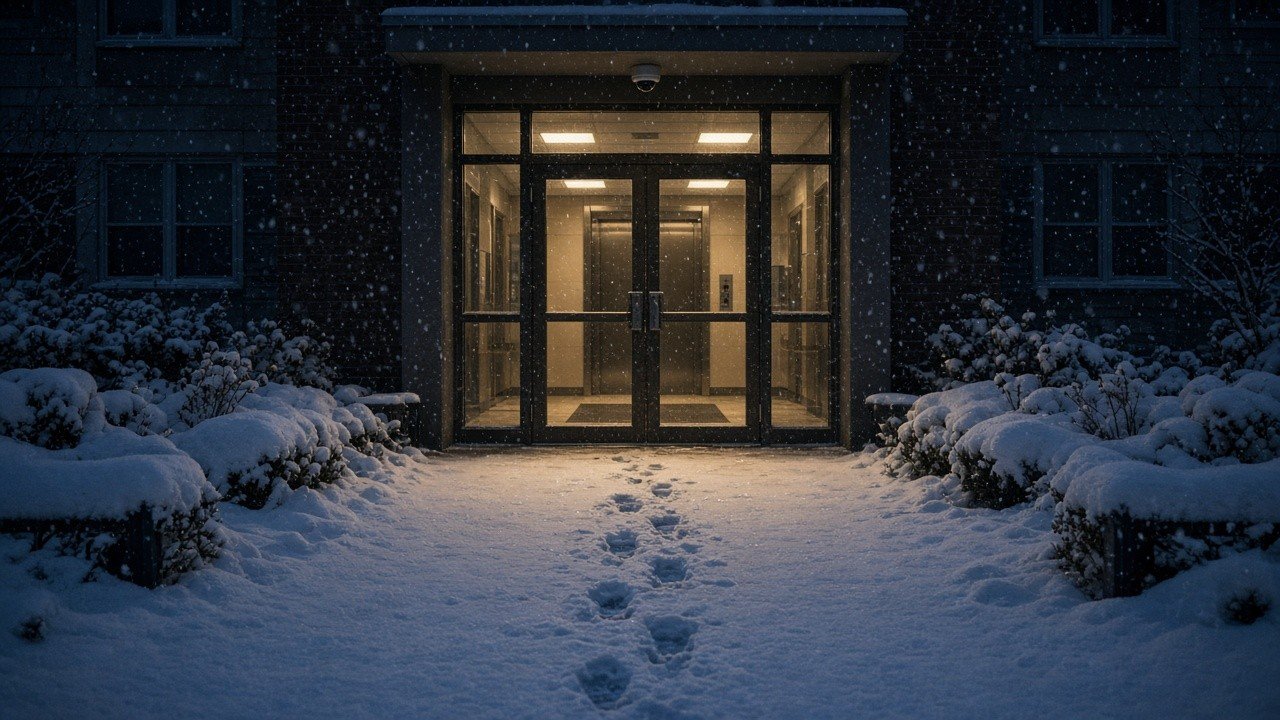
Prosecutors relied on building video and phone data from the snowy night of 1 February 2021.
Her Death Was Ruled A Suicide, Then The FBI Took A Second Look: Why A Jury Found Former Detective Matthew Farwell Guilty
For years, the official answer to how Sandra Birchmore died was that she had taken her own life. On Tuesday 10 November 2026, a federal jury in Boston rejected that answer.
After 19 days of trial and deliberations that included a reported deadlock, jurors found Matthew Farwell, a former detective with the Stoughton Police Department in Massachusetts, guilty of killing Birchmore and her unborn child in February 2021. Prosecutors had argued that he killed the 23-year-old to stop her revealing that he had sexually abused her when she was a teenager in a police youth programme. Farwell, who pleaded not guilty, faces a mandatory sentence of life in prison without parole. Sentencing is set for 3 February 2027.
This guide explains what Farwell was convicted of, the evidence the jury heard, what the defence argued, and why a case once closed as a suicide ended in one of the most closely watched trials in Massachusetts this year.
The Verdict And The Charges
Farwell was convicted on both counts he faced: killing a witness or victim, and causing the death of a child in utero under federal law.
He was not charged with murder. In the United States, murder is usually prosecuted by the state where the death happened, and Massachusetts has brought no charges. Instead, federal prosecutors built their case around a different question: whether Farwell killed Birchmore to prevent her from telling federal law enforcement about crimes he had committed against her. They pointed to alleged federal offences including deprivation of rights under colour of law, coercion and enticement, and wire fraud, linked to claims that he met her while on duty.
The jury of eight men and four women began deliberating on Friday 6 November. By Monday they had told the judge they were deadlocked. Less than 24 hours later, on the second full day of deliberations, they returned guilty verdicts on both counts.
"Today justice was served for Sandra Birchmore," said Leah Foley, the US Attorney for Massachusetts. "The evidence introduced at trial exposed the real Farwell, the former police officer who exploited and abused a teenager, Sandra, in a way that should be unimaginable."
Who Was Sandra Birchmore?
As a girl, Sandra Birchmore joined the Stoughton Police Department's Explorers programme in Stoughton, a town south of Boston, which connected young people with local officers. Farwell was an instructor there.
Her family have asked that she be remembered for more than the way she died. "Nothing that happens in the courtroom can return Sandra or her baby boy to our family but truth matters," said Ray Cosgrove, a relative, after the verdict. "Accountability matters, and the trust we place in people in positions of authority carries an enormous responsibility."
At the time of her death in February 2021, Birchmore was 23, living in an apartment in neighbouring Canton, and pregnant. A medical witness told the jury the pregnancy was viable.
What Prosecutors Said Happened
Prosecutors told the jury that the abuse began when Birchmore was 15 and Farwell was 27. Over the years that followed, as he married and had three children, they said he kept up a sexual relationship with her that lasted around seven to eight years. US Attorney Foley said he had wasted no time beginning to "groom Sandra and lure her into his depraved world".
According to the prosecution, the relationship became increasingly tense in 2020. Birchmore wanted a baby and, prosecutors said, pressed Farwell to father one and threatened to tell his wife about their history. When she became pregnant in late 2020, both she and Farwell believed he was the father. They argued over what role, if any, he would play.
Then, prosecutors said, came the moment that changed everything for him. Twelve days before Birchmore died, a friend of hers called the Stoughton Police Department to report the relationship. According to the prosecution, Farwell told a colleague he had to "put crazy back in the bag". Prosecutors told the jury that this meant he intended to silence her.
On the evening of 1 February 2021, the eve of his wife's planned caesarean section and in heavy snow, Farwell went to Birchmore's apartment. The prosecution's case was that he went there "not to end things with Sandra Birchmore, but to end her". Her body was found three days later.
The Evidence That Mattered Most
The trial turned on a small number of key strands, and the jury heard weeks of argument about each.
The building video and the phone data. Surveillance cameras in Birchmore's apartment building recorded Farwell arriving that night, wearing a hooded top and a surgical mask, and heading up in the lift. Birchmore's phone, which prosecutors said she always had with her, locked for the last time at 9.13pm, a minute before he went up. The phone registered its last steps at 9.40pm. Three minutes later, the cameras showed Farwell leaving the building. A digital forensics expert, the prosecution's 38th and final witness, walked the jury through that timeline. "After the defendant arrives, no one hears from Sandra Birchmore ever again," prosecutor Brian Fogerty told the jury.
The messages. The FBI recovered around 40,000 text messages between the two. Prosecutors said some of them referred back to the abuse when she was 15, and others showed the relationship growing more contentious as the pregnancy progressed. They also told the jury that Farwell tracked her phone and told her to delete messages that could incriminate him.
The medical evidence. The most technical part of the trial concerned a small U-shaped bone in the neck, the hyoid, which was found to be broken. Dr William Smock, a forensic medical expert called by the prosecution, testified that the injury, in a young woman whose hyoid had not yet fused, pointed to strangulation, and that the scene had been altered. He concluded that Birchmore was "the victim of a homicidal act". Prosecutors also pointed to signs they said showed a struggle, including her glasses lying away from her body and a mark on her chest that they argued matched part of the strap.
The first investigation. Prosecutors were openly critical of how the original state inquiry was handled. They told the jury that Farwell was interviewed for around 15 minutes in a car park, that investigators did not take notes, examine him for injuries or take his DNA, and that his phone was examined only after he had deleted his messages with Birchmore. They also said the medical examiner who carried out the autopsy had not been given enough information about the case.
What The Defence Argued
Farwell did not give evidence. His lawyers argued throughout that Birchmore had taken her own life, which was the original finding of the Massachusetts State Police.
They told the jury that Farwell went to the apartment that night to end the relationship, and that Birchmore died after he left. They pointed to her documented history of mental health struggles, including a previous suicide attempt.
On the medical evidence, the defence called Dr Thomas Andrew, a former chief medical examiner for New Hampshire, who said the manner of death appeared to be undetermined and that hyoid fractures can occur in hangings. The defence argued that because the autopsy did not record bleeding at the fracture site, the break could have happened after death, in the days before she was found.
The defence also asked the jury to think about the video. If Farwell had gone there to kill her, his lawyers asked, why would a serving police detective walk past a security camera in full view, rather than use a side door, and why did he leave calmly rather than in a hurry?
The jury did not accept those arguments.
The Other People In The Case
Several other people gave evidence or appeared in the case, and the court record supports only limited statements about them.
Farwell's twin brother, William Farwell, also a former Stoughton officer, testified for the prosecution under a grant of immunity. He admitted having a sexual relationship with Birchmore when she was an adult, and said it was not while she was under age.
DNA testing carried out after Birchmore's death showed that the father of her baby was not Matthew Farwell but another man, an Army recruiter, who testified at the trial. He told the jury he had encouraged Birchmore to report the alleged abuse.
In 2022, Stoughton's police chief said publicly that three former officers had had inappropriate sexual relationships with Birchmore, one of them when she was a girl, and that they had resigned during an internal investigation. Only Matthew Farwell has been charged in connection with her death.
Why The Case Was Reopened
Birchmore's death was investigated at first by the Massachusetts State Police under the Norfolk County District Attorney's Office, and was ruled a suicide.
The case began to attract fresh scrutiny in 2022, after the Stoughton police chief's disclosure. The FBI opened its own investigation in October 2023, according to US Attorney Foley, and in 2024 Farwell was arrested and indicted on the federal charges. Earlier in 2026, the state's medical examiner changed the official manner of death from suicide to undetermined.
The verdict is a significant moment for the agencies involved. "When the evidence demands a second look, we must have the courage to pursue it," said Ted Docks, who leads the FBI's Boston office. "Justice requires persistence, not deference, not convenience, and certainly not the protection of those who wear the badge and misuse their authority."
The Norfolk District Attorney's Office acknowledged the verdict and "the criticism it has received for its handling of this case". It has described the matter as "an ongoing and pending criminal matter", which limits what it can say, and has not brought state charges.
What Happens Next
Farwell will be sentenced on 3 February 2027. The federal charge of killing a witness carries a mandatory sentence of life in prison without parole, so the judge's discretion is limited. Any appeal would go to the US Court of Appeals for the First Circuit.
The case is not finished in other ways. Birchmore's estate has filed a civil lawsuit against the town of Stoughton, Farwell and others, which is due for a hearing after the criminal trial. Stoughton itself remains in turmoil: its police chief and town manager are both on leave during an outside investigation into a dispute between them that includes claims about a second internal inquiry into the case.
For Birchmore's family, the verdict closes a long chapter. "He's gonna spend every day of his life thinking about what he did," her cousin Barbara Wright told reporters.
The jury's decision rests on one central finding: that the official account of Sandra Birchmore's death was wrong, and that the man who had known her since she was a child in a police youth programme was responsible for it.
If you have been affected by any of the issues in this article, support is available in the UK from Samaritans on 116 123 and from the National Association for People Abused in Childhood (NAPAC) on 0808 801 0331.
Next Reads
How Cold Cases Are Solved: DNA, Witnesses And The Evidence That Changes Everything
Lindsay Clancy: The Mistrial That Has Reopened A National Argument
Sources
Jury finds Matthew Farwell guilty of killing Sandra Birchmore and unborn child, WBUR
Verdict in Matthew Farwell trial over Sandra Birchmore's death, NBC Boston
Matthew Farwell found guilty in the deaths of Sandra Birchmore and her unborn baby, Boston.com
Matthew Farwell trial live updates: jury announces guilty verdict on all counts, Boston 25 News
Closing arguments in the trial of Sandra Birchmore's alleged killer, Matthew Farwell, Boston.com
Matthew Farwell trial: jury begins deliberations after closing arguments, The Boston Globe
Matthew Farwell trial closing arguments live updates, CBS News Boston
Deadlocked jury continues its deliberations in Matthew Farwell trial, NBC News
