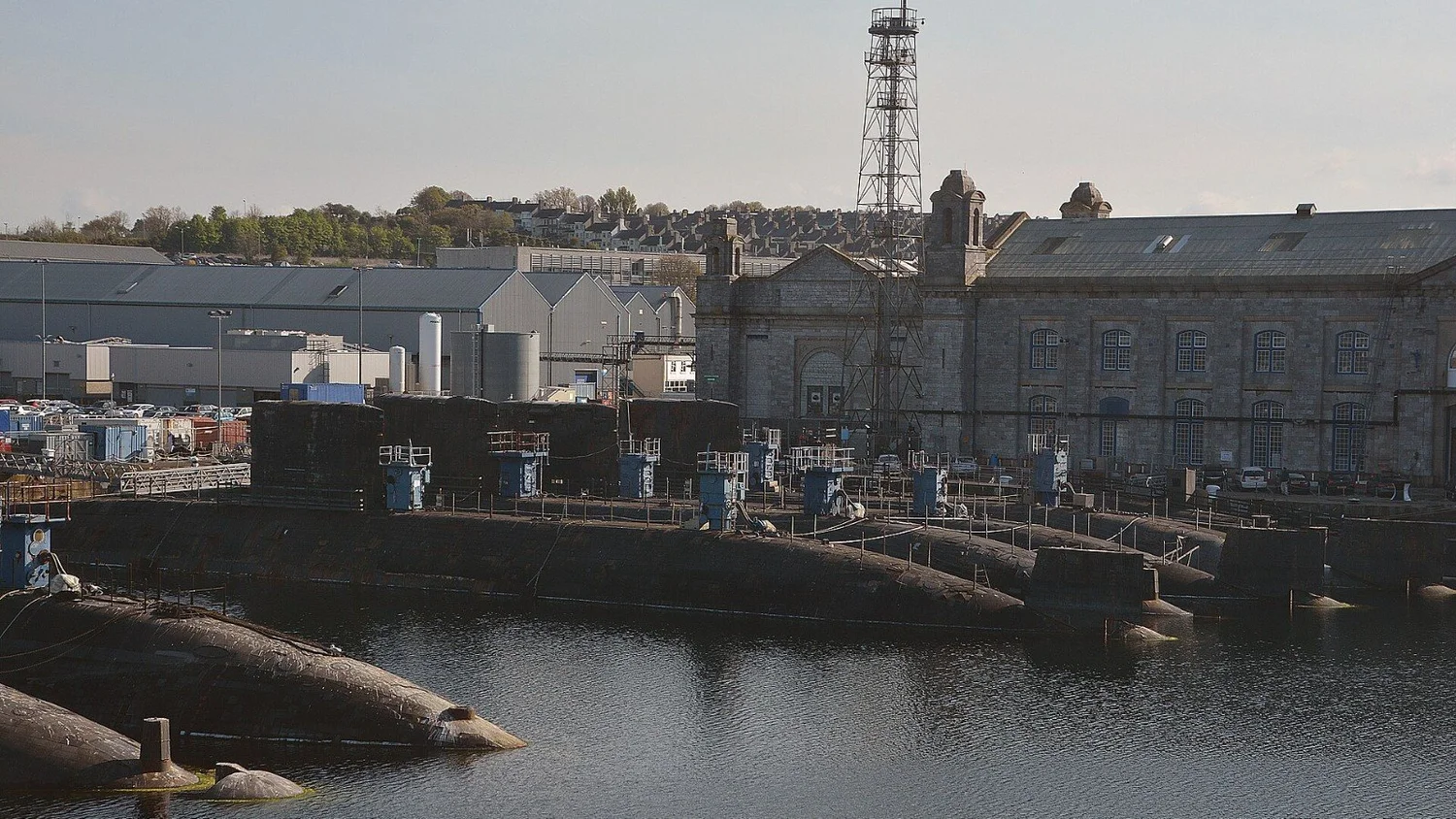
The Deterrent Is Only as Strong as the Boats That Can Leave Port
The Ministry of Defence has awarded Babcock an £8 billion contract to overhaul how Royal Navy submarines are maintained, in an effort to get boats out of dock and back to sea faster. The government announced the five-year "Gateway Agreement" on Thursday 26 November 2026, with Defence Secretary Wes Streeting due to unveil it during a visit to His Majesty's Naval Base (HMNB) Devonport in Plymouth.
The MoD says the deal will create around 3,000 new skilled jobs, mainly in Plymouth, on the Clyde and in Bristol, plus around 2,500 apprentice and graduate roles, and will support 8,500 existing jobs at the submarine maintenance sites at Devonport and Clyde. It is the second multi-billion-pound submarine deal the department has signed since the Defence Investment Plan was published.
For the government, the headline is availability. Submarines that spend months or years waiting for maintenance cannot patrol, and the Royal Navy's ability to keep a nuclear-armed boat at sea at all times depends on the rest of the fleet getting through the dockyards on time.
What the Gateway Agreement Covers
- Who: Babcock, the UK engineering and defence firm, working with the MoD's Defence Nuclear Enterprise.
- How much: around £8 billion over five years, according to the MoD.
- What it pays for: submarine maintenance and critical naval base services. The MoD says the agreement will tackle bottlenecks and modernise ways of working, and that it also enables wider Royal Navy activity including surface fleet facilities, sea training and future autonomous capabilities.
- Incentives: the contractual framework includes incentives for faster delivery, which the MoD says should mean submarines spend less time in maintenance and more time available for operations, including NATO and AUKUS commitments and nuclear deterrent patrols.
- Supply chain: around £2.4 billion of spending in the wider UK supply chain, including about £1 billion aimed at small and medium-sized businesses.
What Ministers and the Navy Said
Prime Minister Andy Burnham said the agreement was "not just investing in our national security", but also "making a huge investment in our people", with jobs for communities "in Plymouth, Clyde and beyond".
Wes Streeting, the Defence Secretary, called nuclear submarines "the cornerstone of our national security" and said: "The deterrent is only as strong as our ability to keep it at sea." He added that the government would prioritise the deterrent "even when we have to move funding from other departments".
General Sir Gwyn Jenkins, the First Sea Lord, said the agreement would tackle "the delays that hold us back" and get submarines "through maintenance quicker and back where they belong: beneath the waves".
Babcock's chief executive, Harry Holt, said the company would support the Continuous At Sea Deterrent, which he described as the UK's highest defence priority, and help increase submarine availability.
Why Submarine Availability Matters
Britain's nuclear deterrent relies on the Royal Navy keeping at least one ballistic missile submarine on patrol at all times, a posture known as Continuous At Sea Deterrence. The attack submarines that protect those boats, and that the UK commits to NATO and AUKUS operations, have to cycle through the same small number of specialist maintenance facilities. When work in those docks overruns, fewer boats are available for operations.
The government's own announcement frames the deal as a fix for that problem: incentives tied to faster delivery, more workers at the waterfront and a modernised way of running the bases. What it does not yet set out publicly is how much faster maintenance is expected to become, or how performance will be measured and reported.
The Bigger Picture: £26 Billion for the Naval Bases
The Gateway Agreement sits alongside Project Royal Oak, which the MoD describes as the largest programme of naval infrastructure investment since the end of the Cold War. Under it, HMNB Devonport, HMNB Clyde and HMNB Portsmouth are to receive £26 billion of government investment over 10 years to modernise infrastructure and accommodation.
At Clyde, home to the Royal Navy's Submarine Service, the programme includes Programme Euston, which the MoD says will deliver an out-of-water submarine engineering capability by the 2030s for the current and future fleet.
The wider Defence Nuclear Enterprise supports more than 6,000 UK companies and around 47,000 UK jobs, according to the MoD, with workforce demand forecast to rise to about 65,000 by 2030.
What We Still Do Not Know
- How the £8 billion is phased across the five years, and how much of it is new money rather than spending that would have gone to existing support arrangements.
- Which targets for submarine availability the delivery incentives are tied to.
- Where the 3,000 new jobs and 2,500 training places will be split between Plymouth, the Clyde and Bristol.
- Which budgets Mr Streeting was referring to when he spoke of moving funding from other departments.
Taylor Tailored will update this article if the MoD or Babcock publishes further contract details.
