

Britain Bans Iran-Linked March in London as Security Fears Rise
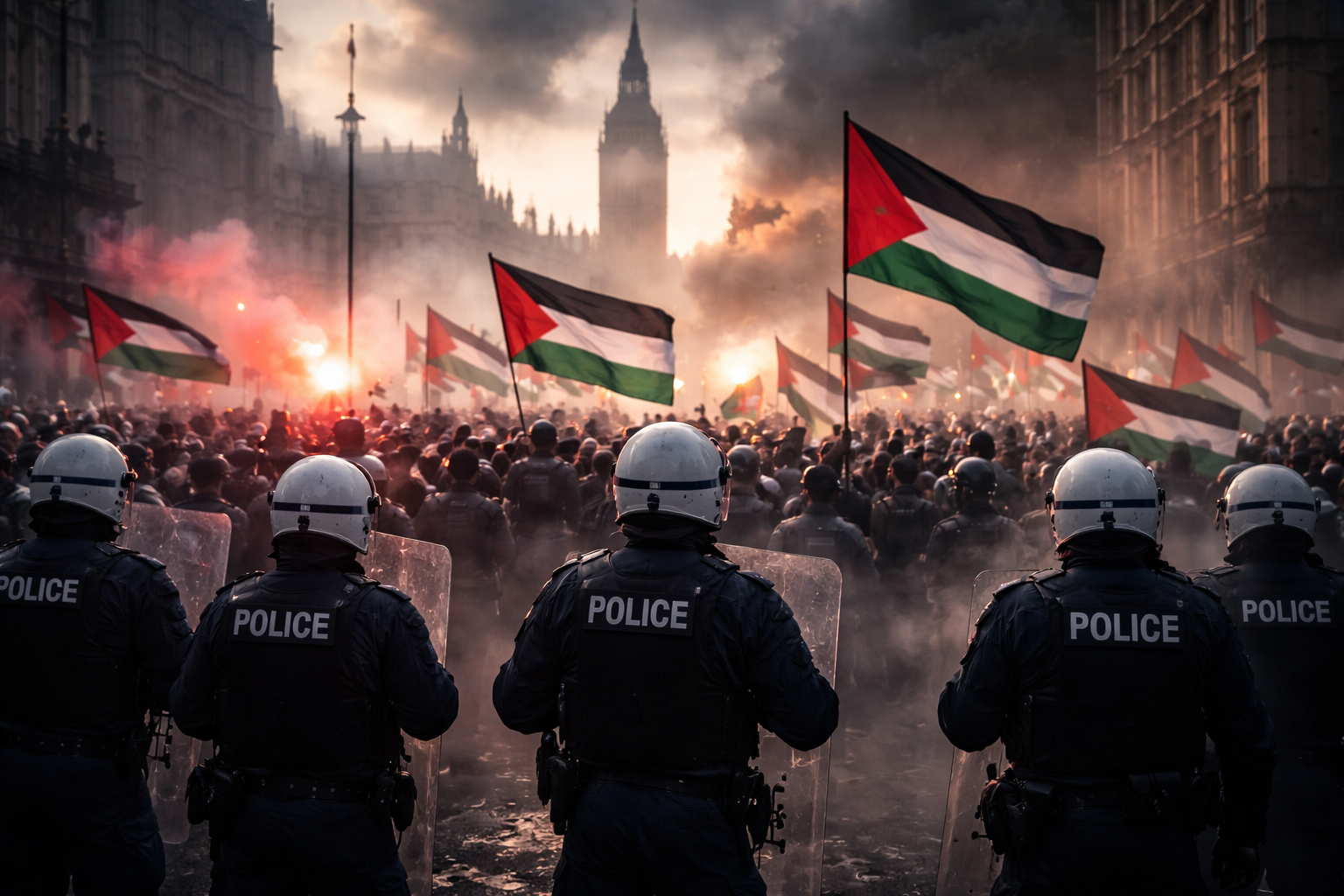
UK Halts Pro-Iran March as Middle East Conflict Reaches Europe
UK Bans Pro-Iran London March as Middle East Conflict Spills Into European Security
London’s annual pro-Iran Al-Quds Day march has been banned after British authorities warned it could trigger serious disorder amid escalating Middle East tensions.
The decision, approved by Home Secretary Shabana Mahmood on March 11, 2026, followed a request from the Metropolitan Police to prohibit the planned march through central London and any associated counter-protests. Authorities concluded that the scale of the demonstrations, combined with geopolitical tensions and competing rallies, posed a credible risk to public safety.
The move is unusual. Britain rarely prohibits protest marches outright, and this action is the first such ban in more than a decade.
But the deeper story is not simply about one controversial rally. It is about how conflicts thousands of miles away are increasingly shaping domestic security calculations inside European democracies.
The story turns on whether Western governments now see geopolitical proxy conflicts as a domestic public-order threat.
Key Points
The UK government has banned the planned Al-Quds Day march in London after police warned it could lead to serious public disorder.
The march traditionally supports Palestinian causes and has been criticized for links to Iran-aligned political messaging, which has raised concerns about the potential for escalating tensions and violence during the event.
Authorities cited rising tensions around the Middle East conflict and multiple expected counter-protests as key risks.
A stationary demonstration may still take place under strict conditions rather than a full street march.
The decision marks the first protest ban of its kind in the UK since 2012.
The move reflects growing concern that international conflicts are translating into security risks inside European cities.
The Protest That Became a Security Decision
The planned London rally was part of Al-Quds Day, an annual international demonstration established in Iran after the 1979 Islamic Revolution. It is held on the last Friday of Ramadan and calls for support for Palestinians and opposition to Israeli control of Jerusalem.
In London the event has historically been organized by groups including the Islamic Human Rights Commission and has drawn thousands of participants.
For years it has also been controversial. Critics say the protest has occasionally featured symbols linked to Hezbollah, which is banned as a terrorist organization in the United Kingdom.
Supporters, however, argue the march is a legitimate political protest focused on Palestinian rights.
In 2026, British authorities were worried about the march and its context.
Police warned that the event was likely to coincide with several counter-protests and heightened tensions linked to the wider Middle East conflict. The combination, officials said, created a credible risk of violent confrontation.
Rather than attempting to police multiple opposing marches through central London, the government chose the bluntest tool available: banning the march entirely.
Why Authorities Said the Risk Was Too High
The Metropolitan Police rarely request the power to ban protests. To do so they must argue that existing policing conditions cannot prevent serious disorder.
In this case, the police assessment rested on several factors.
First, tensions surrounding Iran and Israel have intensified globally. Protests and counter-protests linked to the conflict have occurred in cities across Europe and North America.
Second, London has already seen flashpoints tied to Iranian politics in recent months. Demonstrations around the Iranian embassy earlier in 2026 led to arrests and injuries during clashes with police.
Third, security officials were concerned that multiple groups planned to mobilize simultaneously, raising the likelihood of confrontations between rival protesters.
Faced with these risks, the Home Secretary authorized a ban on both the march and any associated counter-marches for a one-month period starting March 11.
Organizers are still allowed to hold a static protest, meaning demonstrators may gather in one location under strict police conditions rather than moving through the city.
A Free Speech Clash Is Now Inevitable
The decision immediately triggered a debate about the balance between security and protest rights.
Organizers of the march say the ban is politically motivated and argue the demonstration has taken place peacefully for decades.
Civil liberties advocates warn that banning protests sets a high-stakes precedent. In liberal democracies, restrictions on demonstrations are typically limited to narrow security threats.
Government officials insist the decision is about safety, not political content.
In practice, the controversy reflects a broader tension: as global conflicts intensify, domestic protests linked to those conflicts increasingly become security flashpoints.
What Most Coverage Misses
The key shift is not simply that a protest was banned.
It is that European security agencies are increasingly treating foreign geopolitical conflicts as domestic security problems.
For decades, demonstrations related to Middle East politics occurred regularly in Western capitals with relatively limited intervention.
What has changed is the scale of polarization and the involvement of rival diaspora groups, activist networks, and sometimes state-aligned influence campaigns.
In effect, conflicts abroad are now generating competing political mobilizations inside Western societies.
Police forces that once managed demonstrations as routine public-order events now increasingly approach them as potential geopolitical flashpoints.
The London ban is one of the clearest signals yet that governments are adapting their security posture to this new reality.
The Domestic Stakes of a Distant War
For London authorities, the immediate priority is preventing violence.
But the implications extend far beyond a single protest.
The decision highlights how global conflicts are increasingly intersecting with domestic politics and social cohesion in European cities.
Large diaspora populations, active political movements, and highly networked online communities mean that international crises can rapidly trigger protests and counter-protests thousands of miles away.
That dynamic has already been visible during protests related to Gaza, Ukraine, and Iranian domestic politics.
As a result, policing strategy is evolving.
Authorities must now plan not only for demonstrations themselves but also for the possibility that rival geopolitical narratives will collide in the same physical space.
What Happens Next
In the short term, the focus will be on the static protest expected to replace the banned march.
Police will likely impose strict conditions on where it can take place, how large it can be, and how it is monitored.
But the larger question is whether this decision marks the start of a new approach to politically sensitive demonstrations.
If similar bans appear in other European cities, it would suggest governments increasingly see geopolitical tensions as a domestic security risk.
If, instead, this remains an isolated decision tied to a particularly volatile moment, it may simply reflect the extraordinary circumstances surrounding the current Middle East crisis.
The signposts to watch are clear: future protest bans, police intelligence warnings about foreign-linked activism, and new legal powers aimed at managing politically charged demonstrations.
How governments navigate that line will shape the next phase of the struggle between civil liberties and security in Europe.
