

UK Court Throws Out Kneecap Terrorism Case, Free Speech Debate
Kneecap Terror Charge Collapse Triggers Free Speech Row
UK Court Throws Out Terrorism Case Against Kneecap Rapper—A Technical Ruling Ignites Britain’s Free Speech Debate
A UK High Court decision has shut down the government’s attempt to revive a terrorism case against a member of the Irish rap group Kneecap—a ruling that immediately reignited debate over the boundary between national security law and political expression.
Judges rejected a Crown Prosecution Service (CPS) appeal seeking to reinstate the charge against rapper Liam Óg Ó hAnnaidh, known on stage as Mo Chara.
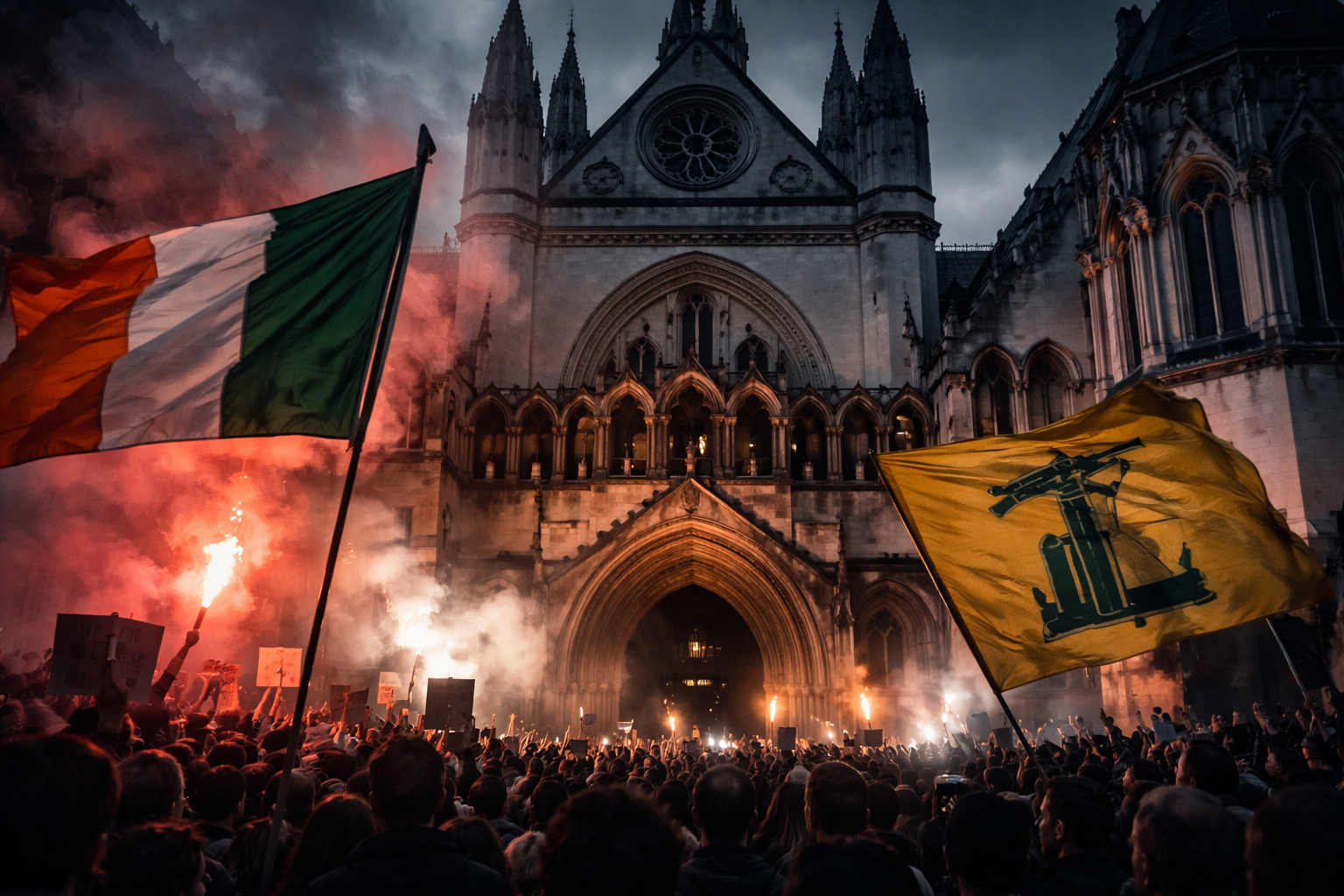
The case centered on an incident during a November 2024 concert in London where prosecutors alleged the rapper displayed a flag linked to Hezbollah, a proscribed militant organization under UK law.
But the prosecution collapsed not over the facts of the allegation—instead, it failed on procedure.
The story turns on whether a procedural technicality can determine the limits of terrorism law in a democratic society.
Key Points
A UK High Court has rejected prosecutors’ appeal to revive a terrorism charge against Kneecap rapper Mo Chara.
The charge related to an alleged display of a Hezbollah flag at a London concert in November 2024.
The original case collapsed because prosecutors filed the charge after the six-month legal deadline and without proper approvals.
The CPS contended that the dismissal warranted an overturn, yet the judges maintained the previous ruling.
The decision ends the criminal case and leaves unresolved tensions between counter-terror law and political speech.
Where the Case Began: A Concert, a Flag, and Terrorism Law
The dispute traces back to a performance at the O2 Forum in Kentish Town, north London, on November 21, 2024. Prosecutors alleged that Mo Chara displayed a flag associated with Hezbollah during the concert.
Under the UK Terrorism Act, it is a criminal offense to display an article in a way that suggests support for a banned organization.
Hezbollah is designated as a terrorist group in the UK, meaning even symbolic gestures interpreted as endorsement can trigger prosecution.
In May 2025, prosecutors charged the Belfast-born rapper with a terrorism offense. But the case quickly ran into a legal problem unrelated to the alleged conduct itself.
The charge had been filed one day after the six-month statutory deadline required for such offenses.
In September 2025, a London magistrate dismissed the case entirely because of that procedural error.
The Government’s Attempt to Revive the Case
The Crown Prosecution Service did not accept the defeat.
Arguing that the ruling created a troubling precedent, prosecutors appealed to the High Court, seeking to overturn the dismissal and restart the case.
Their argument focused on whether the magistrate had interpreted the procedural rules too rigidly—especially given that terrorism-related allegations were involved.
Supporters of the prosecution framed the appeal as necessary to preserve the credibility of counter-terror enforcement.
Critics, including supporters of the band, saw the case very differently.
Kneecap—known for politically charged lyrics and outspoken commentary on global conflicts—described the prosecution as an attempt to silence political speech.
The High Court decision now closes that chapter.
Judges upheld the original dismissal, meaning Mo Chara will not face a new trial on the terrorism charge.
Why the Case Matters Beyond One Rapper
At first glance, the ruling looks like a routine procedural outcome.
But it touches on a deeper tension that has become increasingly visible across Western democracies: how far counter-terror laws should extend into political expression.
The UK’s terrorism legislation is intentionally broad. Displaying symbols linked to banned groups can trigger criminal charges even without proof of direct operational involvement.
Authorities argue that such rules prevent propaganda and recruitment.
Civil liberties advocates counter that broad definitions risk sweeping up speech, satire, protest, or cultural expression.
The Kneecap case directly addresses this issue.
What Most Coverage Misses
The central hinge in this story is not the rapper’s conduct but the structure of UK criminal procedure.
Many terrorism offenses in the UK are classified as “summary offenses,” meaning prosecutors must bring charges within six months of the alleged act.
In this case, prosecutors filed the charge just one day too late.
Once that deadline passed, the court had limited options. The charge was effectively void.
The government’s appeal was an attempt to reopen that procedural door—not necessarily to prove the underlying allegation.
By rejecting the appeal, the High Court reinforced a principle often overlooked in security debates: procedural safeguards apply even in terrorism cases.
In other words, counter-terror law does not bypass ordinary criminal procedure.
That legal reality may shape future prosecutions more than the cultural controversy surrounding the band, as it emphasizes the necessity of adhering to established legal standards in all cases, including those involving terrorism.
Who Gains and Who Loses
For Kneecap, the outcome is a clear legal victory.
The band has long cultivated a confrontational political identity, blending Irish republican themes with modern protest culture.
The case also amplified their visibility, drawing supporters and critics into a global debate over free speech.
For prosecutors, the ruling is more complicated.
The CPS argued that the technical dismissal created an undesirable precedent—one where serious allegations could collapse over minor administrative errors.
The High Court’s refusal to revive the case effectively confirms that procedural compliance is non-negotiable.
For lawmakers, the episode raises a policy question.
Should terrorism-related offenses remain subject to the same six-month charging window as many lesser summary offenses?
Some officials have previously suggested reviewing the rule, but there is currently no confirmed legislative change underway.
The Bigger Question Britain Now Faces
The broader debate continues, despite the conclusion of the legal case.
The Kneecap controversy sits at the intersection of several volatile issues: counter-terrorism enforcement, Middle East politics, and the boundaries of artistic expression.
Future clashes are likely.
As political conflicts increasingly play out through cultural platforms—concerts, social media, public demonstrations—prosecutors may face more cases where symbolism and criminal law collide.
Three signposts will determine where this debate goes next:
whether lawmakers reconsider procedural rules for terrorism prosecutions
whether prosecutors pursue similar symbolic-speech cases in the future
and whether courts continue to prioritize procedural safeguards over political pressure
The High Court ruling did more than end one prosecution.
It quietly reaffirmed a foundational principle: even in the age of counter-terror laws, the machinery of justice still runs on procedure.
