The Witch Explained: Freida McFadden’s Pemberton Mystery, Family Secrets and Ending
The Portrait, the Letters and the Family Mystery
What Happens at Pemberton?
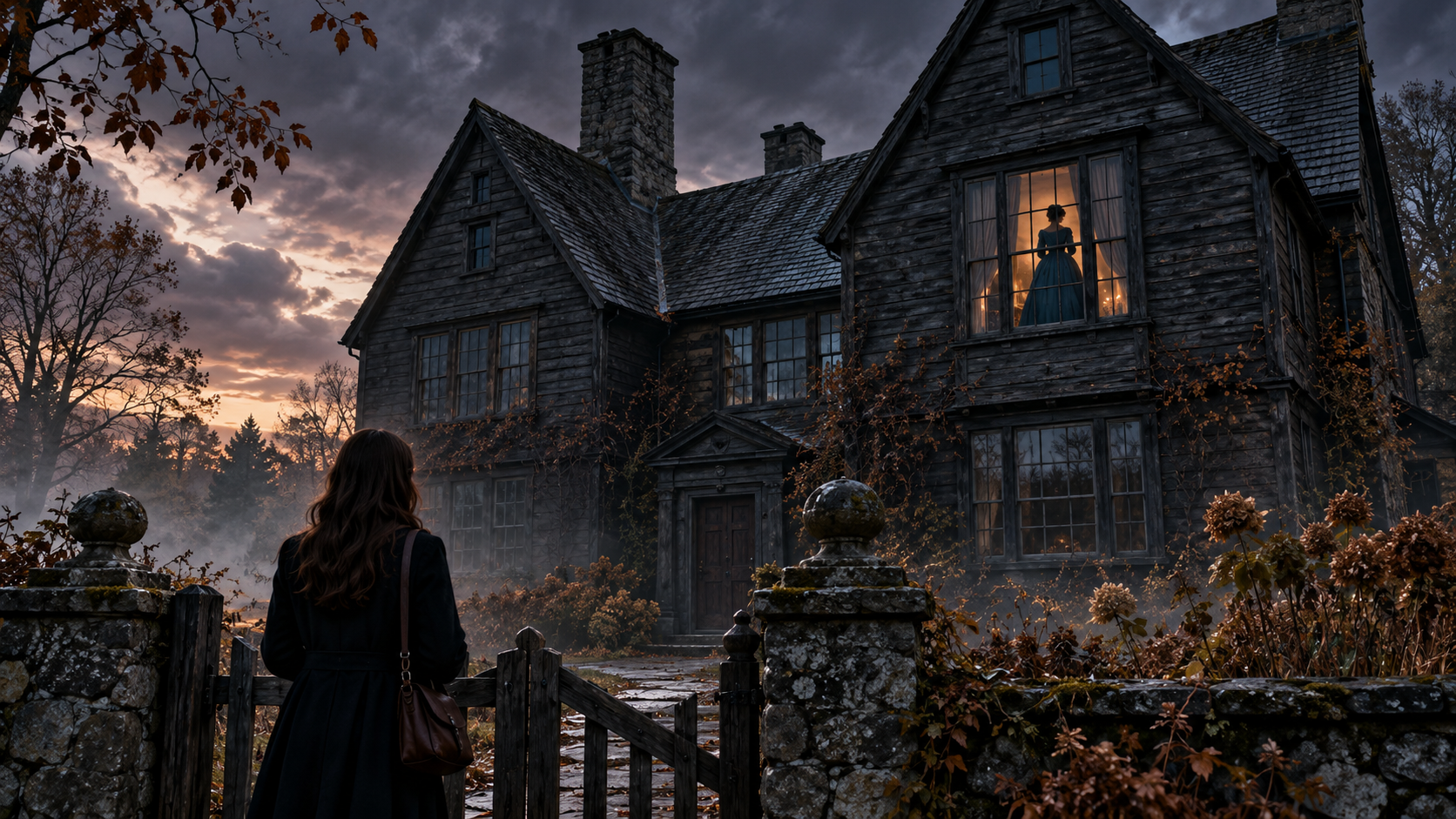
Julia Barlow needs somewhere to live. After losing her job and apartment, she returns to Pemberton, the old Massachusetts estate belonging to her family. Her grandmother needs help, and Julia needs a chance to recover. Yet the house offers little reassurance: a clock repeatedly stops at the same time, unexplained sounds disturb the night, and the family’s history includes a woman accused of witchcraft.
Freida McFadden’s The Witch follows Julia’s investigation alongside Caroline Eldridge’s life in 1692. The two women occupy the same house in different centuries, each trying to understand whom she can trust. This summary follows those discoveries towards the ending, then explains the family connections, the apparent haunting and the final historical revelation.
Julia Returns to Pemberton
Pemberton should offer Julia something her recent life cannot: stability. It has survived for centuries, belongs to her family and provides a roof when she has run out of alternatives. But returning also means entering a household whose habits and loyalties were established long before she arrived.
Her grandmother, whom she calls Gram, has problems with her memory. Gram’s sister Ethel and the longstanding employee Mick Wheeler remain part of daily life at the estate. Julia must work out whether this arrangement still provides the care her grandmother needs.
There is a practical decision behind the visit. The Woodhaven Museum wants to buy Pemberton and preserve it. Julia’s father supports the possibility, while Ethel resists. A sale would change who controls the house, who lives there and who can examine its contents.
That gives the opening an ordinary family tension beneath its gothic atmosphere. An elderly relative’s home can represent independence to one person and a growing responsibility to another. Julia cannot assess the property simply as an attractive historical building. It is also someone’s home, with emotional obligations attached.
She already has frightening associations with Pemberton. An unsettling childhood experience left her afraid of returning, and the household now gives her further reasons to feel uneasy. The room she occupies is connected to Caroline Eldridge, a woman remembered through the story of her alleged witchcraft.
According to the family account, Caroline was executed, and her husband Archibald subsequently married their servant Molly Howe. Julia understands Archibald and Molly to be her ancestors. Their portrait gives that story a visible place inside the house.
At this stage, Julia has inherited an explanation rather than established one. Family relationships, a painting and a repeated account appear to fit together. Her immediate concern is how to live among them while deciding what should happen to Gram and Pemberton.
Caroline’s Marriage and Woodhaven’s Growing Fear
The historical chapters bring Caroline out of the family legend and into an anxious marriage. In 1692, she lives at Pemberton with Archibald Eldridge, usually called Archie. He is older and wealthy, while Caroline feels pressure over their failure to have a child.
She tells him she is pregnant when she is not. The lie gives him the news he wants, but leaves her with a problem that cannot remain hidden indefinitely. Molly, their servant, recognises the deception and makes clear that she knows.
This is the first important difference between Caroline as a person and Caroline as a story told by descendants. Her immediate troubles are intimate and recognisable: fear of disappointing her husband, uncertainty about her position and the knowledge that someone else can expose her.
Her behaviour is imperfect without making the accusations that follow reasonable. A lie about pregnancy does not establish supernatural wrongdoing. The distinction matters because the community around her is becoming willing to treat personal suspicion as evidence of something much larger.
Woodhaven also faces a concrete danger. Women have been strangled by a killer known as the Night Reaper. The murders create fear alongside the growing readiness to identify witches.
Caroline finds support in Hitty Atkins, an older woman who sells herbs. Their friendship provides a source of advice beyond the household, but Hitty herself attracts hostile suspicion. To people already looking for witchcraft, her difference from others becomes incriminating.
The two forms of fear begin to crowd Caroline’s world. There is the threat of an unknown killer, and there is the threat that neighbours will decide someone familiar has supernatural powers.
Those dangers require different kinds of judgement. Finding a murderer should depend on establishing what someone has done. The witchcraft accusations instead encourage people to reinterpret ordinary conduct until it resembles the crime they expect to find. Caroline is living where that distinction is becoming harder to defend.
The House Gives Julia Reasons to Stay Afraid
Back in the present, Julia struggles to separate the household’s explanations from what she experiences. The grandfather clock stops at 3:41 a.m. Lights flicker, and a woman’s voice seems to call from outside her bedroom. The disturbances make the family’s account of Caroline feel immediate.
Ethel’s warnings strengthen the connection. Julia is encouraged to lock her door and treat parts of the house and grounds cautiously. The atmosphere discourages ordinary exploration: opening a door or moving an object can seem like provoking something dangerous.
The fear works because an explanation is already available. Julia does not hear an unexplained sound in an unfamiliar building. She hears it in a house where she has been told that a wronged woman remains present.
This changes what investigation means to her. If Caroline is responsible, understanding Caroline’s suffering might offer a way to restore peace. Julia begins to approach the past as something demanding a response from the living.
Henry Ziegler, the museum curator, provides another route into Pemberton’s history. His professional interest gives Julia access to someone who wants to understand the estate, although his wish to acquire it also means he has a stake in its future.
Their developing connection introduces the possibility of a life outside the household’s closed routines. Henry can discuss the building as a historical object, rather than accepting every family claim as an instruction.
Still, neither attraction nor professional enthusiasm automatically settles whether someone is trustworthy. Julia must judge the information she receives as well as the person offering it.
The house now presents her with competing duties. She wants to protect Gram, understand the disturbances and assess a possible sale. Pursuing any one of those tasks takes her further into the others. Leaving would bring relief from the immediate fear, but it would also leave the family’s practical problems unanswered.
Caroline Discovers the Cost of Defending Someone
In 1692, Caroline’s attempt to help a sick neighbour becomes dangerous. Judith is ill, and Caroline distrusts the treatment offered by Dr Shaylor. She provides care, yet her intervention can be recast as evidence that she caused the suffering.
The important movement is from action to interpretation. What Caroline intends as help becomes material for an accusation. Once others accept the possibility of witchcraft, even an improvement in someone’s condition need not clear her.
Hitty is arrested and condemned. Caroline tries to defend her, but cannot prevent her hanging. Speaking for her friend draws attention to Caroline at precisely the moment when association with an accused woman carries danger.
Her refusal to abandon Hitty gives the historical storyline its moral pressure. Remaining silent might offer some protection, but would mean allowing a person she believes innocent to face death without her support. Speaking carries consequences that she cannot control.
Caroline is then arrested herself. Imprisonment places her close to Jonas Reeve, the man accused of being the Night Reaper. That allegation initially makes him another source of fear.
The reader must now keep two uncertainties separate. Caroline knows that the charge against her is false. That does not automatically tell her whether Jonas is innocent, even though both have been imprisoned by the same authorities.
Her situation demonstrates why accusation is such an effective means of isolation. Once the community accepts the label, other people can distance themselves while describing their withdrawal as caution. The accused loses supporters before any fair examination of the facts occurs.
Caroline’s marriage and social position have not prevented this. The house that seemed to give her security cannot protect her from a public story that places her outside acceptable society.
Julia’s investigation, meanwhile, proceeds from the opposite direction. She has begun with that public story and is trying to recover the woman inside it. Caroline experiences the process by which a person’s life can be reduced to an accusation.
The Letters Change Julia’s Investigation
Julia’s exploration of the attic introduces evidence that belongs to a much more recent past. She discovers letters written by Ethel to her mother, including information about a pregnancy and the death of the baby’s father during the Vietnam War.
The letters give her something different from an atmosphere or a family anecdote. They have a particular writer, a personal purpose and dates that can be compared with known events. Their importance comes from what those details imply together.
Julia begins to suspect that Ethel gave birth to her father and that Gram raised him. If so, the relationships she has accepted throughout her life need to be reconsidered.
This possibility does not cancel the love within the family. It changes the biological account, while leaving the history of care as a separate question. Gram’s role in raising a child would remain real even if the explanation of that role had been concealed.
The letters also introduce Celia, a woman associated with the household and with Mick. Julia’s questions about her meet resistance rather than a straightforward explanation.
Meanwhile, a human bone is uncovered in the grounds. The discovery creates an urgent need to determine what is physically buried there. A suggestion about a restless spirit has become a question about human remains.
Julia also turns to ghost investigator Alastair Dixon. His recording later brings the name Celia into the investigation again. That repetition connects the apparently supernatural disturbances with a person mentioned in documentary evidence.
It is tempting to make all these findings fit one account immediately. The more careful approach is to keep their roles distinct. A letter can establish what its writer believed or intended to disclose. A bone can be examined. A recording can be interpreted, but still needs an explanation of how it was produced.
Julia’s danger grows as those different routes begin to converge. The house’s past is becoming specific enough to threaten someone’s version of events.
The Trial and the Search for a Way Out
Caroline’s trial brings the hostility around her into an official setting. Molly testifies against her, and ordinary behaviour is transformed into supposed evidence of dealings with the Devil.
The hearing also exposes the collapse of Caroline’s marriage. Molly is pregnant by Archie. Caroline sees the woman helping to condemn her occupying an increasingly intimate position beside her husband.
Archie declines to speak in Caroline’s defence. His silence matters because she has reason to expect his support. The person with whom she shares a home allows the court’s account of her to stand.
This betrayal gives Molly’s testimony a personal context without making every accusation merely a private quarrel. Other figures contribute, and the proceedings give their claims authority. Individual hostility becomes more destructive when an institution accepts and enforces it.
Caroline is examined and subjected to supposed tests for witchcraft. The process treats her body as something others can interpret against her. She cannot obtain safety simply by insisting on an ordinary explanation.
The court condemns her to hang. The possibility of persuading her accusers has narrowed until she faces the consequences of a judgement already made.
Jonas becomes important through what he does in prison. He intervenes against the deputy’s mistreatment of Caroline, exposing himself to violence. That conduct gives her a reason to reconsider the frightening identity assigned to him.
Trust here develops under pressure, through observable action. It cannot rest on the reassuring appearance of authority, because the people exercising authority are participating in her persecution.
As execution approaches, Jonas creates an opportunity to escape. The jail is set on fire, and they flee. Their survival does not restore their legal standing: Caroline remains a condemned woman, and Jonas remains a wanted man.
They need money and a way out. Returning to Pemberton offers access to resources, but takes Caroline back into the household where her protection has already failed.
Julia’s Family History Begins to Unravel
In the present, the investigation begins to break the connection between a familiar name and the person using it. DNA testing does not support the relationship Julia expects with the woman she knows as Ethel.
The discovery matters beyond Julia’s earlier suspicion about who gave birth to her father. That suspicion still assumed that Ethel was Ethel. The test challenges the identity on which the entire question depends.
The woman living under that name is Celia Caine. Years earlier, she worked at Pemberton and killed the real Ethel after Ethel gave birth. She told Gram that her sister had died in childbirth, and Gram raised the baby who became Julia’s father.
Celia has occupied the dead woman’s place for decades. The estate therefore contains a recent concealed crime alongside its older history.
The haunting also acquires a human explanation. Celia and Mick have manufactured disturbances to frighten Julia and protect their secrets. Julia’s existing fear of the house gives their deception a ready audience.
Seen in that light, the warnings serve a practical purpose. Fear can keep someone away from a room, a patch of ground or a question without requiring a convincing everyday reason.
The revelation also changes the meaning of familiarity. Julia has known a family role for years, but recognition of that role did not authenticate the person performing it. Repetition made the arrangement feel normal.
This is a disturbing idea because domestic trust usually depends on continuity. People cannot constantly investigate the identity of everyone around them. Celia has exploited that reasonable dependence on an established account.
The discovery puts Julia in immediate danger. Exposing the deception threatens Celia’s freedom and the life she has maintained. The question has moved from whether Julia can explain the house to whether she can survive what she has learned.
The Confrontations at Pemberton
Caroline’s return to Pemberton reveals the answer to the Night Reaper mystery. She finds Archie strangling Molly. The husband whose household once seemed to promise security is the killer terrorising Woodhaven.
Molly dies, and Archie attacks Caroline. Jonas intervenes and shoots him, saving her. The man publicly accused of murder rescues Caroline from the man whose respectable position concealed it.
This reversal completes the historical plot’s failure of judgement. The community has directed its certainty towards people it could condemn, while leaving the actual killer in a position of safety.
Molly’s fate also prevents her betrayal from becoming a simple story of successful ambition. Her relationship with Archie does not protect her from his violence. Helping remove Caroline has placed no dependable limit on what he can do.
Caroline and Jonas must now decide how to survive beyond the immediate confrontation. Reporting the truth would mean asking the authorities to believe two fugitives already marked as criminals.
They bury Archie and Molly and take their identities. Caroline becomes Molly; Jonas becomes Archibald. They leave under names that allow them to build a life beyond the accusations attached to their own.
In Julia’s timeline, exposure also leads to violence. Celia shoots Mick and forces Julia to dig at gunpoint. Julia tries to escape, but Celia remains a direct threat.
Gram intervenes with a shovel and knocks Celia unconscious. Henry has alerted the police, who arrive and arrest her. Mick is dead; Julia survives.
The two rescues have different emotional meanings. Jonas acts after earning Caroline’s trust through his conduct. Gram acts despite the vulnerability that has shaped Julia’s concern for her throughout the novel. She remains capable of protecting someone she loves.
Neither woman escapes through a supernatural confrontation. Both face human violence, and both survive because another person acts when the danger becomes immediate.
The Final Historical Chapter Changes the Family Story
The aftermath brings consequences in the present. Celia is convicted of murder. The real Ethel’s remains are recovered, and the estate is sold to the museum. Julia and Henry build a life together, while Pemberton moves towards a public role.
Yet recovering remains does not guarantee that every historical conclusion is correct. Julia’s understanding of Caroline still depends partly on the inherited account. A name placed on a grave can repeat a mistake as easily as correct one.
The final historical chapter supplies information Julia does not possess. In 1717, Caroline and Jonas return to Pemberton after twenty-five years away. They have built a family while living as Molly and Archibald.
The portrait associated with those names depicts Caroline and Jonas. What appeared to preserve the identities of the household’s original couple instead records the lives of the people who replaced them.
This resolves the oldest family connection. Julia’s ancestry runs through Caroline and Jonas, although the names handed down through the family conceal that relationship. Caroline was never simply an unfortunate outsider to the lineage.
It also explains the buried seventeenth-century bodies. The real Archie and Molly were left in the grounds after their deaths. Caroline’s supposed execution cannot be used as a reliable guide to identifying the remains.
The reader therefore finishes with a fuller account than Julia. That gap is essential: her survival and the exposure of Celia do not mean she has reconstructed every event across three centuries.
The identity changes also invite a moral comparison. Celia kills a woman and takes her place for her own advantage. Caroline and Jonas adopt new names after escaping unjust condemnation and surviving Archie’s violence.
The mechanism resembles itself across the timelines, but the circumstances differ. Reading both substitutions as equivalent would erase the distinction between predation and escape.
Caroline gains a future without receiving public vindication under her own name. That makes the ending hopeful and uneasy at once. The woman survives, while the false story about her continues to circulate.
What the Ending Leaves Open
The principal deception at Pemberton has a human explanation, but the book leaves room for a narrower supernatural possibility. Gram says the real Ethel prompted her to intervene. Julia is left considering whether something beyond the staged disturbances helped bring the truth into view.
That suggestion should not be expanded into certainty that Caroline haunted the house. Nor does exposing Celia and Mick automatically prove that every unexplained experience has been accounted for. The novel separates the demonstrable plot from a residual question about a presence.
This distinction makes the ending more interesting than a simple choice between an entirely haunted house and a completely rational solution. A crime can be solved while a character retains a belief that the solution does not fully explain.
The stronger connection between the timelines concerns how people are remembered. Caroline’s community assigns her a false identity through accusation. Celia takes another woman’s identity through murder. Later generations inherit names without the events necessary to understand them.
Pemberton preserves objects exceptionally well, but objects still require interpretation. A portrait survives while its subjects are misidentified. A burial preserves remains while the story attached to them changes.
Turning the house into a museum therefore offers an opportunity rather than a guarantee. Public attention can expose secrets, but preservation alone cannot make an inaccurate account true. Julia’s incomplete knowledge remains part of the ending’s tension.
Gram’s intervention adds another distinction: a person’s ability to recount events and their capacity to act with love are different things. Her difficulties with memory do not erase her relationship with Julia or the significance of saving her.
The Witch ultimately gives Caroline something more substantial than a corrected reputation. It gives her years, children and a return to a place that once nearly destroyed her.
The final revelation asks the reader to recognise the life that the family legend obscures. Caroline’s name carries a story of defeat. Behind another name, she has already lived beyond it.
Sources
The Witch — Freida McFadden’s official book page — book identity and advertised premise.
The Witch — Kirkus Reviews — publication details, opening situation and dual narrative.
The Witch — Bookreporter — household relationships and historical conflict.
The Witch by Freida McFadden: Plot Summary and Spoilers — Jen Ryland Reviews — investigation, letters and plot sequence.
The Witch: Full Spoiler Review — Plot Twisted — independent corroboration of the confrontations and final historical chapter.
The Witch: A Dual-Timeline Thriller That Burns Brighter in 1692 — Sopranu — Caroline’s persecution and the investigation.
The Witch: A Chilling Family Saga About the Lies We Inherit — Probinism — supporting plot account, checked against other sources.
The Witch Ending Explained — Wrote a Book — supporting explanation of identities and chronology.
The Witch Ending Explained — Insta.Page — present-day confrontation and aftermath.
The Witch Book Review, Synopsis and Ending Explained — Bookaxis — final portrait revelation and the distinction between Julia’s conclusions and the reader’s knowledge.
The Witch: Spoilers, Summary and Ending Explained — SpoilThePlot — corroboration of principal outcomes.
Review: The Witch by Freida McFadden — Mr Book Review — supporting account of the staged haunting.
