A Christmas Present, Three Rules and the Darkest Speech in Any Festive Film
Every December the same argument comes back. Is Gremlins a Christmas film, or a horror comedy that just happens to have snow in it? The question matters more than usual this year, because Joe Dante's 1984 film is back on big screens across the country. Newcastle's Tyneside Cinema bills it as a "cult Christmas-set favourite" and is screening it on 7, 11, 20 and 24 December, and The Light in Addlestone is showing it on Saturday 5 December.
This guide sets out the case for and against, explains the three rules and why they matter, looks at the speech that the studio wanted cut, and walks through the ending, the rating row it caused and where the sequels fit. Spoiler warning: this article discusses the whole plot of Gremlins, including its ending, and touches on Gremlins 2: The New Batch.
What Is Gremlins About?
The struggling inventor Randall Peltzer visits an antique shop in Chinatown looking for a Christmas present for his son, Billy. He finds a small, furry creature called a mogwai. The owner, Mr Wing, refuses to sell it, but his grandson sells it anyway and warns Randall to remember three rules. Randall takes it home to the small town of Kingston Falls, where Billy works at the local bank and names the creature Gizmo.
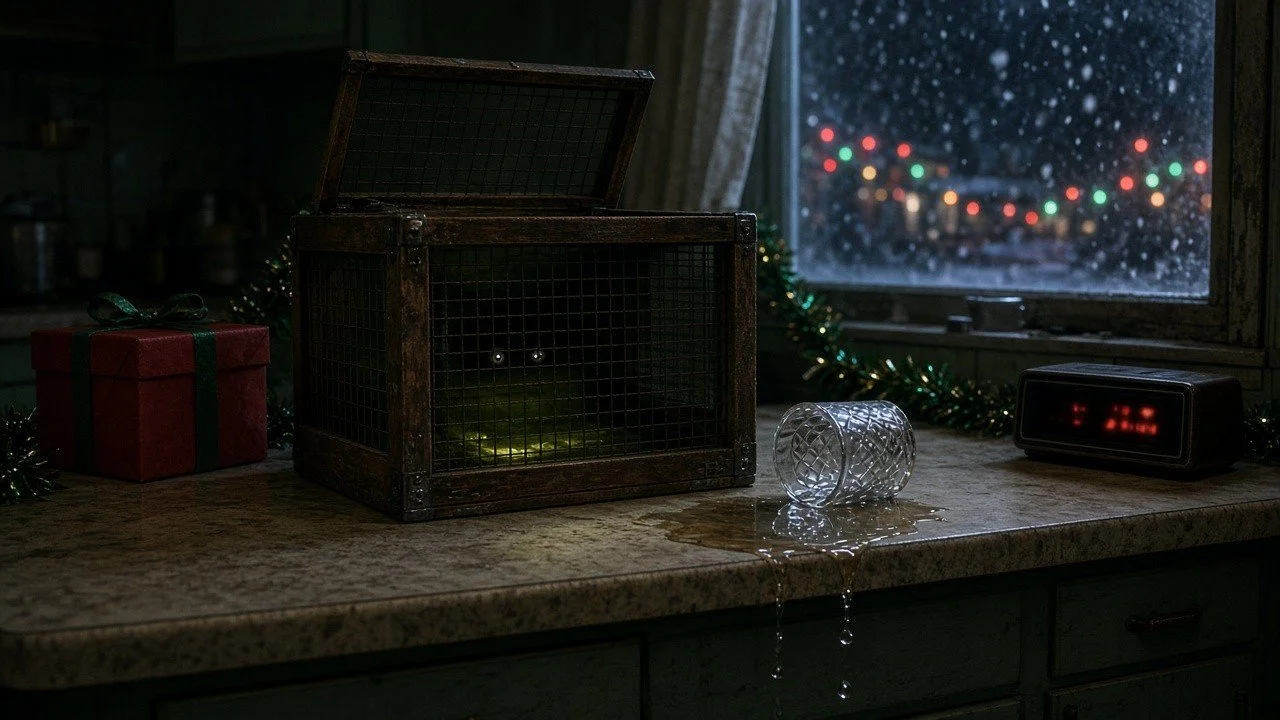
Gizmo is gentle and sweet. The trouble starts when Billy's friend Pete spills water on him and five more mogwai spawn from him. These are a nastier breed, led by Stripe, named after the white tuft of fur on his head. They trick Billy into feeding them after midnight by sabotaging his bedside clock, they form cocoons, and they hatch as reptilian monsters that the film calls gremlins. By Christmas Eve, an army of them is tearing Kingston Falls apart.
The film was directed by Joe Dante, written by Chris Columbus and executive produced by Steven Spielberg, who took the project to Warner Bros. Zach Galligan plays Billy, Phoebe Cates plays his girlfriend and colleague Kate, Hoyt Axton plays Randall, and Howie Mandel provides the voice of Gizmo, with Frank Welker as Stripe.
The Three Rules of Gremlins
The rules are the most quoted thing about the film, and they are simple enough to fit in a trailer, which is exactly how Warner Bros. sold it.
- Keep the mogwai away from light, especially sunlight, which will kill it.
- Never let it come into contact with water.
- Above all, never feed it after midnight.
Each rule is a ticking clock. Water makes more mogwai, food after midnight turns them into gremlins, and sunlight is the only reliable way to destroy them. Everything that goes wrong in Kingston Falls happens because the Peltzers treat a living creature as a novelty gift and ignore the instructions that came with it.
The midnight rule is also the one people still argue about. Viewers have asked for decades when it stops being "after midnight" and whether a mogwai can ever safely eat again. The film never answers that, and it does not need to. The rule works as a fairy-tale prohibition, like the warning not to open a door or look back, rather than a timetable.
Is Gremlins a Christmas Film? The Case For
The story is built around Christmas from its first scene. The whole plot begins with a father shopping for a Christmas present, and the gremlins' rampage takes place on Christmas Eve in a town decorated with lights and covered in snow. The trailer itself explained that Billy receives the strange creature as a Christmas gift.
The film is also full of nods to the festive films that came before it. Leonard Maltin, one of its harshest early critics, noted that it blends the feel of It's a Wonderful Life with that of The Blob, and a clip of It's a Wonderful Life appears in the film. Kingston Falls is a picture-postcard small town of the kind Frank Capra filmed, before Dante sets about wrecking it.
Most importantly, the film has something to say about Christmas, not just a Christmas backdrop. It is about what happens when a gift is treated carelessly, and the closing scene makes that point directly. And then there is Kate's speech, which only works because it is Christmas.
The Case Against
The strongest argument against is the release date. Gremlins opened in North American cinemas on 8 June 1984, the same day as Ghostbusters, as a summer blockbuster. It did not reach British cinemas until 7 December 1984, which is one reason many UK viewers have always associated it with the festive season.
The second argument is tone. Gremlins is a horror comedy in which a science teacher is killed by his gremlin, a woman is thrown from her house by a sabotaged stairlift, and Billy's mother, Lynn, has to fight off the creatures in her own home. Its humour is closer to a Looney Tunes cartoon than a Christmas card. Many of the people who say it is not a Christmas film are really saying it is not a family film.
The third argument is that the sequel has nothing to do with Christmas. Gremlins 2 moves the action to a New York skyscraper and drops the festive setting completely, which suggests that Christmas was the backdrop for the first film rather than the point of the franchise.
Our Verdict: Yes, Gremlins Is a Christmas Film
By the same test we apply to whether Die Hard is a Christmas film, Gremlins passes comfortably. Its plot cannot exist without Christmas. Take away Die Hard's office party and you still have a hostage thriller. Take away Gremlins' Christmas present and there is no story at all.
It is also a film about what Christmas does to people. The town's miser, Mrs Deagle, is a Scrooge figure who threatens to have Billy's dog put down, and the closing scene delivers the kind of moral that festive films have always ended on. It simply tells its Christmas story with monsters. Cinemas agree: it now returns every December, and our ranking of the best Christmas films ever is the place to see where it sits alongside the traditional favourites.
Kate's Speech: Why the Studio Wanted It Cut
The most famous dialogue in the film is not about gremlins at all. Hiding from the creatures in the bank, Kate tells Billy why she hates Christmas. When she was nine, her father went missing on Christmas Eve. Several days later, the family found him dead in the chimney. He had dressed up as Santa Claus to surprise them, slipped while climbing down, and broken his neck. Her punchline, that this is how she discovered there was no Santa Claus, is what has made the speech so quoted.
It is hard to tell whether the audience is supposed to laugh or wince, and that was exactly the problem for Warner Bros. After the film was completed, studio executives insisted the scene be removed because they felt it was too ambiguous whether it was meant to be funny or sad. Dante refused. He argued that the speech represented the whole film, which mixes the horrific and the comic in the same moment. Spielberg did not like the scene either, but he regarded Gremlins as Dante's film and allowed him to keep it.
Dante was right. The speech is now the clearest statement of what Gremlins is: a film that knows Christmas is meant to be magical and also knows it can be the loneliest time of the year. It also gives Kate a reason to dread the holiday that is darker than anything the gremlins do. The BBFC still flags it in its content advice, noting that the scene in which a teenage girl explains how she discovered Santa Claus did not exist may upset younger viewers.
Six years later, Gremlins 2 parodied the scene, which shows how quickly it had become the most famous thing in the film.
Gizmo and Stripe: The Hero Who Was Meant to Be the Villain
Gizmo was not always meant to stay cute. At one point in development, the plan was for Gizmo himself to transform into the main villain, the part that became Stripe. Spielberg overruled it. He felt Gizmo was so appealing that audiences would want him on screen throughout the film, and the creature effects team made him largely animatronic because the mogwai were too small to work as simple hand puppets.
Early drafts of the script were much darker than the finished film. One cut scene had Billy's mother decapitated by the gremlins, and others had the creatures eating Billy's dog and attacking customers at a McDonald's. Dante later explained that the decapitation made the film darker than the filmmakers wanted. What survived is still violent, but the final version leaves room for Gizmo's innocence, and for his humming. Gizmo's little song was written by the film's composer, Jerry Goldsmith, and sung by the child actress Ilene Keys rather than Mandel.
Even the idea of a gremlin had a British history. Mechanical failures in RAF aircraft were jokingly blamed on mischievous little creatures as early as the 1920s, and the RAF pilot and children's author Roald Dahl published a book called The Gremlins in 1943. Dante said he had read it and that it was of some influence on his film.
Gremlins Ending Explained
The final act takes place as Christmas Eve turns into Christmas morning. Billy, Kate and Gizmo discover the gremlins gathered in the town's cinema, sheltering from the coming daylight, and blow it up with a gas explosion. Every gremlin dies except Stripe, who slipped out earlier to raid the Montgomery Ward department store across the street for sweets.
They follow him into the store, where Stripe heads for a fountain to spawn a new army. Gizmo, the creature everyone has underestimated, opens a nearby skylight and exposes Stripe to sunlight, killing him.
The real ending comes afterwards. Mr Wing arrives at the Peltzers' house to take Gizmo back. He scolds the family for their negligence and criticises Western society for its carelessness with nature, the film's clearest statement of its theme. As he turns to leave, Gizmo says goodbye to Billy, and the old man concedes that Billy may one day be ready to look after him properly.
That is the Christmas moral. The family were given something precious and treated it as a toy. The gremlins are what that carelessness looks like when it multiplies. Gizmo goes home with the person who understands him, and Billy is left with the hope that he might earn him back.
The Film That Created PG-13
In the United States, Gremlins was released with a PG rating, and many parents were shocked by what they found. Together with Indiana Jones and the Temple of Doom, released a couple of weeks earlier, it led to complaints that the PG category was being stretched to cover violence that was not suitable for young children.
Spielberg, who had a hand in both films, suggested that the Motion Picture Association of America create a new category between PG and R. It did so within two months of Gremlins' release: the PG-13 rating was introduced on 1 July 1984, and the first film released with it was Red Dawn. TheWrap's report on the new sequel summed it up bluntly: the original was so violent that it spurred the creation of the PG-13 rating.
British audiences had a different experience. When the BBFC classified Gremlins for cinemas on 8 August 1984, it was rated 15. It stayed a 15 on home video for years. When it returned to UK cinemas in 2012 and 2019 it was classified 12A, and the current classification for home viewing is 12, with content advice for violence, horror, injury detail, dangerous behaviour and suicide references. Its running time is 106 minutes.
Box Office: A Summer Hit That Became a Christmas Habit
Gremlins was a huge success. Produced for $11 million, it took $12.5 million in its opening weekend in North America, just behind Ghostbusters, and finished as the fourth-highest-grossing film of 1984 in the US, behind Beverly Hills Cop, Ghostbusters and Indiana Jones and the Temple of Doom. After a 1985 re-release it had made more than $153 million in North America, briefly making it the most successful film Warner Bros. had ever released, until Batman overtook it in 1989.
Critics were divided at first. Some found it too nasty and too violent, and Maltin called it "icky" on Entertainment Tonight. Its reputation has risen steadily, and it now holds an 87% approval rating on Rotten Tomatoes. In February 2026, Dante confirmed that a long-rumoured early cut exists, handing a VHS of the film's first assembly, nearly three hours long, to a fan museum.
Gremlins 2: The New Batch and Gremlins 3
Dante returned for Gremlins 2: The New Batch, released in the US on 15 June 1990. Billy and Kate, now engaged, work in a Manhattan skyscraper owned by the eccentric billionaire Daniel Clamp, where Gizmo is captured by a genetics laboratory run by a scientist played by Christopher Lee. Inevitably, he gets wet. The new gremlins raid the lab's serums, producing an intelligent gremlin, a spider hybrid and one made of pure electricity.
The sequel is a gleeful parody of the first film and of Hollywood sequels in general. It includes a cameo by Leonard Maltin, the critic who had panned the original, and a scene in which the gremlins appear to sabotage the film itself, rescued in cinemas by a Hulk Hogan cameo. It grossed $42 million on a reported budget of $30 million to $50 million, a disappointment at the time, but it now has a strong cult following. The BBFC rates it 12, with content advice for moderate threat and comic horror.
A third film is coming. On 23 September 2026, Warner Bros. announced that the new Gremlins film, written and directed by Chris Columbus, will be released on 6 October 2028, moved back from its earlier date of 19 November 2027. Columbus, who wrote the original script before going on to direct Home Alone and the first two Harry Potter films, has said he wants to use real puppets rather than CGI. There is also an animated prequel series, Gremlins: Secrets of the Mogwai, which premiered on Max in May 2023.
Where to Watch Gremlins This Christmas
In cinemas, Tyneside Cinema in Newcastle shows Gremlins on 7, 11, 20 and 24 December, and The Light in Addlestone on Saturday 5 December at 3pm. Both list it as a 12A with a running time of 1 hour 46 minutes. Independent cinemas across the country often add festive screenings in December, so check your local listings.
At home in the UK, JustWatch's listings on 28 November showed both Gremlins and Gremlins 2 streaming on HBO Max, including through Prime Video's HBO Max channel, and on Sky and Now. Both are also available to rent or buy from the usual digital stores. Availability changes often, so check before you plan a viewing.
Is Gremlins Suitable for Children?
It depends on the child. The BBFC's 12 rating is a fair guide: the violence is cartoonish but frequent, the gremlins are killed in gruesome ways, including in a blender and a microwave, and Kate's speech is genuinely upsetting for younger viewers who still believe in Father Christmas. Many families treat Gremlins as the step up from gentler festive films, the one older children watch once they are ready for something scarier.
If your household likes its Christmas viewing with a dark streak, Gremlins sits comfortably alongside Tim Burton's gothic fantasies such as Corpse Bride. Both prove that a film can be dark, funny and full of monsters and still be the one a family puts on every winter.
The Short Answer
Gremlins is a Christmas film. It was released in summer in America and has more monsters than mince pies, but its story begins with a Christmas present, takes place on Christmas Eve and ends with a lesson about how to treat the things we are given. Its darkest moment is a story about Father Christmas. Just remember the rules: no bright light, no water, and never, ever feed them after midnight.
Sources
- Gremlins – BBFC — The 1984 UK 15 certificate (8 August 1984), the 12A re-releases (2012, 2019), the current 12 and the content advice, including Kate's speech; running time.
- Gremlins – Tyneside Cinema — "Cult Christmas-set favourite" billing and screenings on 7, 11, 20 and 24 December 2026.
- Now Playing in Cinema – The Light Addlestone — Screening on Saturday 5 December 2026.
- 'Gremlins 3': Warner Bros. Pushes Christopher Columbus Sequel Back a Year to Fall 2028 – TheWrap — The new film's 6 October 2028 date and its link to the PG-13 rating.
- Gremlins – Wikipedia — Plot, production (Kate's speech, cut scenes, Gizmo), release, box office and reception.
- Motion Picture Association film rating system – Wikipedia — PG-13 introduced on 1 July 1984; Red Dawn the first PG-13 release.
- Gremlins (1984) – Release Dates – TMDB — UK cinema release on 7 December 1984.
- Gremlins – JustWatch UK — UK streaming availability checked on 28 November 2026.
