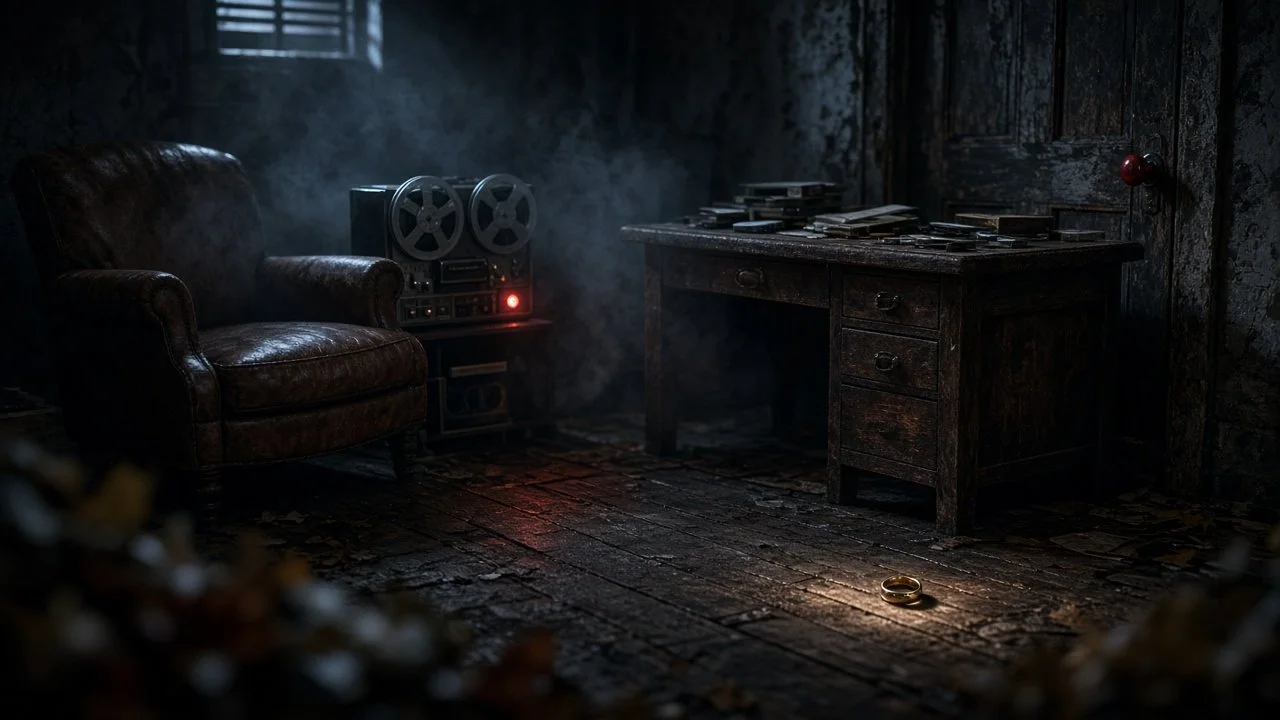
The Doctor Who Never Noticed Nobody Was Talking to Him
M. Night Shyamalan's The Sixth Sense is the rare twist film that survives being spoiled. More than a quarter of a century after its release in 1999, almost everyone knows the secret, yet people still go back to it, partly to see how the trick was done. Bruce Willis plays Malcolm Crowe, a child psychologist trying to help Cole Sear, a frightened boy played by Haley Joel Osment who says he sees dead people. The last scene reveals that Malcolm has been dead since the opening minutes, and that he is one of the ghosts Cole sees. This guide walks through the story, explains the ending and collects every clue the film planted along the way, so you can see exactly how it hid the twist in plain sight.
Spoiler warning: the following summary discusses the plot, major twists and ending.
The Shooting That Opens the Film
The film begins on a good night for Malcolm Crowe. He and his wife, Anna, played by Olivia Williams, are at home in Philadelphia celebrating an award he has received for his work with children. Upstairs, they find a broken window and an intruder in their bathroom. He is Vincent Grey, played by Donnie Wahlberg, a former patient Malcolm treated as a boy. Vincent says Malcolm failed him. Then he shoots Malcolm and turns the gun on himself.
The film cuts to the following autumn. Malcolm is now sitting on a bench outside a house, reading notes on a new case. As far as the audience is concerned, he has recovered and gone back to work, haunted by the patient he could not save. That assumption is the foundation of the whole film, and Shyamalan never states it. He simply lets us fill in the gap ourselves.
Cole Sear and His Secret
Cole is a withdrawn boy who lives with his mother, Lynn, played by Toni Collette. Lynn is a single parent who loves him fiercely but cannot understand why he is so frightened, or why strange things keep happening around him. Malcolm sees in Cole the same isolation he missed in Vincent, and he takes him on as a patient, partly to make amends.
At first Cole will not trust him. Malcolm tries games and gentle questions. He follows Cole to a church and sits with him, and he visits him at home. The breakthrough comes after a birthday party, where other boys lock Cole in a small cupboard. What is inside it terrifies him so badly that he ends up in hospital. Sitting by his bed that night, Cole finally tells Malcolm his secret.
"I see dead people," he says. Asked how often, he answers: "All the time." Then he explains how they behave, and these are the most important lines in the film: "Walking around like regular people. They don't see each other. They only see what they want to see. They don't know they're dead."
The audience hears this as a description of the ghosts tormenting Cole. On a second viewing, it is a precise description of Malcolm.
How Malcolm Comes to Believe Him
Malcolm's first reaction is professional. He thinks Cole may be suffering from a serious psychological illness, and he considers handing the case over. Then he goes back to the tape recordings of his sessions with Vincent Grey. On one of them, recorded while Malcolm had stepped out of the room, he turns up the volume and hears a voice in the background, speaking Spanish: "Yo no quiero morir." I don't want to die.
Vincent had the same gift as Cole. He saw the dead, nobody believed him, and the boy grew up into the man who shot Malcolm. Malcolm understands now that he failed Vincent by not listening, and he decides not to make that mistake twice. He believes Cole.
He also offers Cole a different way of thinking about the ghosts. Maybe they are not trying to frighten him, Malcolm suggests. Maybe they want help with something they left unfinished. That idea transforms Cole's life, and it turns out to apply to Malcolm too.
Kyra Collins and What the Dead Want
Cole tests the idea with a ghost who has been appearing in his bedroom, a girl called Kyra Collins, played by Mischa Barton, who is violently sick in front of him. He goes with Malcolm to her house on the day of her funeral reception. Kyra's ghost leads Cole to a box, and inside it is a videotape. Cole gives the tape to her father. When he plays it, it shows Kyra's mother putting something into her daughter's food. Kyra did not die of an illness. She was poisoned, and her younger sister may be next.
The scene matters for two reasons. It shows that the dead in this film have unfinished business that the living can help them complete. It also gives Cole a purpose. His gift stops being a curse when he uses it to help the dead and the living. From then on he is calmer, he makes friends and he gets a starring moment in his school play while Malcolm watches proudly.
Cole and Lynn in the Car
The most emotional scene in the film does not involve Malcolm at all. Cole and his mother are stuck in traffic behind a fatal accident, and Cole decides to tell her the truth. He explains that the woman who died in the crash is standing next to his window.
Lynn does not believe him, so Cole tells her something he could not otherwise know. Her own mother, his grandmother, has visited him. She told him that she came to watch Lynn dance at a performance when Lynn thought she had stayed away. Then he tells her what Lynn asked at her mother's grave: "Do I make her proud?" Her mother's answer, Cole says, is "Every day." Lynn breaks down. Mother and son are finally on the same side.
Collette was nominated for an Oscar, and this scene is the reason. It also marks the end of Cole's story. He has accepted what he is and told the one person who matters most, so he no longer needs a therapist. That leaves Malcolm with nothing more to do, which is where the twist comes in.
What Happens at the End of The Sixth Sense?
After the school play, Cole had suggested that Malcolm try talking to his wife while she is asleep, because that is when she will be able to hear him. Malcolm goes home. Anna is asleep on the sofa with their wedding video playing. In her sleep she says, "Why did you leave me?" A ring slips from her hand and rolls across the floor.
It is Malcolm's wedding ring. He looks at his own hand and sees that he is not wearing it. The film cuts through the clues we have just watched. He remembers Cole's words about ghosts who only see what they want to see, and the coldness in the air. He finds the gunshot wound from the night Vincent shot him, still there. Malcolm has been dead since the start of the film. Everything since then has been a ghost finishing one last job. Cole, who sees the dead, was the only person who could see him.
Malcolm understands his unfinished business: he helped Cole the way he failed to help Vincent. His other task is Anna. Speaking to her as she sleeps, he says: "I think I can go now… You were never second. Ever. I love you." Half asleep, she answers: "Good night, Malcolm." The screen fades to white.
Every Clue That Malcolm Was Dead
The pleasure of a second viewing is seeing how carefully the film follows its own rule: only Cole ever responds to Malcolm. The editor, Andrew Mondshein, has described how important it was to be "very rigorous about maintaining the laws and the rules of that world". When the film came out on DVD in the UK, it even carried a featurette called Rules and Clues, a sign of how much the film-makers wanted viewers to go back and check their work. Here are the clues that hide the twist.
Nobody Except Cole Talks to Him
After the shooting, no living adult ever holds a conversation with Malcolm. People are near him, and some scenes are framed to make it look as though they are reacting to him, but none of them speaks to him or replies to what he says. When Malcolm first visits Cole's home, he and Lynn sit opposite each other in silence. It plays as an awkward wait for Cole to come home. In fact Lynn is alone in the room and has no idea he is there.
The Anniversary Dinner
Malcolm arrives late at a restaurant, where Anna is eating on her own. He apologises and talks to her. She never looks at him, and when the bill arrives she picks it up, says "Happy anniversary" and leaves. On first viewing this looks like a marriage in trouble, with a husband who has been absorbed by his work since the shooting. It is actually a widow spending their anniversary alone.
Anna's Grief Looks Like Anger
The same trick runs through all of Malcolm's scenes with his wife. She seems cold, distant and possibly drawn to another man. Malcolm assumes she is pulling away from him because he has neglected her. In fact she is grieving, and he has misread her for the whole film, just as Cole said the dead do.
The Basement Door
Malcolm keeps struggling with the door to his basement office, which seems to be locked. At the end it is revealed to be blocked by a desk. Anna has sealed off the room, and Malcolm, who does not know he is dead, never quite registers why he cannot get through.
The Clothes
Malcolm is only ever dressed in items he wore or touched on the evening he was shot, including his overcoat, a blue rowing sweatshirt and the different layers of his suit. It is the kind of continuity detail nobody notices on first viewing.
The Cold
Cole explains that when the dead get angry, the temperature drops: "When they get mad... it gets cold." The rule is set up for Cole's ghosts, and the audience applies it only to them, never to the man sitting beside him. The cold is one of the things Malcolm remembers when the truth finally lands.
The Colour Red
Shyamalan uses red to mark the moments when the real world and the world of the dead touch. Examples include the church door, the balloon, the carpet and Cole's sweater at the birthday party, the tent where Kyra appears, and the volume numbers on Malcolm's tape recorder when he hears Vincent's ghost. The doorknob of the basement door is red, and so is the shawl Anna wears in the final scene. Kyra's mother wears red at the funeral reception. The colour does not prove anything on its own, but it is a consistent visual signal that something from the other side is close.
The Camera on "I See Dead People"
When Cole delivers his famous line, the camera moves in on Malcolm's face rather than staying on Cole. The filmmakers have said they worried this would give the twist away. They kept it anyway, because audiences read it as Malcolm's shock rather than the camera pointing at the answer.
"They Only See What They Want to See"
This is the clue that hides in a line of dialogue. Cole describes, in detail, a dead person who does not know he is dead, walks around like a living one and explains away everything that does not fit. Malcolm hears it and never applies it to himself. Neither do we.
Why Malcolm Doesn't Realise
The cleverest idea in the film is that Malcolm's blindness is psychologically believable. He is a man defined by his work and by one failure. The night he is shot, Vincent tells him he failed, and Malcolm spends the rest of the film trying to prove that wrong by saving a boy just like Vincent. Everything that does not fit that mission, such as his wife's silence, the locked door and the fact that nobody else speaks to him, he explains away as the cost of his obsession. He sees what he wants to see.
That is also why the audience falls for it. We share Malcolm's point of view and his assumptions. We want him to be the hero of a redemption story, so we accept the version of events he tells himself. The twist is less a trick played on the viewer than a test of how easily all of us fill gaps with the story we expect.
Does the Twist Play Fair?
Mostly, yes, which is why the film is still discussed while many imitators are forgotten. The twist does not contradict anything we have seen; it reinterprets it. Every scene with Malcolm plays one way the first time and another way once you know.
Some viewers do point to looser moments. Malcolm handles objects: he reads his notes, plays tapes and sits in chairs. A strict reading of the rules raises questions about how much a ghost in this film can physically do. The film's answer, given through Kyra and the other ghosts, seems to be that the dead can affect the world when they are focused on something, but it never sets this out explicitly. Some critics have also argued that the twist overshadows the rest of the film. On a rewatch, though, it is clear that the real story is about grief, communication and a lonely child, and Malcolm's death is the frame around it.
If you enjoy films that play this trick, our explainer on The Others, released two years later, covers a ghost story that does something similar from the other side, and our ranking of the biggest plot twists in cinema puts The Sixth Sense in context.
Does Cole Know Malcolm Is Dead?
The film never says outright, and viewers have argued about it ever since. Cole tells Malcolm that the dead do not know they are dead, and he never tells Malcolm that he is one of them. His advice about talking to Anna while she sleeps can be read as the gentlest possible push towards the truth. On the other hand, the film gives no clear sign that Cole recognises Malcolm as a ghost, and his relief at finally having an adult who believes him is real either way. The ambiguity suits a film built on what people choose not to see.
How The Sixth Sense Became a Phenomenon
Shyamalan wrote and directed the film when he was still relatively unknown. It opened in the US on 6 August 1999 and in the UK on 5 November 1999, where the BBFC gave it a 15 certificate. Running 107 minutes, it was a sleeper hit, built on word of mouth and audiences going back to see it again. It grossed about $672.8 million worldwide and earned six Academy Award nominations: Best Picture, Best Director, Best Original Screenplay, Best Supporting Actor for Osment, Best Supporting Actress for Collette and Best Film Editing. Frank Marshall and Kathleen Kennedy were among the producers. Shyamalan also appears briefly as a doctor who examines Cole.
Its influence has been huge. "I see dead people" became one of the most quoted lines of its decade, and the film made the twist ending a selling point in Hollywood for years afterwards. It also set expectations that Shyamalan has spent the rest of his career living up to and playing against.
The Ending in Context
The final twist is easy to treat as a party trick. What gives it lasting power is that it completes the film's emotional logic. Cole learns that the dead need to be heard before they can move on, and Malcolm is the proof. He cannot leave until he has done what he failed to do for Vincent, and until he has told the woman he left behind that she was never second. The last words of the film belong to Anna. She did not know he was there, but she says goodbye anyway.
Sources
- Wikipedia: The Sixth Sense, plot, production, release and reception: https://en.wikipedia.org/wiki/The_Sixth_Sense
- Wikiquote: The Sixth Sense, dialogue: https://en.wikiquote.org/wiki/The_Sixth_Sense
- BBFC: The Sixth Sense, classification: https://www.bbfc.co.uk/release/the-sixth-sense-q29sbgvjdglvbjpwwc0zmdm5mdu
- ScreenCraft: Screenwriting plants and payoffs in The Sixth Sense, including comments from editor Andrew Mondshein: https://screencraft.org/blog/screenwriting-plants-and-payoffs-the-sixth-sense/
- Box Office Mojo: The Sixth Sense, worldwide gross: https://www.boxofficemojo.com/title/tt0167404/
