Iran Declares ‘Fully Offensive’ Posture as Hormuz Attack Raises Fears the War Is Escalating Again
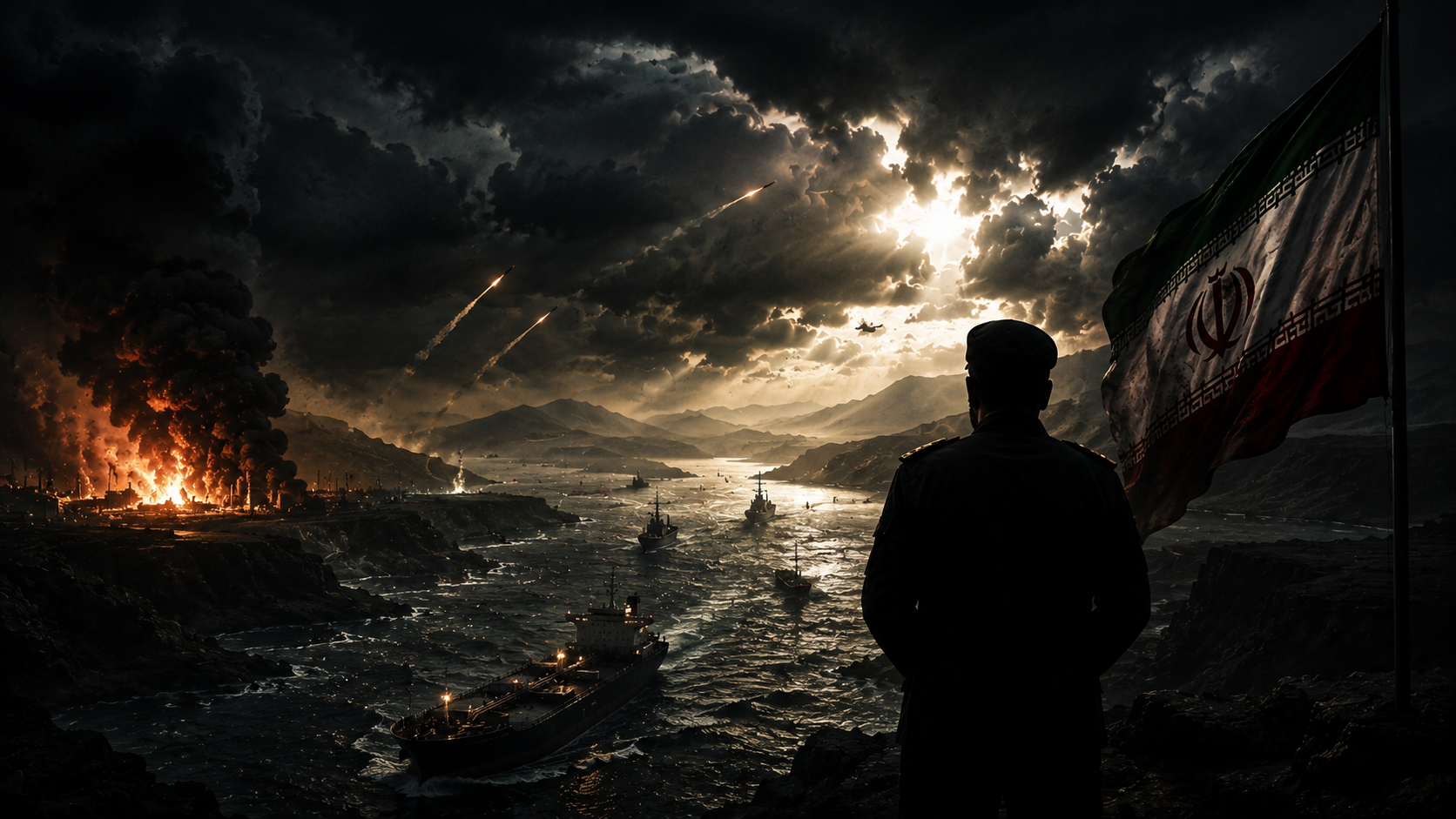
Iran’s ‘Fully Offensive’ Warning Is Starting to Look Much More Dangerous
The Iran Ceasefire Is Unravelling — And Hormuz Is Becoming the Battlefield Again
Iran says it is moving to a “fully offensive” military posture after attempts to secure a lasting settlement with the United States stalled, marking one of Tehran’s clearest warnings yet that the next phase of the conflict may be fought on very different terms. The declaration comes as the Strait of Hormuz remains largely closed, diplomatic deadlines have expired and another commercial vessel has been damaged in the waterway.
The most important fact, however, is also the one that requires the most caution. A ship travelling through the Strait of Hormuz was hit by a projectile on Tuesday, damaging its engine room and injuring a crew member, but authorities have not publicly established that Iran carried out the attack. What is confirmed is that the incident came against the backdrop of Tehran openly threatening a more aggressive military strategy and warning that it could take direct action to break what it describes as an American naval blockade.
Iran Says the Defensive Phase Is Ending
The change in language from Tehran is significant because Iran is no longer describing its military strategy purely in terms of proportional retaliation.
A senior Iranian official said the country would shift to a “fully offensive” posture after efforts to negotiate a permanent end to the conflict stalled. Iranian authorities have warned that forces must be prepared to escalate in the Strait of Hormuz and across the wider region, including the possibility of what Tehran described as a timely and precise attack intended to break the American naval blockade if diplomacy fails.
That threat builds on warnings issued during previous rounds of fighting. In July, senior Iranian military adviser Mohsen Rezaei said continued American attacks could push Iran into “full-scale offensive operations”, in which its forces would no longer restrict themselves to like-for-like retaliation.
The difference now is timing. The diplomatic mechanism designed to prevent that escalation has effectively run out of road.
The 60-Day Diplomatic Window Has Collapsed
A memorandum reached in June was supposed to create a pathway towards a wider settlement between Washington and Tehran. It provided a maximum 60-day period for reaching a final agreement, potentially extendable with the consent of both sides.
That settlement never materialised.
President Donald Trump said in July that the agreement was effectively over, while Iran subsequently announced that it had suspended its commitments. The deepest dispute remained control of the Strait of Hormuz: Washington demanded freedom of navigation while Tehran sought conditions that would significantly strengthen its authority over traffic through the waterway.
Iranian negotiator Mohammad Baqer Qalibaf has now said the strait will remain shut until Washington meets Iranian conditions. Tehran wants the blockade of Iranian ports lifted, oil sanctions removed, frozen Iranian assets released and American military threats and operations ended.
The result is a dangerous inversion of the diplomatic process. Instead of negotiations gradually reducing military pressure, military pressure is increasingly becoming the instrument through which both sides hope to shape any future negotiation.
A Ship Has Already Been Hit — But Attribution Matters
The first major maritime incident following the latest escalation in rhetoric came early on Tuesday when a commercial vessel travelling through the Strait of Hormuz was struck by a projectile.
The vessel suffered engine-room damage and a crew member was injured. Omani authorities responded to the incident, but responsibility had not been publicly established at the time of reporting.
That uncertainty matters.
Iran has previously attacked, intercepted or threatened vessels attempting to use routes it regards as unauthorised, and the IRGC has made clear that it intends to exercise control over passage through Hormuz. But those facts do not establish responsibility for every attack in the waterway. The distinction between a confirmed Iranian operation and an unattributed strike is particularly important when a single incident could become the justification for another round of American retaliation.
The strategic consequence is dangerous even before attribution is settled. Commercial operators, insurers and energy traders must respond to the risk of attack, not merely to proven responsibility after the event.
Hormuz Is Becoming the Real Centre of the War
The conflict may involve nuclear facilities, missile systems, airbases and political leadership, but the Strait of Hormuz increasingly determines how much economic damage the confrontation can inflict on the rest of the world.
Before the war, roughly a fifth of global oil and liquefied natural gas flows passed through the narrow waterway. Traffic is now severely depressed, giving any fresh attack disproportionate economic importance.
That is why the struggle for control of the Strait of Hormuz matters far beyond Iran and the United States. Tehran does not need to physically block every ship to create a global energy problem. Threats, selective attacks, interceptions and uncertainty can make the commercial risk sufficiently high that normal traffic becomes impossible.
Only a small number of commodity vessels have recently been making the passage. The vulnerability is now sufficiently serious that alternative transfer arrangements are being used around Fujairah as companies try to reduce their exposure to the strait.
Iran therefore possesses a form of asymmetric leverage. It cannot match American conventional military power across every domain, but it can make one narrow stretch of water economically dangerous enough to transmit the costs of the war around the world.
Oil Is Already Responding
Markets are beginning to price that danger back in.
Brent crude climbed above $91 a barrel on Tuesday, while West Texas Intermediate moved above $85 as hopes of an American-Iranian settlement faded. Oil has risen for three consecutive sessions as traders reassess the risk of prolonged disruption to Gulf supplies.
The move is important because higher energy prices turn a distant military confrontation into a domestic economic problem across importing countries.
Higher crude prices feed into transport costs, aviation, manufacturing, household fuel bills and eventually inflation. The longer Hormuz remains constrained, the greater the chance that what began as a military dispute becomes a renewed global cost-of-living pressure.
That creates political consequences inside the United States as well. With American elections approaching in November, an extended oil shock would place greater pressure on the administration to either force the strait open or secure a diplomatic settlement capable of restoring reliable traffic.
Iran Appears to Have Prepared for a Longer Conflict
Iran’s harder rhetoric has not emerged from nowhere.
The confrontation has already passed through several cycles of direct strikes, temporary restraint, attempted negotiation and renewed attacks. Iranian forces have previously targeted American military positions and vessels across the Gulf region, while US forces have repeatedly struck Iranian military infrastructure and capabilities.
During July, Iran demonstrated that its concept of retaliation could extend far beyond Iranian territory. Missile and drone attacks were directed towards American-linked military targets in Kuwait, Bahrain and Jordan, while commercial shipping around Hormuz repeatedly came under pressure.
The shift to an explicitly offensive doctrine raises a harder question: whether future Iranian operations will wait for an identifiable American attack before being launched.
A genuinely offensive strategy could theoretically encompass pre-emptive action against military assets, attempts to deny access to strategic waters, attacks on logistics supporting American operations or wider use of Iran-aligned armed groups. Those possibilities are implications of Tehran’s declared posture, not confirmed plans for specific forthcoming attacks.
That distinction will become one of the most important things to watch.
Washington Faces an Escalation Problem of Its Own
The United States now faces a familiar military dilemma.
Every Iranian attack on American forces or commercial shipping increases pressure on Washington to respond. But every new American strike also gives Tehran another argument for widening its own operations.
That cycle has already played out repeatedly throughout the conflict. Previous American strikes on Iranian military infrastructure were intended to reduce Iran’s ability to threaten commercial traffic, yet the maritime confrontation has continued.
The problem is not simply whether the United States can destroy Iranian missile launchers, surveillance installations, naval assets or logistics sites. The larger question is whether military pressure can produce a stable political arrangement in which Iran accepts a permanently diminished role in Hormuz.
Tehran is signalling the opposite.
Oman Is Suddenly Caught in the Middle
Oman occupies an especially uncomfortable position because it lies directly opposite Iran across the Strait of Hormuz and has traditionally played a diplomatic role between Tehran and Washington.
Iran and Oman have been discussing mechanisms for managing ship movements through the waterway. At the same time, Trump has publicly threatened Oman over any approach Washington believes obstructs American objectives in the conflict.
That adds another layer of instability.
If Oman can help create an arrangement acceptable to both sides, it could provide one of the remaining paths towards restoring commercial shipping. If relations between Washington and Muscat deteriorate instead, a mediator with unusual access to Tehran could become less effective precisely when it is most needed.
Turkey is also pushing for diplomacy. President Recep Tayyip Erdoğan has urged Trump to continue talks with Iran and offered Turkish support for peace efforts, reflecting growing regional concern that the military logic is once again overtaking the diplomatic one.
What ‘Fully Offensive’ Could Actually Mean
The phrase is deliberately intimidating, but it should not automatically be interpreted as a declaration that Iran is about to unleash every military capability it possesses.
Military posture exists on a spectrum.
Iran could use the language primarily to improve its bargaining position, signalling that failure to compromise will become progressively more expensive. It could intensify operations selectively around Hormuz while avoiding a larger regional campaign. Or it could begin launching attacks that are less obviously tied to immediate American actions.
The evidence so far proves the change in declared posture. It does not yet prove which of those operational models Tehran has chosen.
That makes the next confirmed Iranian attack unusually important. It may reveal whether “fully offensive” is largely diplomatic coercion or the beginning of a genuine change in how Iran chooses and initiates military targets.
The Most Dangerous Phase May Be the One Between War and Peace
The conflict has reached a strange position in which neither side has achieved enough to dictate the final settlement, yet both possess enough military power to prevent the other from imposing one cheaply.
Iran has not forced the United States to accept its demands. The United States has not restored normal passage through Hormuz. The June diplomatic framework has failed to produce a final peace agreement, and Tehran is now attaching major economic and security concessions to reopening the strait.
That creates exactly the environment in which escalation becomes tempting.
Iran can increase pressure on shipping. Washington can intensify attacks on Iranian capabilities. Each side can then argue that it is merely responding to aggression by the other.
The danger is that an unattributed projectile, a damaged tanker or a missile launched at the wrong target could become the event that pushes that cycle beyond political control.
What Happens Next
Three developments now matter more than the rhetoric.
First is whether Iran announces or carries out a clearly identifiable military operation under its new offensive doctrine. The distinction between threats and confirmed action will show whether Tehran has genuinely crossed into a new phase.
Second is the Strait of Hormuz itself. If commercial traffic falls further, insurers withdraw additional coverage or more vessels are attacked, pressure on oil prices will grow even without a dramatic expansion of the land war. Brent’s return above $90 shows how quickly that risk can move markets.
Third is Washington’s response. A confirmed Iranian offensive strike against American forces, Gulf infrastructure or commercial shipping could produce another major US attack on Iranian military assets, particularly if Americans are killed.
Iran has now publicly said it is preparing to operate more aggressively. The United States has shown repeatedly that it is willing to strike back. Hormuz remains constrained, diplomacy has failed to deliver a final settlement and another ship has already been hit without responsibility yet being established.
That combination is more dangerous than the phrase “fully offensive” by itself. It means the mechanisms that previously separated threats, retaliation and escalation are becoming harder to distinguish — and the world’s most important energy chokepoint is once again where the difference may be tested.
