A Licence for a Million Satellites, but Years Before Any Real Test
The US Federal Communications Commission (FCC) has authorised Elon Musk's SpaceX to put up to one million satellites into low-Earth orbit for a project called Starmind. The satellites are designed to work as solar-powered data centres in space, processing artificial intelligence workloads and sending the results back to Earth. FCC chairman Brendan Carr announced the decision on Wednesday 25 November 2026. The BBC describes it as the first approval of its kind.
The licence is not a launch schedule. SpaceX must begin deploying the satellites by November 2033, have 10% in orbit by November 2035 and 50% by November 2038, according to the BBC. The company has said it wants to launch its first Starmind satellite next year. It is unclear whether SpaceX will ever launch anything like a million, or whether it asked for a larger number than it expects to use.
What the FCC and SpaceX Said
In its statement, the FCC said Starmind would "support America's booming super intelligence economy". Carr said the project "opens a bold new frontier for the computing infrastructure needed to power America's leadership and growth". In a post on X, he added that Starmind and "competitor constellations will use solar power to extend America's lead" in AI, CNBC reported.
Musk replied on X: "Much appreciated. This will be a great asset to America and the world." SpaceX did not respond to CNBC's request for comment.
How Starmind Is Meant to Work
SpaceX argues that orbital data centres are the most cost- and energy-efficient way to meet demand for AI computing that is beyond "terrestrial capabilities". According to the BBC:
- the satellites would run on sunlight rather than grid electricity;
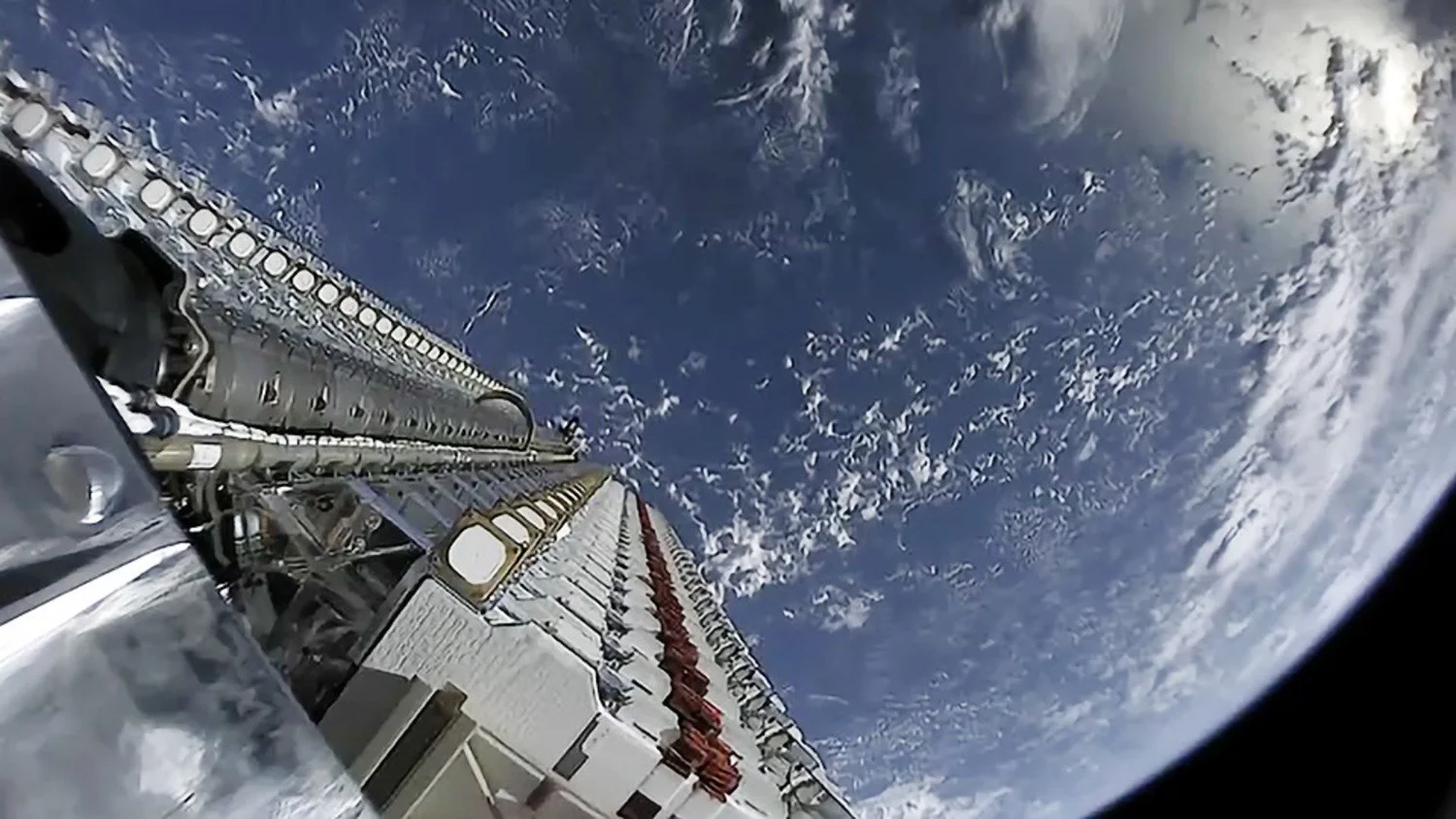
- they would sit in low-Earth orbit at altitudes of 500 to 2,000km (310 to 1,242 miles), like the existing Starlink network;
- Starmind satellites would talk to Starlink satellites, which would relay data back to the ground.
Starlink already operates more than 10,000 satellites providing broadband from space. The FCC's own statement went further, saying the system "promises to bring the human race closer to a Kardashev II civilisation", a reference to a hypothetical society able to harness the full energy output of its star.
Why AI Companies Are Looking Up
The approval lands as AI's appetite for electricity, water and land runs into local opposition. The BBC notes that communities across the US have pushed back against new data centres, and that data centres were a central issue in the US midterm elections earlier this month.
SpaceX is not alone. Google announced Project Suncatcher, which it calls a "moonshot to put AI in space", and launched its first chips into orbit in October on a SpaceX rocket and a Planet Labs satellite, CNBC reports. In March, Jeff Bezos's Blue Origin asked the FCC for permission to launch up to 51,600 satellites for a constellation called Project Sunrise.
The Objections the FCC Set Aside
The application drew a large number of public comments. CNBC reports that formal petitions to deny it were filed by Amazon's satellite business Kuiper Systems (now Amazon Leo), by Viasat and by the American Astronomical Society. In March, Amazon called Starmind a "lofty ambition rather than a real plan" and said it would take SpaceX "centuries" to build. Amazon declined to comment on the approval.
According to CNBC, the FCC dismissed concerns about the environment and about the impact on optical astronomy, saying those topics fall outside its authority. Jan Hasselman, a senior attorney at the environmental law group Earthjustice, criticised the commission for approving the plan without an environmental review, which he said the National Environmental Policy Act required, and for issuing the decision in a US holiday week.
Scientists have also raised safety concerns. The astrophysicist and author Adam Becker told CNBC that any serious attempt "is going to further pollute the night sky" and risks a cascading chain of space-junk collisions. Experts quoted by the BBC have warned that launching hardware is expensive, that protecting, cooling and powering it in orbit is complex, and that more low-orbit craft increases the chance of crashes. Musk has denied that Starlink causes congestion in space.
What It Means
Analysis: for now, the decision is regulatory permission, not proof that computing in orbit works at scale. It gives SpaceX a US licence and long deadlines to show that it does. If Starmind goes ahead even partially, it would multiply the number of objects in low-Earth orbit, which matters to astronomers, to other satellite operators and to every country that relies on space-based services, including the UK.
What Is Still Unknown
- How many Starmind satellites SpaceX actually intends to launch, and when the first goes up.
- What the system will cost and whether it can compete on price with data centres on the ground.
- Whether the objectors, including environmental groups, will challenge the decision.
- How regulators outside the US will respond to a constellation on this scale.
Sources
- BBC News: US approves SpaceX plan to send a million data satellites to space (26 November 2026)
- CNBC: SpaceX wins FCC approval for 1 million orbital data center satellites (25 November 2026)
