
Science News, Discoveries & Research Explained
Explore discoveries and questions across space, biology, psychology, health and the natural world. Our science articles explain what researchers found, how they investigated it and what the results can—and cannot—tell us. Browse new developments alongside accessible guides to the scientific ideas that help explain ourselves and the universe.

The Next Likely Global Pandemics Ranked – And How They Might Play Out
The Next Likely Global Pandemics Ranked – And How They Might Play Out

What caused COVID-19, ranked – and what still isn’t answered
What caused COVID-19, ranked – and what still isn’t answered
Panspermia’s Newest Clues: Fresh Evidence That Life’s Ingredients Travel Through Space
Edit Site Header
Panspermia’s Newest Clues: Fresh Evidence That Life’s Ingredients Travel Through Space
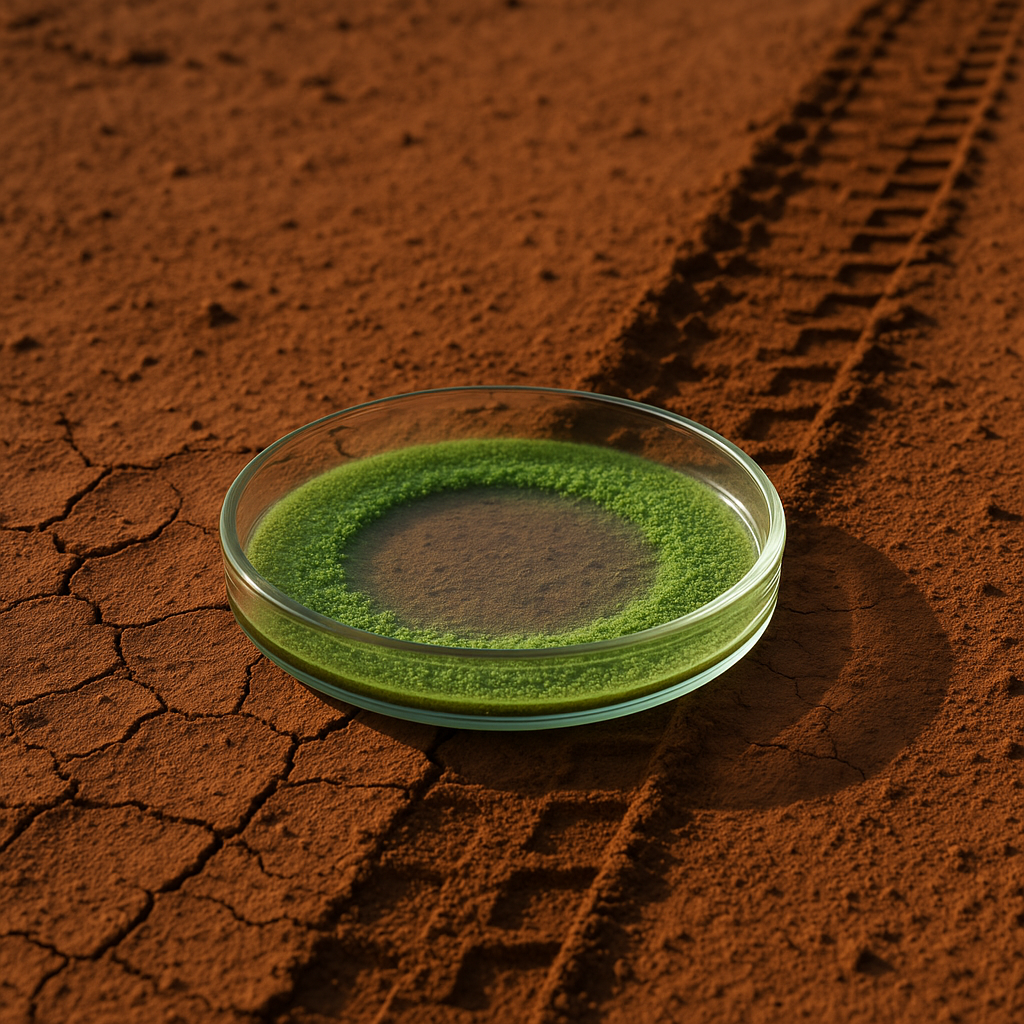
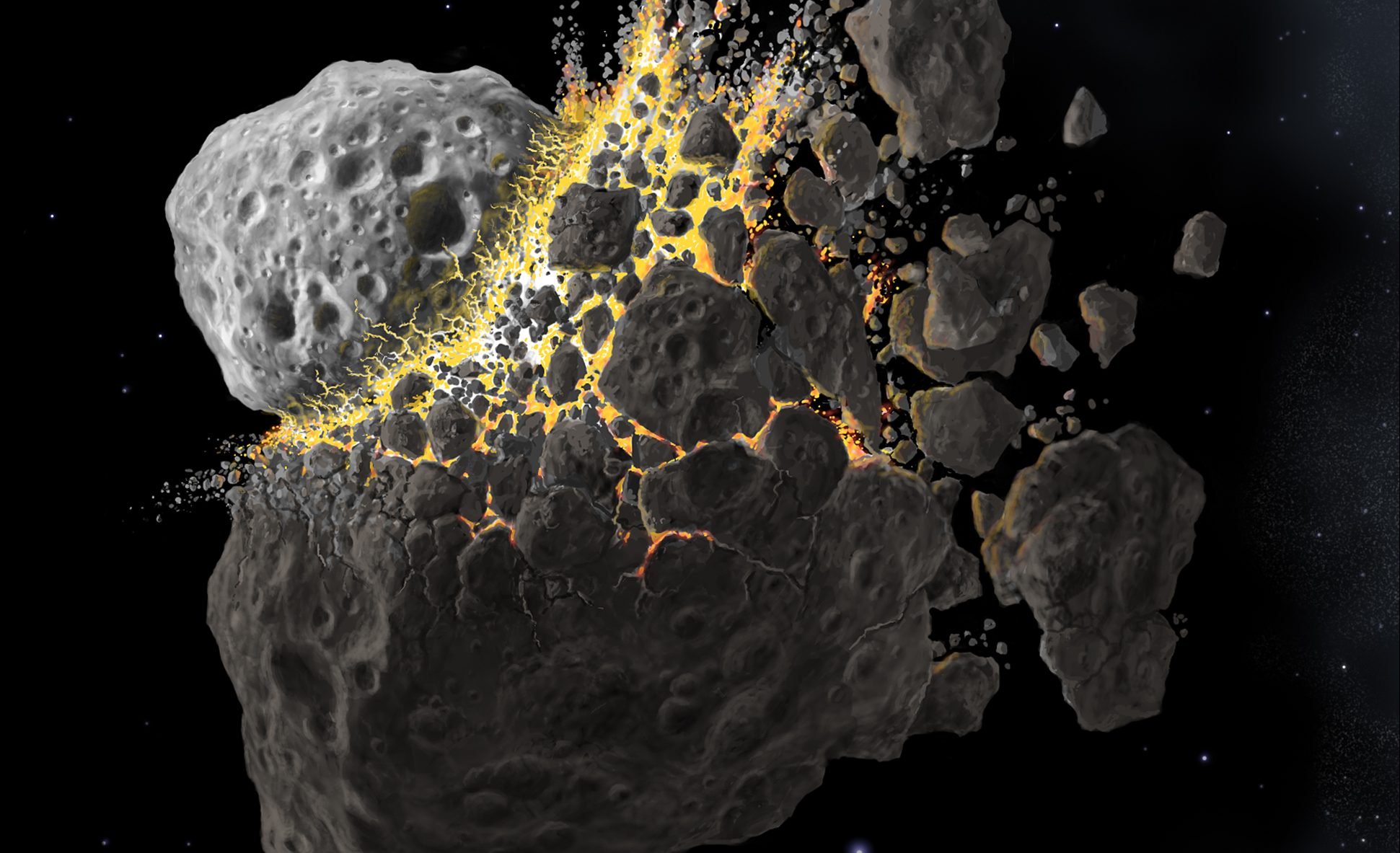
Humanity’s oldest hunch about life in the universe is being tested in the lab. Within days, scientists announced that samples from asteroid Bennu contain sugars vital to DNA and RNA, along with a mysterious “space gum”

Rare powerful solar flare triggers radiation spike and air travel safety rethink
Rare powerful solar flare triggers radiation spike and air travel safety rethink

Quantum Tech Boom: Inside the New UK-Germany Joint Funding Push
Quantum Tech Boom: Inside the New UK-Germany Joint Funding Push

Synthetic human genomes: lab-grown chromosomes enter human cells
Synthetic human genomes: lab-grown chromosomes enter human cells

Atlantic Meridional Overturning Circulation Collapse Risk and Europe’s Growing Drought Threat
Atlantic Meridional Overturning Circulation Collapse Risk and Europe’s Growing Drought Threat
SOHO at 30: 5,000 Comets, New Solar Insights, and What Comes Next
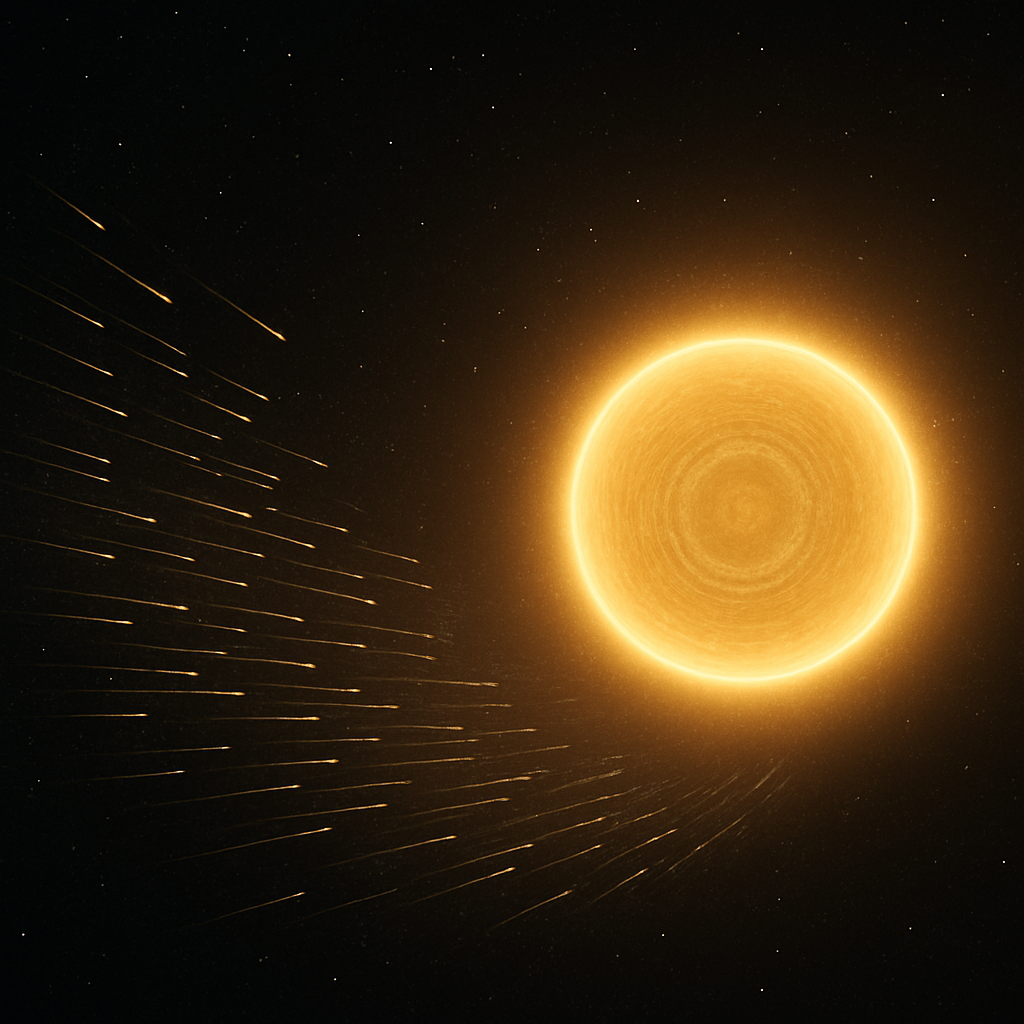
SOHO at 30: 5,000 Comets, New Solar Insights, and What Comes Next

Are We Finally Closing In on the Theory of Everything? String Theory Today
Are We Finally Closing In on the Theory of Everything? String Theory Today

Space Race and New Geopolitics: How the New Space Economy Is Redrawing Power in Orbit and Beyond
Space Race and New Geopolitics: How the New Space Economy Is Redrawing Power in Orbit and Beyond

Possible First Direct Evidence of Dark Matter: What a New Gamma-Ray Signal Really Means
Possible First Direct Evidence of Dark Matter: What a New Gamma-Ray Signal Really Means
For nearly a century, dark matter has been the universe’s biggest ghost story. Astronomers could see its fingerprints in the way galaxies move, but never the thing itself. Now, a new analysis of gamma rays from the Milky Way has ignited headlines with a bold claim: this might be the first direct evidence of dark matter.
The signal comes from NASA’s Fermi Gamma-ray Space Telescope. Over 15 years, the instrument has quietly watched the sky for the most energetic form of light. In the latest work, a researcher in Japan believes the data reveal a halo of gamma rays around our galaxy that matches what dark matter theories have been predicting for decades. If that interpretation is right, it would be a turning point for both cosmology and particle physics.
But “if” is doing a lot of work here. Other experts are excited but wary. Past “dark matter signals” have faded under closer scrutiny, and this new result faces many of the same tests.
This article unpacks what has actually been found, how the analysis works, why some scientists are cautious, and what it would mean if the signal really does come from dark matter particles annihilating in the Milky Way’s halo. It also looks at the broader impact on physics, technology, and society if the universe’s missing mass finally steps out of the shadows.
Key Points
A new study of 15 years of data from NASA’s Fermi Gamma-ray Space Telescope reports a halo-like glow of high-energy gamma rays around the Milky Way that closely matches models of a dark matter halo.
The signal peaks at energies of around 20 billion electron volts and can be interpreted as the byproduct of collisions and annihilations of hypothetical dark matter particles hundreds of times heavier than a proton.
The result is being described as “possible first direct evidence” of dark matter because it would be the first non-gravitational signature of the substance, rather than an indirect effect on galaxy motions or light paths.
Many astrophysicists urge caution, noting that other astrophysical sources—such as pulsars, cosmic-ray interactions, or complex diffuse structures—could still explain the glow, and that similar signals are not clearly seen in nearby dwarf galaxies where dark matter should also be abundant.
If confirmed, the finding would point toward a specific class of dark matter particle and open new paths for particle accelerators, underground detectors, and future telescopes to target.
Even if the signal ultimately has a more mundane explanation, the analysis pushes forward techniques in high-energy astrophysics, data processing, and large-scale simulations that spill over into other fields.

Muscle Mass Can Make Your Brain Younger, Study Finds
An 8-billion-year-old fast radio burst, older than the solar system, reveals hidden matter between galaxies and reshapes what we know about cosmic explosions.

Astronomers Detect 8-Billion-Year-Old Fast Radio Burst Older Than the Solar System
An 8-billion-year-old fast radio burst, older than the solar system, reveals hidden matter between galaxies and reshapes what we know about cosmic explosions.

A 220-Mile-Wide Heat Blob Is Moving Under North America – What’s Really Happening Beneath Our Feet
A 220-Mile-Wide Heat Blob Is Moving Under North America – What’s Really Happening Beneath Our Feet
Far below the quiet forests and small towns of New England, something huge is on the move.
Roughly 200 kilometers beneath the Appalachian Mountains, a sprawling “heat blob” of unusually hot rock, about 220 miles (350 kilometers) wide, is slowly drifting through Earth’s mantle. University of Southampton+2ScienceDaily+2
Headlines have cast it as a giant underground menace “heading for New York City.” The true story is stranger and slower. This structure, known as the Northern Appalachian Anomaly (NAA), is not a molten monster racing toward the surface, but a deep, sluggish flow of hot mantle rock created by tectonic events tens of millions of years ago. University of Southampton+2Geoscience World+2
The new research behind the NAA suggests that parts of the supposedly “stable” interior of North America are still being reshaped by the aftershocks of ancient continental breakup. It also introduces a new way of thinking about how mantle material moves: as a kind of “mantle wave” that ripples inland long after continents split apart. University of Southampton+2Geoscience World+2
This article breaks down what scientists have really found, how they figured it out, and what it means for earthquakes, mountain building, ice sheets, and long-term planetary change. It also separates solid evidence from speculation and hype, and explains why a heat blob that will not reach the New York region for another 10–15 million years still matters today. Popular Mechanics+3University of Southampton+3ScienceDaily+3

What If Civilization Collapsed Tomorrow? Lessons from the Last Hunter-Gatherers
What If Civilization Collapsed Tomorrow? Lessons from the Last Hunter-Gatherers
The lights flicker and die. No traffic hums. No internet pings. In an instant, cities fall silent. A hush spreads over the world’s power grids and highways. Faced with sudden collapse, we’d be thrown back into the wild – and into the hands of ideas as old as humanity. In that moment, the only blueprint for survival would be our oldest. We’d have to learn, fast, from the very people who live that way still.
Hidden Hominins in the Modern World? Unraveling the Mystery
Hidden Hominins in the Modern World? Unraveling the Mystery
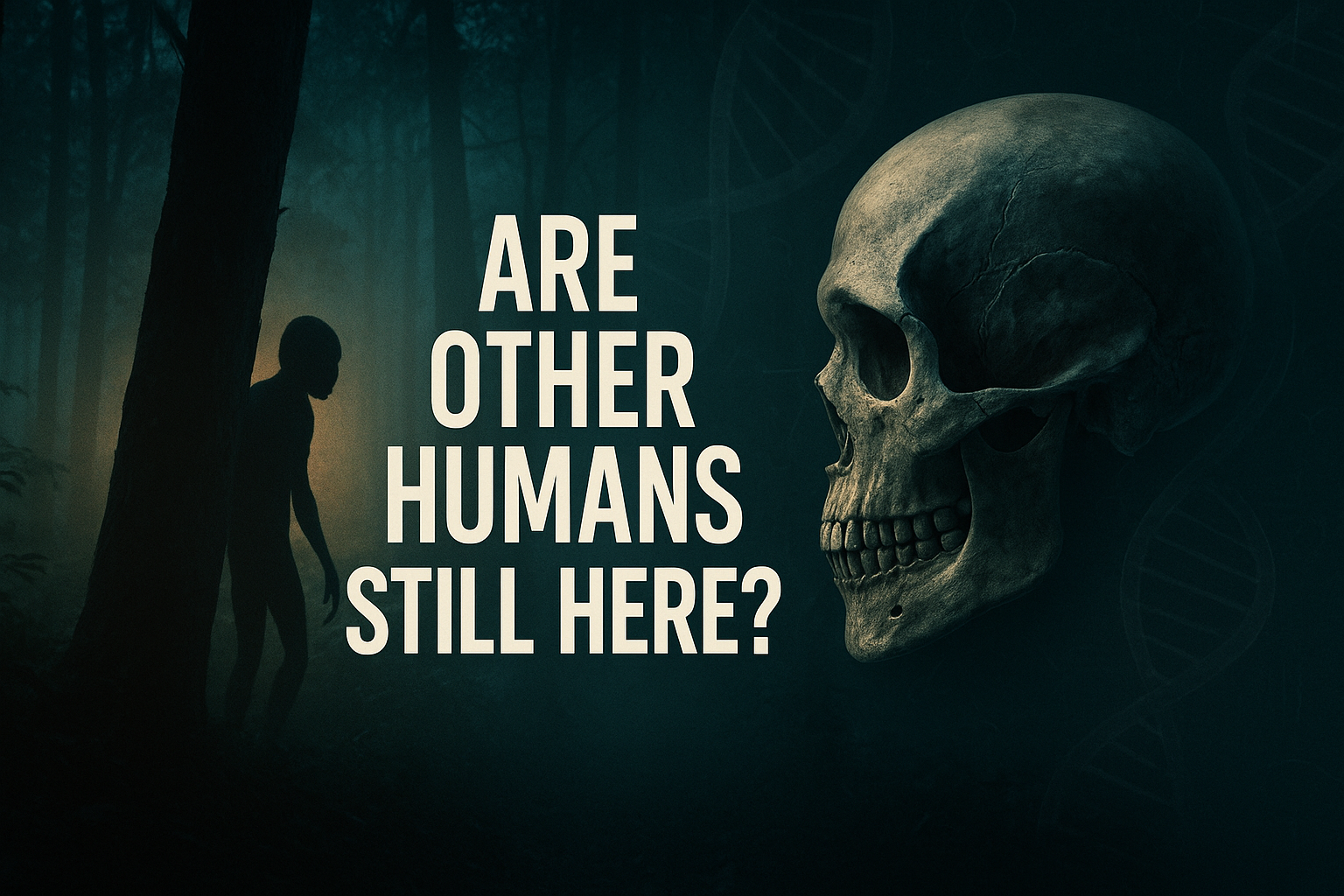
Imagine hiking deep in a tropical rainforest or scaling a misty mountain, only to glimpse a strange, human-like figure dart among the trees. Could a long-extinct human relative – a hidden “hobbit” or a wild forest man – still exist today? Over the past two decades, discoveries like Homo floresiensis (the tiny “Flores Hobbit” from Indonesia) and Homo luzonensis (a small archaic human found in the Philippines) have reminded us that the human family tree is far bushier than once thought. These finds naturally spark speculation: if such hominins lived tens of thousands of years ago, might some have survived in remote corners of the world? We sift through the evidence – fossils, DNA studies, and the hard cold logic of population biology – to see what experts actually say. Along the way we’ll note how local legends (from Flores’s ebu gogo to Amazonian wildmen stories) have fueled hope – but also how science has tested those tales.

Isolated Peoples, Islands & Remote Life: The World’s Forgotten Communities
In a hyperconnected age, some places still lie beyond reach.
In 2025 the world feels small – yet tiny specks of humanity remain cut off by miles of ocean. Picture Tristan da Cunha, a tiny volcanic isle 2,400 km from any neighbor, and North Sentinel, an outlawed tribal sanctuary in the Bay of Bengal.
These spots barely register on our radar, yet a few hundred people call them home. Their lives still follow old rhythms shaped by land, sea and sky, not by smartphones or flight schedules.

Mystery, Exploration & Speculation: Earth’s Final Frontiers
Mystery, Exploration & Speculation: Earth’s Final Frontiers
When we think of a mapped world, it’s easy to assume there are no mysteries left. But even with satellites and satellites, blank spots persist. Recent headlines sparked wonder: a drone image of an unknown jungle village in Brazil. A new tribe, their huts shining through the canopy. It’s a reminder: our planet still hides secrets.

The World’s Last Undisturbed Tribes: Hidden Societies in a Modern World
The World’s Last Undisturbed Tribes: Hidden Societies in a Modern World
In an era of nonstop news and satellite maps, an unusual story still has the power to shock. A lone traveler lands on a forbidden beach, determined to preach to an island tribe that wants nothing to do with the outside world. Arrows fly. He dies. The world argues.
That story, and others like it, expose a simple truth: uncontacted tribes and isolated indigenous peoples still exist. They live in deep forest, on remote islands, and in mountain valleys where roads stop and rivers begin. Their days unfold far from cities. They fish in rivers, hunt with simple tools, and sing old songs by firelight. Their lives move to the rhythm of sun, rain, and forest, not clocks and screens.