
Book Summaries & In-Depth Analysis
Explore the key ideas, arguments and themes behind fiction and nonfiction books. These summaries and analyses help you understand a book’s central message, consider its strengths and limitations, and connect its ideas with wider questions. Browse individual titles and comparisons covering subjects such as psychology, productivity, philosophy and society.

Hollow Bones by Jodi Picoult: Plot Summary, Ending Explained and the Family Lie That Changed Everything
Jodi Picoult's Hollow Bones follows Molly Fitzgerald, who grew up believing her mother died on September 11. When an unexpected discovery overturns her family history, questions emerge about motherhood, psychiatric illness and a lie concealed for twenty-five years. This spoiler-filled guide explains the major revelations, the consequences for Molly's family and the meaning of the final memorial scene.

The Housemaid’s Secret Explained: The Rescue That Became a Trap
Millie Calloway believes she has recognised an abusive marriage and a woman who needs her help. In Freida McFadden’s The Housemaid’s Secret, that certainty becomes the foundation of someone else’s plan. This spoiler-rich summary reconstructs Wendy and Russell’s deception, explains why the man Millie confronts is not Douglas Garrick and follows the real murder through to Marybeth’s revenge. It also examines the uncomfortable final revelation about Millie’s involvement. The thriller’s central question is not whether compassion matters, but how easily a rescuer’s identity can be exploited.

Alchemised Summary and Ending Explained
Helena Marino wakes after a lost war without the memories needed to understand her captivity—or her own importance. This spoiler-rich exploration of SenLinYu’s Alchemised connects the present-day imprisonment with the earlier war, revealing Helena’s hidden work, her relationship with Kaine and the decisions concealed beneath the regime’s account. It explains the escape, the wider conflict’s resolution and Enid’s encounter with a distorted public history. The novel’s deepest wound is not only what happened to its characters, but how easily essential work can disappear from the story told afterwards.

The Sixth Faction Summary and Ending Explained
What changes when Tris makes a different choice? Veronica Roth’s The Sixth Faction revisits the Divergent world through an alternative timeline, exposing new conflicts beneath the factions’ promises of virtue and belonging. This spoiler-rich analysis follows Tris’s path through Abnegation, memory control and factionless politics, alongside her relationship with Four and the devastating confrontation with Caleb. It explains the ending without confusing this continuity with the original trilogy. Beneath the altered plot lies a familiar danger: admirable values can become tools of control when institutions claim the right to define them.


Dune Messiah Summary and Ending Explained: Paul Atreides Won—and That Was the Disaster
A detailed summary of Dune Messiah, explaining Paul’s empire, the conspiracy, Duncan Idaho’s return, Chani’s death and the desert ending that transforms the meaning of Dune.

The Witch Summary and Ending Explained: The Family Secret More Frightening Than the Ghosts
Summary of Freida McFadden’s The Witch, exploring Julia and Caroline’s connected stories, the stolen identities, the ending and the family secrets beneath Pemberton’s haunting.

Swan Song By Charles Spencer Explained: Diana, King Charles, The Funeral, His Interviews And The Legal Fallout
Charles Spencer has finally written his full account of Princess Diana — and within days it produced a royal confrontation and a threatened legal case.
wan Song: Diana, My Sister, Spencer’s account of Diana’s childhood, marriage, death and funeral, what he says about King Charles, his interviews defending the book, the dispute over William and Harry walking behind the coffin, and the factual error that led to an apology to Piers Morgan.

The Laws Of Human Nature Part Four: Groups, Generations, Identity And Death
Robert Greene’s The Laws of Human Nature reaches its widest scale in Part Four, exploring gender rigidity, conformity, generations and death. Modern psychology tests Jungian ideas about masculine and feminine traits, the power of group identity, whether Millennials and Gen Z represent genuine psychological generations, and what mortality awareness does to behaviour.
The final analysis also examines the contested replication record of terror management theory and asks what remains of Greene’s argument when identity, history and mortality are placed under scientific scrutiny.

The Laws Of Human Nature Part Three: Why People Want, Resist, Follow And Fight
Robert Greene’s The Laws of Human Nature turns to desire, persuasion, power, leadership and aggression in Part Three. Psychology tests why scarcity can increase attraction, why threats to freedom create reactance, how overconfidence becomes grandiosity and why legitimacy and charisma both shape leadership.
The analysis also examines frustration, status threats and aggression to separate Greene’s strategic insights from claims that modern behavioural science treats far more cautiously.

The Laws Of Human Nature Part Two: How To Read People Without Fooling Yourself
Robert Greene’s The Laws of Human Nature turns outward in Part Two, examining narcissism, social masks, recurring character patterns and envy.
Modern psychology tests whether narcissistic people really lack empathy, whether body language can expose deception, how stable personality actually is and why upward social comparison can produce either hostility or self-improvement.
The result is a more careful guide to reading people without confusing observation with mind reading.

The Laws Of Human Nature Part One: Why Your Own Mind Works Against You
Robert Greene’s The Laws of Human Nature begins with five ideas that expose how your own mind can work against you: irrationality, shortsightedness, self-sabotage, repression and aimlessness.
Modern psychology adds research on cognitive bias, emotional regulation, delay discounting, procrastination, self-determination and purpose. Part One tests where Greene’s ideas hold up, where the science demands more nuance and how the principles can be applied without treating them as literal psychological laws.

Atomic Habits Vs Tiny Habits Vs The Power Of Habit: Which Book Is Best?
Atomic Habits, Tiny Habits and The Power of Habit overlap, but they are not interchangeable. This comparison explains each framework, its limitations and how the three approaches can work together.
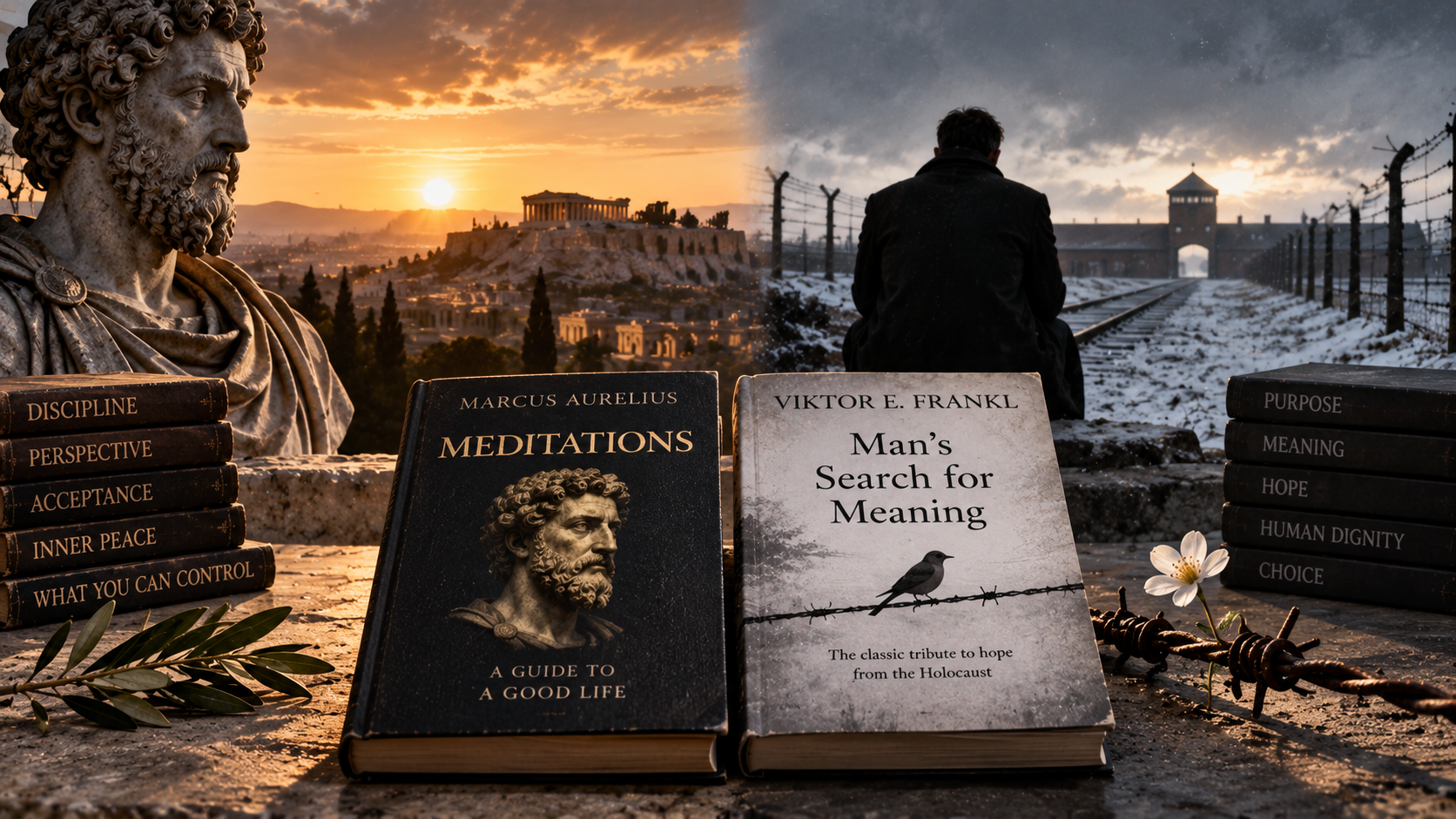
Meditations And Man’s Search For Meaning: Two Different Responses To Adversity
Compare Marcus Aurelius on judgement and duty with Viktor Frankl on meaning and responsibility, preserving their different historical contexts and examining how both books can be applied—or misused—when discussing adversity.
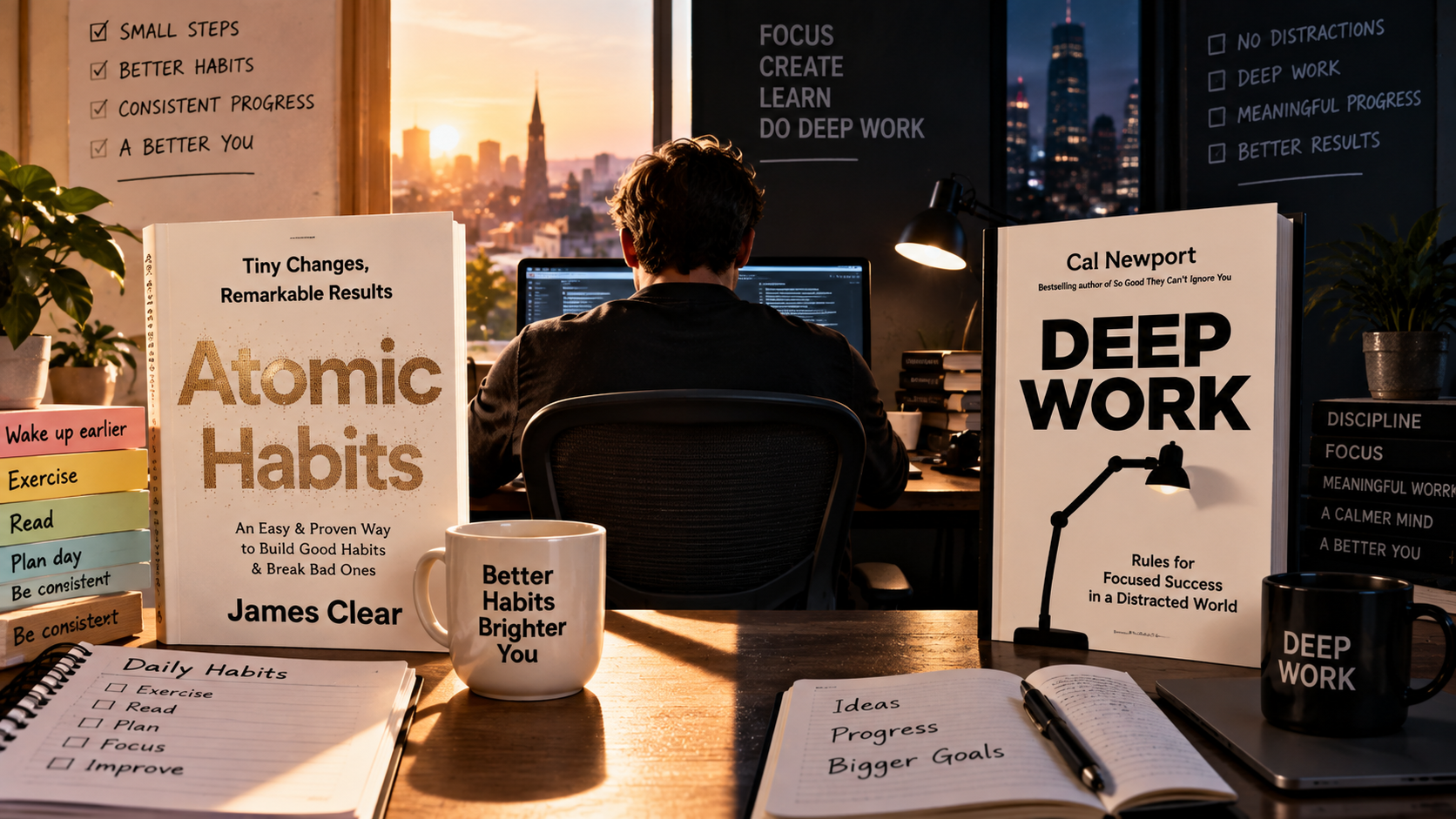
Atomic Habits Vs Deep Work: Which Problem Does Each Book Help You Solve?
Compare James Clear’s habit-building approach with Cal Newport’s emphasis on demanding concentration, then use original worked examples to identify whether your main obstacle is starting, distraction, task choice or workload.

12 Bible Passages That Can Change How You Face Fear, Failure and the Future
12 Bible Passages That Can Change How You Face Fear, Failure and the Future

The Bible Understood Overthinking 2,000 Years Before We Gave It a Name
The Bible Understood Overthinking 2,000 Years Before We Gave It a Name
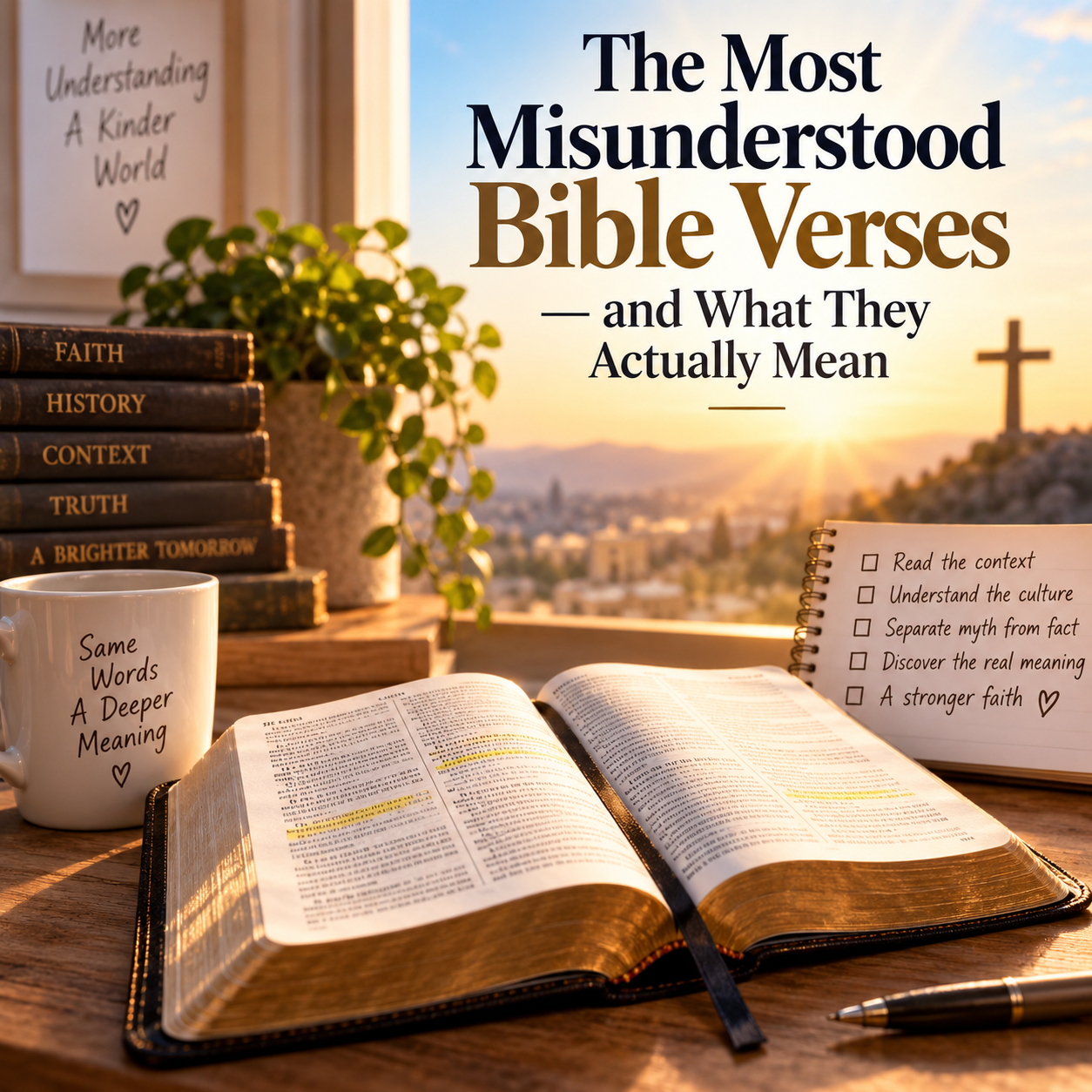
The Most Misunderstood Bible Verses — and What They Actually Mean
The Most Misunderstood Bible Verses — and What They Actually Mean

The Bible’s Greatest Teachings Explained: What They Really Mean and How to Live Them Today
The Bible’s Greatest Teachings Explained: What They Really Mean and How to Live Them Today

Models By Mark Manson Summary: Non-Neediness, Vulnerability, Attraction And Dating Lessons Explained
Models By Mark Manson Summary: Non-Neediness, Vulnerability, Attraction And Dating Lessons Explained