How Did an Experienced Crew Fly Into a Mountain They Never Saw?
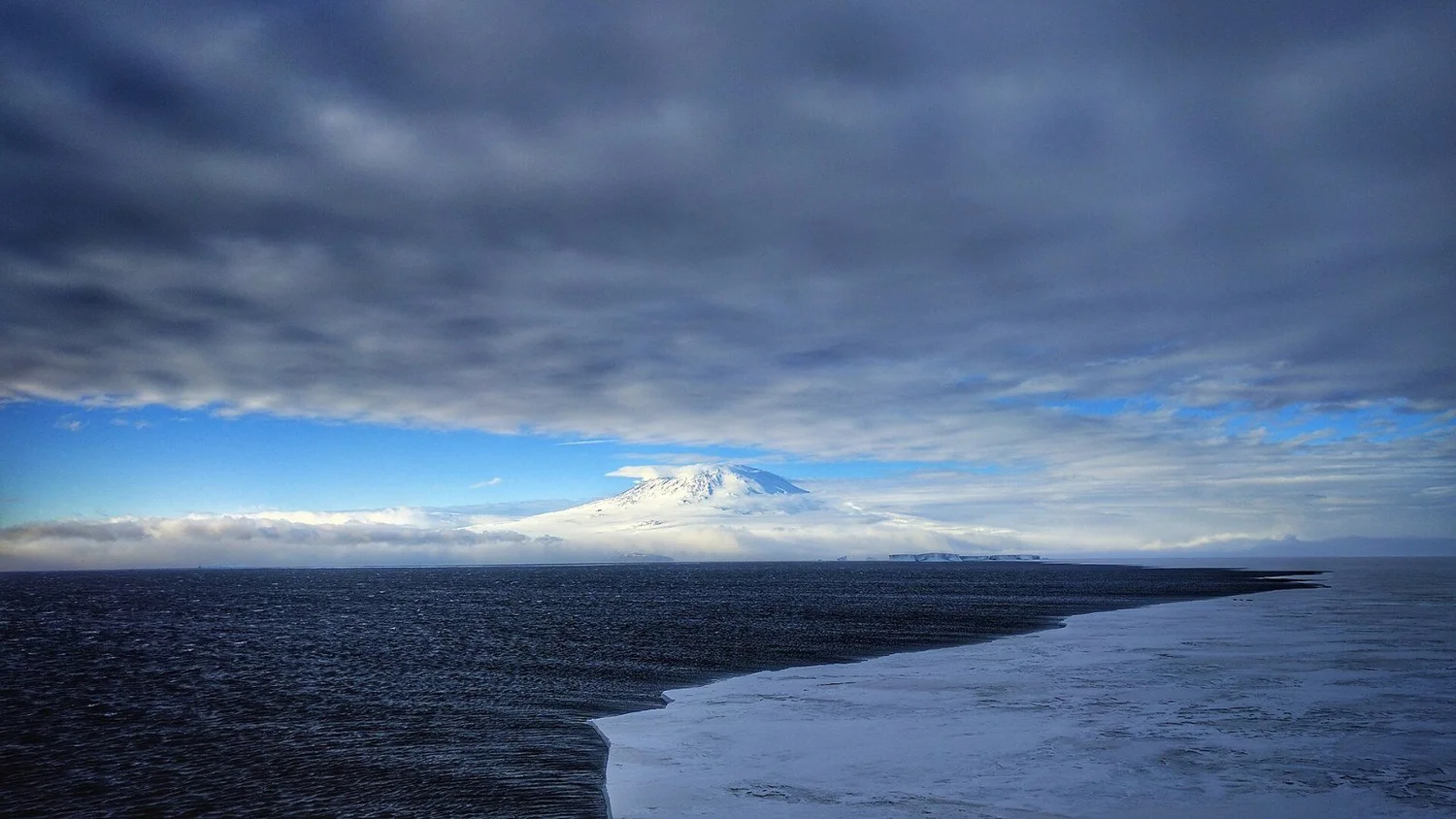
At 12:50pm on 28 November 1979, Antarctic time, an Air New Zealand DC-10 on a sightseeing trip from Auckland flew into the lower slopes of Mount Erebus, an active volcano on Ross Island. All 257 people on board were killed: 237 passengers and 20 crew. Nobody on the flight deck saw the mountain coming. The cockpit voice recorder shows that until the final seconds, the crew believed they were flying over the open water of McMurdo Sound, miles to the west.
The short answer to how it happened is that two things went wrong at once. The route programmed into the aircraft's navigation computer had been changed in the early hours of that morning without the pilots being told, so the "autopilot track" they trusted now led straight at Erebus rather than down the Sound. And the weather produced a whiteout, a polar light condition in which cloud and snow merge so completely that a white mountainside looks like a flat, distant horizon.
The longer answer is why the Erebus disaster still matters 47 years on. The first official report blamed the pilots. A Royal Commission then cleared them and accused the airline of "an orchestrated litany of lies". Britain's Privy Council later ruled that the cover-up finding went too far. And it took 40 years, until 2019, for New Zealand's government to apologise to the families. This explainer sets out what is established, what was contested, and what remains unresolved.
What Was Flight 901?
Air New Zealand began running scheduled Antarctic sightseeing flights in 1977. Flight TE901 was marketed as a once-in-a-lifetime day trip: depart Auckland in the morning, fly south for around five hours, sweep low over McMurdo Sound and the Ross Ice Shelf, then return via Christchurch for refuelling and a crew change before landing back in Auckland in the evening. Qantas ran similar flights from Australia. By the time they ended, more than 10,000 people had taken one, according to RNZ.
Tickets for the November 1979 flights cost NZ$359. Each flight carried a commentator who pointed out landmarks over the public-address system. Sir Edmund Hillary had guided earlier trips and was due to commentate on the 28 November flight, but cancelled because of other commitments. His friend and climbing partner Peter Mulgrew went instead and was among those killed.
The aircraft was a McDonnell Douglas DC-10-30, registration ZK-NZP. Captain Jim Collins, 45, had more than 11,000 flying hours; First Officer Greg Cassin, 37, had nearly 8,000. Neither had flown to Antarctica before, but both were considered qualified for the route. Two flight engineers, Gordon Brooks and Nick Moloney, and a second first officer, Graham Lucas, were also on the flight deck roster.
The passengers were mostly New Zealanders: 180 passengers plus all 20 crew. There were also 24 Japanese passengers, 22 Americans, six Britons, two Canadians, and one passenger each from Australia, France and Switzerland.
The Route Change Nobody Told the Pilots About
This is the heart of the story, and it is less complicated than it first appears.
The route that New Zealand's Civil Aviation Division approved for the Antarctic flights in 1977 ran from Cape Hallett to a radio beacon near McMurdo Station. That straight line happened to pass almost directly over the 3,794-metre summit of Mount Erebus. Flown at the safe altitude laid down for that sector, that was not in itself dangerous.
When Air New Zealand computerised the route, however, a typing error moved the final waypoint. The resulting track ran down the middle of McMurdo Sound, roughly 27 nautical miles (about 50km) west of Erebus, over flat sea ice and water. Most of the earlier flights loaded those coordinates into their inertial navigation systems and flew the Sound route, apparently without anyone realising it differed from the approved one.
On 9 November 1979, Collins and Cassin attended a briefing for their upcoming trip. The flight plan printout they were shown corresponded to the McMurdo Sound track. The night before the flight, Collins marked up his own maps on that basis.
Meanwhile, the captain of a 14 November flight noticed a sizeable gap between the stored McMurdo waypoint and the position of the McMurdo navigation beacon, and told the airline's navigation section. In the early hours of 28 November, at around 1:40am, the navigation section updated the waypoint in the ground computer to match the beacon. That moved the track back over Erebus. The crew of Flight 901 were not told.
So the coordinates printed out on the morning of the flight, and typed into the aircraft's navigation system by its crew, were not the ones they had been briefed on. The aircraft was now programmed to fly straight towards the mountain, while its pilots believed it would take them down an empty stretch of sea.
Justice Peter Mahon, who later investigated the disaster, also found that the telex Air New Zealand sent to US air traffic controllers at McMurdo gave the final waypoint simply as "McMurdo" rather than as coordinates. He concluded this was a deliberate attempt to stop the Americans noticing the change. That is his finding, and it was part of the wider deception case that the Privy Council later rejected, as explained below.
Whiteout: Why the Mountain Was Invisible
As it approached Ross Island, Flight 901 descended through a gap in the cloud, flying a figure-of-eight pattern over the water to get below the cloud base so the passengers could see the landscape. The cloud base was later estimated at around 2,000 to 3,000 feet. Captain Collins told McMurdo he was descending to 2,000 feet, and engaged the autopilot to follow the programmed track.
Below the cloud, the conditions were treacherous in a way the crew did not recognise. Under a continuous layer of cloud, the snow-covered slope of Erebus ahead of them reflected the same flat, diffuse light as the overcast sky. With no shadows and no contrast, the mountainside blended into the cloud above it. The effect, called sector whiteout, created the illusion of a flat horizon far in the distance. The crew appear to have believed they were looking across McMurdo Sound towards the Ross Ice Shelf. In fact they were flying over Lewis Bay, towards the mountain.
Investigators later found that Air New Zealand had given its crews no training in this phenomenon. Passengers' photographs recovered from the wreckage, taken in the moments before impact, showed good visibility beneath the cloud, with landmarks clearly visible miles to either side. That ruled out the idea that the aircraft had simply blundered into cloud. The crew could see, but what they could see was misleading.
The voice recorder suggests some unease on the flight deck. In the final minutes, according to the transcript reported by RNZ and Stuff's White Silence investigation, Collins remarked that the conditions did not look very good. At 12:49pm the ground proximity warning system began sounding "Pull up!". The flight engineer called out the height: five hundred feet, then four hundred. Collins asked for go-around power. Seconds later, the DC-10 struck the slope at about 1,467 feet (447 metres) and broke apart. Everyone on board died instantly.
The Search and Operation Overdue
McMurdo Station lost contact with the flight and alerted Air New Zealand. US Navy aircraft were launched to search. In Christchurch, where around 50 passengers were due to disembark, families waiting at the airport were at first told a short delay was not unusual. At about 9pm, roughly when the aircraft would have run out of fuel, Air New Zealand told the press it believed the aircraft was lost.
A US Navy crew spotted wreckage on the side of Erebus just before 1am. Around 20 hours after the crash, helicopters landed search parties on the mountain, who confirmed there were no survivors.
The recovery mission that followed was called Operation Overdue. New Zealand police officers, a mountain rescue team and US Navy personnel worked in shifts, camping beside the wreckage in polar tents until 9 December 1979. Their task was to recover and record human remains in brutal conditions, sometimes holding off skuas while waiting for weather that would allow helicopters to fly. Identification took weeks and relied on pathologists, dentists and police. In the end, 83% of those on board were identified. The remains of 44 people were not individually identified, and a funeral was held for them on 22 February 1980.
Many who took part carried the experience for the rest of their lives. In 2006 New Zealand created a Special Service Medal (Erebus) to recognise those, New Zealanders and Americans among them, who worked on the recovery, identification and investigation.
Most of the wreckage is still on the mountain. In cold periods it is buried under snow; in warmer spells parts of it reappear.
The First Verdict: Pilot Error
Both flight recorders survived and could be read. New Zealand's chief inspector of air accidents, Ron Chippindale, published his report on 12 June 1980. It found that the probable cause was the captain's decision to descend below the customary minimum altitude and to continue at that height when the crew were uncertain of their position.
The minimum safe altitude for the approach to Erebus was 16,000 feet, and 6,000 feet in the sector south of the mountain, and then only in good weather. Flight 901 was far below both.
That framing caused fury among many families and pilots, and it had obvious weaknesses. Earlier Antarctic flights had routinely flown low to give passengers a better view; Air New Zealand's own publicity had featured photographs from such flights. Earlier briefings had approved descents to whatever altitude US controllers at McMurdo authorised, and McMurdo had offered Flight 901 a radar-assisted descent to 1,500 feet. And the report did not put the changed coordinates at the centre of the story. Public pressure led the government to set up a Royal Commission of Inquiry.
Justice Mahon and "An Orchestrated Litany of Lies"
The Royal Commission was a one-man inquiry led by Justice Peter Mahon, a High Court judge. His report, published in April 1981, reached a fundamentally different conclusion.
Mahon found that the "single, dominant and effective cause" of the disaster was the airline's alteration of the flight-plan coordinates without telling the crew. He described the whiteout as "a malevolent trick of the polar light". He cleared Captain Collins and his crew of blame, noting that experienced pilots had every reason to trust the inertial navigation system's accuracy. He also criticised the Civil Aviation Division, which the Christian Science Monitor reported he described as "always too ready to approve" the airline's proposals.
Then came the passage that made the report famous. Mahon found that airline executives and senior pilots had presented false evidence to his inquiry in a concerted attempt to cover up the errors of the ground staff. In his report he called their evidence "an orchestrated litany of lies". He also ordered Air New Zealand to pay more than half of the inquiry's costs.
The phrase entered New Zealand's political vocabulary and stayed there for years. The report also led to changes in the airline's senior management.
What the Courts Decided
Air New Zealand challenged the report. The New Zealand Court of Appeal unanimously set aside the costs order. By a majority, it declined to go further and quash the conspiracy finding.
Mahon appealed to the Judicial Committee of the Privy Council in London, then New Zealand's highest court. On 20 October 1983 it dismissed his appeal. The Law Lords held that his finding of a predetermined plan of deception by airline management was not supported by the evidence and had been reached in breach of natural justice.
Two points about that judgment are often lost.
- The cause of the crash was not overturned. Mahon's findings that the route was changed without the crew being told, and that this rather than pilot error was the dominant cause, were not challenged before the Court of Appeal or the Privy Council. They stand.
- The Privy Council did not say the witnesses told the truth. It accepted "unreservedly" that evidence given by several executive pilots on low flying was false, but said that falsehood could not have formed part of a co-ordinated plan to deceive.
Analysis: The practical effect was a split verdict that has shaped arguments ever since. The crew were cleared on the cause; the airline was cleared of a proven conspiracy; and the question of what the airline knew and when has never been fully settled in a way that satisfied everyone. When Jacinda Ardern apologised in 2019, she was careful to reflect both halves: she quoted the Privy Council's view that the Royal Commission report "convincingly clears Captain Collins and First Officer Cassin", while acknowledging that the conspiracy findings had been found unsupported.
Why the Families Waited 40 Years for an Apology
For many families, the injury was not only the crash but what came after: the first report blaming the pilots, the legal fight over Mahon's findings, and the way they felt they were treated by the airline. Mahon's report was not formally tabled in Parliament until 1999, by the then Transport Minister Maurice Williamson.
The apologies came slowly.
- 2008: the New Zealand Air Line Pilots' Association posthumously gave Mahon its Jim Collins Memorial Award for his contribution to air safety.
- 2009: Air New Zealand's chief executive, Rob Fyfe, apologised to those who did not receive appropriate support and compassion from the airline after the crash, and unveiled a memorial sculpture at its headquarters.
- 28 November 2019: on the 40th anniversary, Prime Minister Jacinda Ardern apologised on behalf of the government for the actions of an airline then in full state ownership. "The pilots were not responsible for this tragedy," she said, and she acknowledged that Parliament had handled the Mahon report wrongly. "After 40 years, setting down grief will only be made harder, if we don't acknowledge past wrongs."
At the same event Air New Zealand's chair, Dame Therese Walsh, apologised "on behalf of an airline which 40 years ago failed in its duty of care to its passengers and staff", and for the way the families of those lost on Erebus were treated, RNZ reported.
The National Memorial That Still Has Not Been Built
The government committed to a national Erebus memorial in 2017. Its first chosen site, in Dove-Myer Robinson Park (the Parnell Rose Gardens) in Auckland, met strong local opposition and an Ombudsman investigation, which found in 2022 that the Ministry for Culture and Heritage should have consulted more widely. In 2023, landslips caused by the Auckland floods and Cyclone Gabrielle left the land unsafe, and the plan was abandoned.
On 27 November 2025, the ministry named Cracroft Reserve in Cashmere, Christchurch, as its preferred site, with the Avon riverbank held in reserve. Christchurch was where Flight 901 should have landed first on its return. The ministry said it had looked at 50 sites in the Auckland area without success, had a budget of NZ$3.8 million, and was committed to building the memorial as soon as possible, but could not commit to a timeframe. Some families welcomed the move; others had wanted the memorial in Auckland.
Other memorials already exist. A cross stands on the mountainside above New Zealand's Scott Base in Antarctica, and a koru-shaped capsule containing letters from families was placed beside it in 2010. The memorial at Waikumete Cemetery in Auckland honours the 16 passengers who could not be identified and the 28 whose bodies were never found, with a Japanese cherry tree for the 24 Japanese victims. A crew memorial stands near Auckland Airport.
What Erebus Changed
The disaster ended commercial Antarctic sightseeing for years. Air New Zealand cancelled its remaining flights; Qantas suspended its own in February 1980 and resumed on a limited basis only in 1994. Sightseeing charters from New Zealand did not return until 2013.
It also came at a terrible moment for the DC-10. Six months earlier, American Airlines Flight 191 had crashed in Chicago, and the type had been grounded for five weeks. Air New Zealand replaced its DC-10s with Boeing 747s from 1981.
Analysis: The lasting lessons are about systems rather than one bad decision. Erebus is a textbook case of three weaknesses lining up: a data error in a computer that pilots had learned to trust; a culture in which flying low over Antarctica for the view had become normal; and a natural hazard that the airline had not trained its crews to recognise. Each could have been caught. None was. The same pattern, in which people trust an automated system more than their surroundings and nobody owns the gap between them, recurs in later disasters, including the Therac-25 radiation overdoses and the Boeing 737 MAX crashes. Erebus is also a case study in how an accident investigation can shape public memory: for decades, many New Zealanders' sense of the disaster was defined less by the crash than by the fight over who was to blame.
What Is Still Disputed or Unknown
- What airline managers knew. Mahon found a deliberate cover-up; the Privy Council found that finding unsupported and unfair, while accepting that some evidence was false. There has been no later judicial finding to settle it.
- The weight given to the descent. Mahon's cause finding stands, and the 2019 apology says the pilots were not responsible. But the descent far below the published minimum safe altitude, which Chippindale treated as the principal cause, remains part of the factual record, alongside evidence that earlier flights had done the same with the airline's knowledge.
- The memorial. A preferred site has been chosen, but when it will be built has not been confirmed.
Conclusion
Flight 901 flew into Mount Erebus because the aircraft was programmed to fly over the mountain while its crew believed it would fly down McMurdo Sound, and because a whiteout made the mountain look like empty space. That much has been settled since 1981. What took far longer was accepting it: an official report that blamed the pilots, a judge whose cover-up finding was struck down even as his account of the cause survived, and a government apology that came 40 years later. On the 47th anniversary, the families are still waiting for the national memorial they were promised in 2017.
Sources
- Wikipedia: Mount Erebus disaster (citing the Chippindale accident report, the Royal Commission report and the 1983 Privy Council judgment)
- Christian Science Monitor: Cover-up alleged in New Zealand's worst air disaster (30 April 1981)
- RNZ / Stuff, Michael Wright: White Silence — the tragic story of the Air New Zealand jet that flew into Mt Erebus (8 November 2019)
- RNZ: Erebus disaster — PM offers apology on behalf of NZ government, Air New Zealand (28 November 2019)
- The Spinoff: Jacinda Ardern — 40 years on, we apologise for the state response on Erebus (speech transcript, 28 November 2019)
- RNZ, Anna Sargent: Location of National Erebus Memorial revealed in Christchurch (27 November 2025)
Next Reads
- The Piper Alpha Disaster Explained: What Went Wrong on the North Sea Platform and What Changed After 167 Died
- The Boeing 737 MAX Disaster Explained: The Crashes, MCAS and What Boeing Knew
- The Therac-25 Disaster Explained: How a Software Bug Gave Patients Massive Radiation Overdoses
- The Challenger Disaster Explained: What NASA Knew Before the Shuttle Broke Apart
- MH370 Deep-Sea Search Restarts, Reopening Aviation's Most Haunted Mystery
- The Biggest Cover-Ups Eventually Proven True, Ranked
- The Bhopal Gas Disaster Explained: What Happened, Who Was Blamed and Why It Isn't Over
