

Trump Says Three-Hour Iran Talks Went “Very Well” — Just Hours After His UN Warning
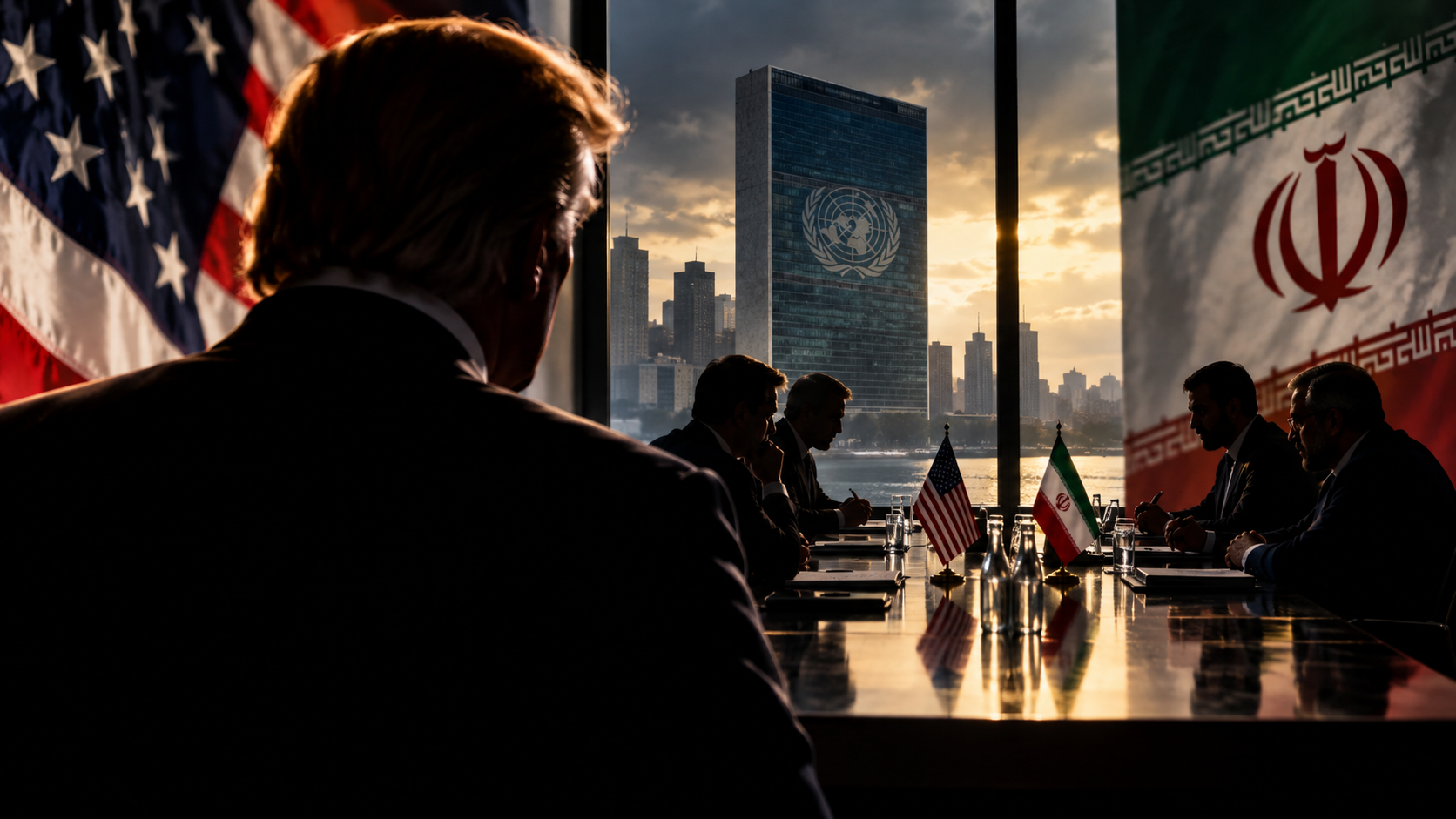
US And Iranian Officials Meet For Three Hours In New York
Three Hours That Suddenly Changed The Mood
Donald Trump says senior US representatives held a three-hour meeting with an Iranian delegation in New York on Tuesday, September 22, in a striking diplomatic development only hours after his address to the United Nations General Assembly. Trump identified his envoys Steve Witkoff and Jared Kushner as the American representatives and described the encounter as a “very good” and productive meeting. Another round of talks, he said, is expected in the “very near future.”
That alone would be significant. Washington and Tehran have spent months locked in military confrontation, sanctions pressure, threats and competing demands over Iran’s nuclear ambitions and the strategic crisis surrounding the Strait of Hormuz. A sustained three-hour encounter does not establish that the two sides are close to agreement, but it does show that direct diplomacy has reopened at a moment when the public rhetoric could scarcely be more confrontational.
The timing is what makes the meeting extraordinary. Trump had just used the UN’s biggest diplomatic stage to say he faced a choice between reaching an agreement with Iran and potentially “annihilating” the Islamic Republic, while insisting Tehran would not be permitted to obtain a nuclear weapon. The White House’s account of his address emphasized American military strength and the administration’s willingness to confront adversaries.
Then came the talks.
Trump Is Applying Pressure And Offering A Door At The Same Time
Trump’s message to Iran now operates on two tracks that appear contradictory but are central to his approach: extreme pressure on one side and the promise of a negotiated exit on the other.
Speaking after the three-hour meeting, Trump said he believed a settlement would eventually be reached. He also framed Tehran’s choice in stark terms, contrasting what he called the possibility of “greatness” with “obliteration.” That is not evidence that Iran has accepted American terms. It is evidence that Trump is publicly presenting diplomacy and military escalation as competing paths available to Tehran.
The central unresolved question is what each side would actually have to surrender to turn a meeting into a deal. Washington’s long-standing focus includes preventing Iran from developing a nuclear weapon, while the wider conflict has also become entangled with sanctions, Iranian oil, military operations and control of maritime movement through Hormuz.
That last issue matters enormously. Taylor Tailored has previously examined how the Strait of Hormuz has evolved from a shipping route into one of the central pressure points of the US-Iran confrontation. Diplomacy is therefore not taking place in isolation. Every negotiation is occurring against a background of military power, energy security and the ability to influence one of the most important trade corridors on Earth.
The Strait Of Hormuz May Be Where The Real Bargaining Power Lies
For months, Hormuz has been more than a battlefield problem. It has become leverage.
The narrow passage normally carries a huge share of global energy exports, giving any sustained disruption implications far beyond Iran, the United States or the Gulf. Taylor Tailored’s analysis of how Iran has used military pressure and selective access rather than a simple physical blockade helps explain why negotiations over the conflict cannot easily be separated from shipping.
Iranian officials have indicated that reopening and normalizing the strait is connected to demands involving American military and economic pressure. That means a peace framework could potentially require negotiations over several interconnected issues rather than one isolated nuclear agreement. Public reporting around Tuesday’s diplomacy also points to Hormuz remaining central to the discussions, although the complete negotiating positions and concessions offered behind closed doors have not been published.
That distinction matters. A three-hour meeting can produce momentum without producing agreement. The most consequential details — sanctions, military guarantees, nuclear restrictions, shipping arrangements and enforcement mechanisms — could also be the hardest ones to settle.
The Nuclear Question Still Sits At The Center
Trump has repeatedly made one condition politically explicit: Iran cannot be allowed to possess a nuclear weapon.
That gives any future negotiation an immediate test. Tehran and Washington may be able to find temporary arrangements around military activity or shipping, but a durable agreement would have to confront the nuclear issue in a form both governments can accept.
Trump’s public language suggests he believes overwhelming American pressure increases the chances of Tehran compromising. Iran’s leadership has its own political and strategic incentives not to appear to capitulate under threat. Those pressures can exist simultaneously, creating exactly the kind of negotiating environment in which progress is possible but breakdown is never far away.
Taylor Tailored previously explored how nuclear pressure, economic warfare and the battle over Hormuz have converged into the same strategic confrontation. The three-hour New York meeting suggests those separate fronts may increasingly be pushed toward one negotiating table.
That does not mean they are close to resolution.
It means the argument about how the conflict ends may finally be becoming as important as the argument about how it is fought.
Why Three Hours Matters More Than A Handshake
Diplomatic encounters can be symbolic. Three hours is harder to dismiss as a photo opportunity.
It implies that enough substance existed for American and Iranian representatives to remain in discussions for a significant period. Trump’s confirmation that another meeting is expected soon strengthens the impression that Tuesday was not intended as an isolated contact.
But there is an important gap between “talks happened” and “a deal is coming.” Trump has expressed confidence about a settlement, yet the terms necessary to re
