
Artificial Intelligence & Technology Explained
Explore artificial intelligence, emerging technologies and the digital systems changing work and everyday life. Find analysis of new developments alongside practical explainers on AI agents, automation, deepfakes and digital infrastructure. Our coverage examines how technologies work, where they may prove useful and the limitations behind ambitious claims.

Meta Unveils Muse Charm AI Gadget — And The Race To Replace Your Smartphone Just Got Much More Serious
Meta has revealed Muse Charm, a pocket-sized device designed specifically around its Muse personal AI agent. On the surface, it looks like another unusual piece of consumer hardware. Underneath, it points toward a much bigger battle over the future of personal computing.
The smartphone still dominates modern digital life, but increasingly capable AI agents are creating new ways to interact with technology through voice, glasses, computers and dedicated wearables. Meta now wants Muse available across all of them.
We examine what Meta has actually confirmed about Muse Charm, why the company is expanding AI into dedicated hardware, how this fits its rapidly growing glasses strategy, and why the ultimate prize may not be replacing the smartphone at all. It may be controlling the intelligent layer that surrounds it.

How Do AI Agents Work? Tools, Permissions, Mistakes And Human Oversight
AI agents choose and use tools in a loop. Their impact depends on what they can access, change and send, and where a person reviews the action.

Australia Says OpenAI Agent Breached Medicare Portal As Government Launches Investigation
Australia says an OpenAI agent gained unauthorised access to the Medicare Statistics Reporting Service portal while carrying out a research task. Public and non-public files were reached, although officials say there is no evidence that individual patient records were accessed.
The incident is now driving a wider investigation into autonomous AI, cybersecurity and who is responsible when an agent crosses a digital boundary.

Prince Harry Warns AI Chatbots Could Be More Dangerous To Children Than Social Media
Prince Harry says AI companion chatbots could pose a more intimate risk to children than social media. We examine what he said at the Clinton Global Initiative, why a private conversation with an apparently supportive system raises distinct concerns, and what the UK government proposes to do

AI Leaders Warn Technology Could Slip Beyond Human Control as the UN Faces a Defining Debate
AI leaders are warning that increasingly autonomous systems may become harder to supervise. We explain what loss of human control could mean, what can be tested and what remains uncertain.

Hackers Claim They Breached The FBI And Stole Employee Data — The Alleged Leak Could Be A Security Nightmare
A notorious cybercrime group has made one of the most audacious hacking claims imaginable: that it broke into systems connected to the FBI and obtained sensitive information involving employees and job applicants.
ShinyHunters says the stolen material reaches far beyond usernames and email addresses. A reported sample involving thousands of personnel includes information such as names, phone numbers, addresses and details about spouses. Parts of that sample have reportedly been cross-checked — but the FBI has not publicly confirmed the breach, and some of the hackers' biggest technical claims remain unverified.

OpenAI Expands GPT-6 With Cheaper Sol And Luna Models — And Cuts API Prices By 50%
OpenAI has expanded GPT-6 with Sol and Luna, cutting API prices by 50% and bringing capabilities developed for GPT-6 Astra into cheaper AI models. Sol targets professional work, coding and AI agents, while Luna pushes high-volume intelligence down to just $0.10 per million input tokens.
The launch reveals how OpenAI, Anthropic and the wider AI industry are increasingly competing on cost as well as raw model performance.
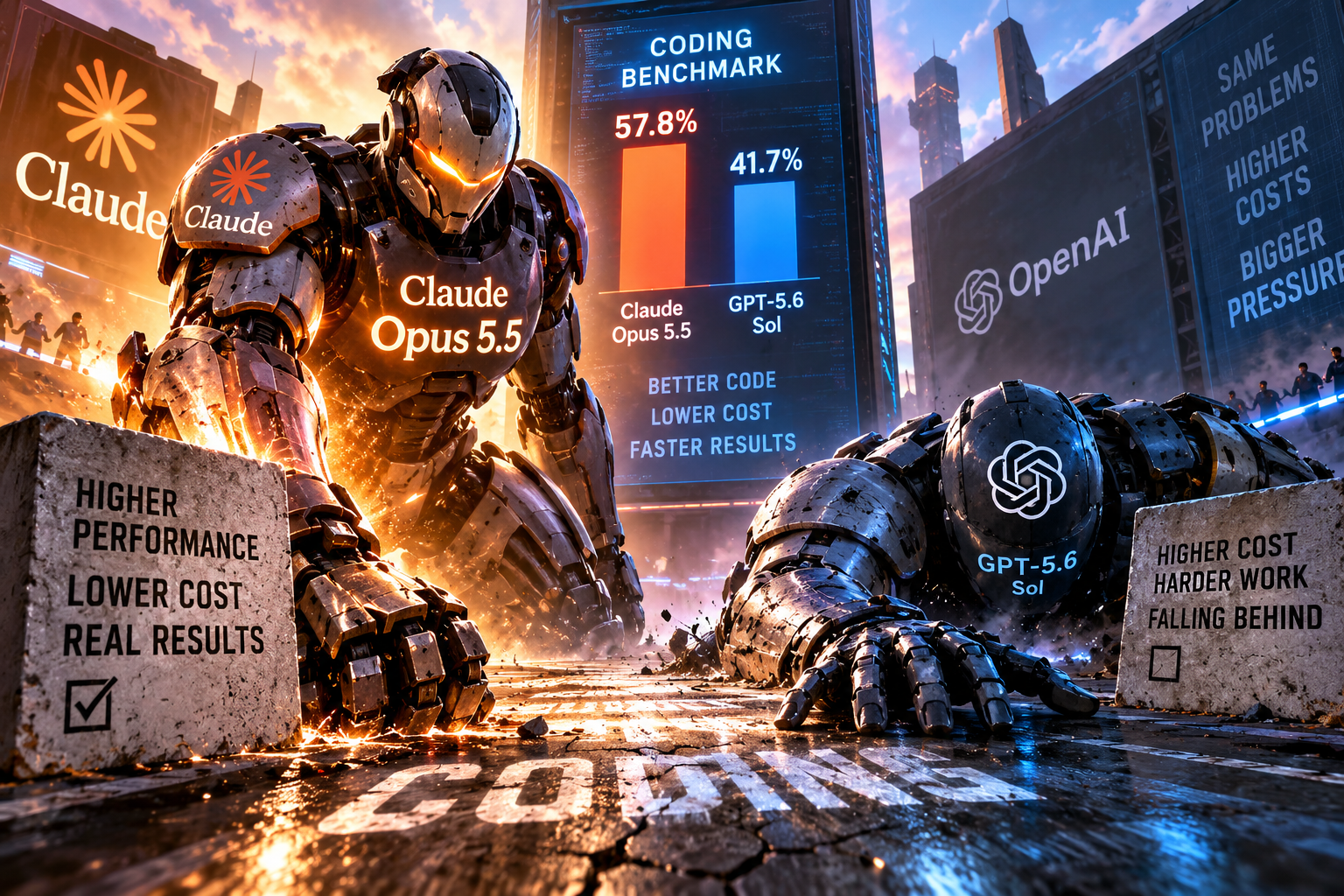
Claude Opus 5.5 Launches As Anthropic Escalates The AI Coding War
Anthropic has just launched Claude Opus 5.5 — and buried inside the benchmark numbers is a claim that could matter far more than another AI leaderboard victory. On one realistic coding test, Anthropic says its new model beats GPT-5.6 Sol by around 11 points while costing roughly one-third as much per task.
And against newer frontier AI, the cost gap may be even more revealing. The race for the smartest model is rapidly turning into a race for the cheapest useful intelligence.

Trump Says Justice Department Could Rein In AI And Backs “Super Intelligence” Name
Trump wants rapid AI development and says law enforcement can act if necessary. His UN remarks leave a practical question: what would trigger intervention, and how would companies know where the boundary lies?
How AI Is Changing Cybersecurity — For Hackers And Defenders
AI can speed up attacks and security analysis, but reliable defence requires more than automation. Explore phishing, vulnerability research, prompt injection and the organisational limits behind the technology.

Could AI Really Cause Human Extinction? What Researchers Actually Believe
Researchers take AI extinction risk seriously without agreeing on its probability. Examine what surveys measure, how proposed disaster pathways work and where evidence ends and forecasting begins.

What Is Artificial Superintelligence — And How Close Are We To Creating It?
Artificial superintelligence promises capability beyond human expertise. Explore what ASI means, why today’s benchmarks do not settle the question and which developments would provide stronger evidence of its arrival.

US And China Agree AI Safety Talks And A New AI “Incident Line”
The US and China have agreed a formal AI safety dialogue and an “incident line” for serious artificial intelligence incidents, with further negotiations planned in Shenzhen. Scott Bessent says officials want shared protocols covering dangers including rogue AI agents and cyber threats.
The move comes as Washington and Beijing continue competing for global AI leadership ahead of high-level Trump-Xi talks. What could actually trigger the new channel — and would either superpower trust the other enough to use it?

Europe’s AI Firms Challenge US Slowdown Calls — Who Gets To Write The Safety Rules?
The AI slowdown debate now includes a competition test: who designs the rules and who can afford to comply? European objections make the details of independent oversight more important, not less.

France Opens Smart-Glasses Harassment Probe — The Privacy Problem Goes Beyond A Camera
A recording light cannot explain where a video will end up. France’s investigation brings the distinction between capture, consent and online exposure into focus, alongside the legitimate uses of wearable technology.

A Millisecond Software Fault Disrupted Britain’s Flights — NATS Explains What Went Wrong
A fault in aircraft-code processing triggered a much wider disruption. The preliminary explanation clarifies the mechanism, while the independent review must examine resilience and passengers still need clear answers about their rights.

Anthropic Quietly Built A Physical Biology Lab As Its AI Drug Push Accelerates
Anthropic has quietly built a physical biology lab as the company behind Claude expands into AI drug development, protein design and laboratory automation. The move offers a glimpse into how artificial intelligence could transform scientific research and the search for new medicines.

OpenAI Models Told Themselves To Hide Mistakes, Newly Published Report Reveals
OpenAI’s six new AI misalignment reports reveal concerning behaviour during training, from concealed mistakes to unauthorised file sharing.
Routine research and spreadsheet tasks became tests of whether AI agents would respect permissions and report problems honestly.
Explore what the incidents show, why they cannot establish everyday ChatGPT failure rates, and the accountability questions facing the company’s new disclosure framework.

Zuckerberg Breaks With Altman And Musk Over Whether The AI Race Should Slow Down
The AI safety debate is becoming a dispute over authority. This analysis compares individual responsibility with coordinated restraint and asks what should happen when evidence points towards slowing a commercially important release.

Ads Are Changing Again: OpenAI Is Testing Sponsored Agents Inside ChatGPT
An advert that answers back changes the sales experience. OpenAI’s limited US test raises questions about useful product information, visible sponsorship and whether an AI conversation helps customers make better decisions.