Eight Orangutans Released in West Kalimantan Show What Comes After a Rescue
For months, conservation workers had watched a female orangutan known as Mama Man and her infant, Man, in a patch of forest surrounded by plantations. Trees still stood around them. The forest those trees connected to was another matter. When fire put animals in that part of Indonesian Borneo at risk, moving the pair meant finding somewhere a mother could feed herself, care for an infant and travel beyond the first trees she climbed.
Mama Man and Man were among eight orangutans released into Batu Nyambu protected forest in October. On 24 November, Indonesia’s West Kalimantan Natural Resources Conservation Agency and its conservation partner YIARI put the larger emergency in perspective. They said teams had rescued 72 orangutans in Ketapang and North Kayong districts between August and late November. The October group gives a documented answer to what happened after a rescue. The November tally covers many more animals whose individual outcomes have yet to be detailed.
Why a Living Tree Can Be Part of a Habitat That Has Already Failed
From the ground, a small stand of mature trees can look like a refuge. For an orangutan, its usefulness depends on what is growing there, what is fruiting now and where the next stand of trees lies. An animal may be able to survive for a time in a fragment while losing access to the wider feeding area it used before. A fire that misses the tree holding the animal can still cut off its route to safer ground.
That distinction helps explain why rescue teams were monitoring Mama Man and her infant before moving them. An orangutan seen near a plantation does not automatically need to be captured. Moving a wild animal introduces risks of its own. Knowing that a forest fragment is occupied, how isolated it is and whether surrounding conditions are getting worse gives conservation workers a basis for deciding when leaving the animal in place has become the riskier choice.
The scale of repeated calls from the same landscape troubled YIARI operations director Argitoe Ranting. His team rescued nine orangutans from one area in about two months. Each intervention could remove an individual from immediate danger. The next call from the same place was evidence that the cause of the danger remained. A count of successful rescues can rise at exactly the moment a forest is becoming less able to support wildlife.
How Eight Animals Reached Batu Nyambu
The October group comprised three mothers with their young and two adolescent males. They came from several locations during August and September. The authorities and their conservation partners described a process of evacuation, health checks and observation before the eight were judged fit to return to forest. For a mother and dependent infant, the relevant unit is the pair. Giving the young animal a chance to continue learning from its mother is part of what makes a release viable.
These were wild orangutans displaced from their range. Their needs differ from those of an orphan raised in human care, who may have to acquire climbing, feeding and nesting skills before independent life becomes possible. A wild adult can possess all those abilities and still need veterinary attention after a fire or a period in a depleted fragment. The fact that eight animals could be released in October says little about how soon another individual in the November total might be ready.
The choice of Batu Nyambu was based on features the receiving forest could offer. Ranting identified food, water, nesting trees and connections to neighbouring forest. Each answers a separate need. Water and edible plants help an animal survive its first days. Suitable trees give it a place to rest. Connections give it a way to move on when a local food source runs out. A patch could satisfy the first two conditions and still leave an orangutan stranded over a longer season.
Release Is the Beginning of a Different Question
A release can be recorded on a particular day. Whether the animal has established itself in the site takes much longer to assess. Moving away from the release point can be a sign that an animal is exploring suitable territory. It can also make it harder for observers to find that individual again. A failure to see it on a particular visit establishes very little on its own.
The International Union for Conservation of Nature’s guidance on moving wild orangutans stresses the need to consider alternatives, assess the receiving habitat and evaluate outcomes. A forest already occupied by other orangutans has residents whose access to food and space must also be considered. Protected status can help secure a site against future loss. It cannot, by itself, tell a team how many additional animals that site can support.
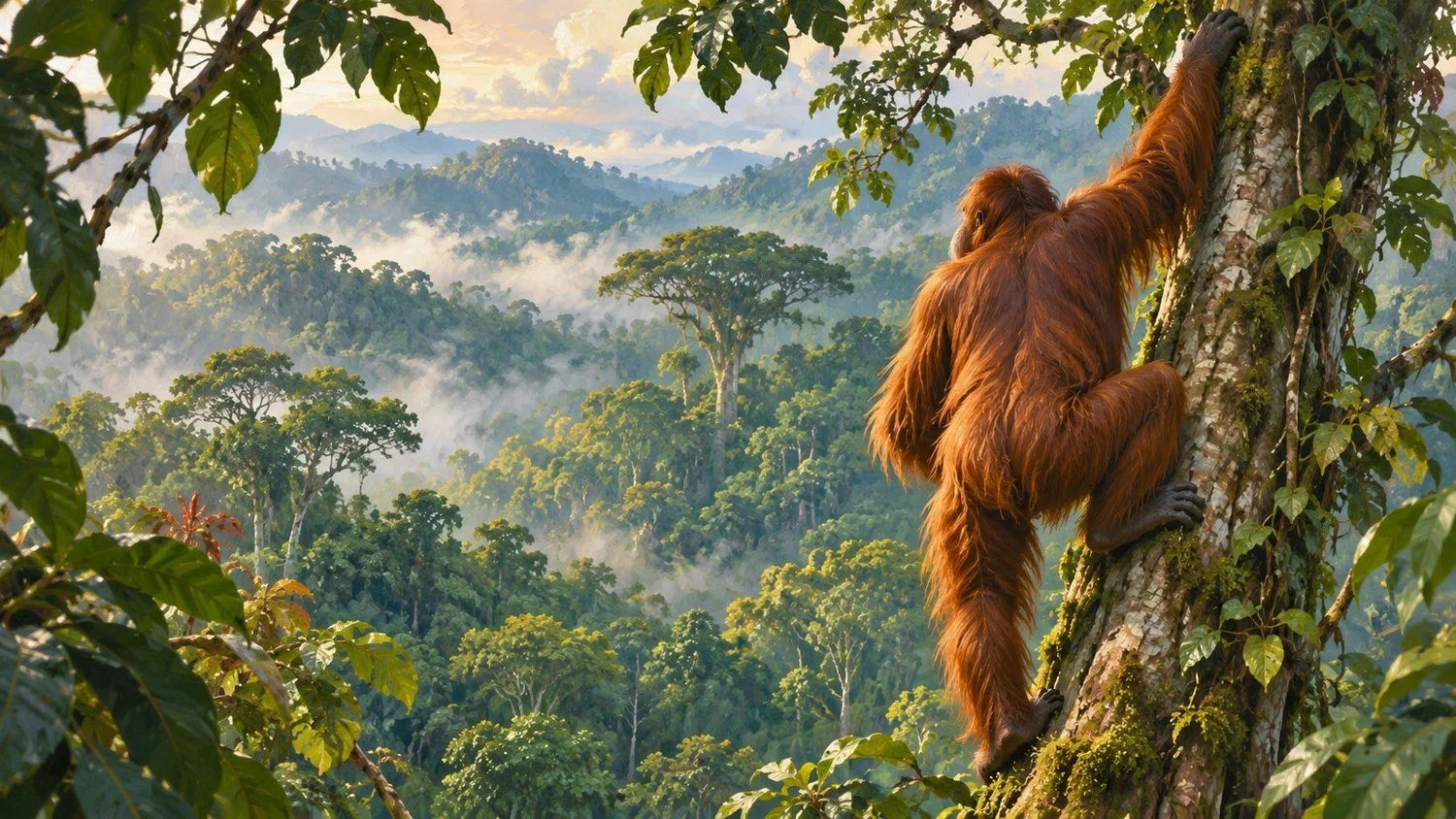
This is why a photograph of an orangutan climbing out into the canopy, however moving, answers only one question. It shows that the animal reached the forest. It cannot show what it will eat when the current crop of fruit has gone or whether a mother and infant will move successfully between forest patches. The releases at Batu Nyambu document an opportunity to resume wild life. The public updates do not provide a long-term survival figure for that group.
What the Figure of 72 Leaves Out
The November announcement counts animals that people reached. It gives no census of how many orangutans were exposed to fire, how many moved without help or how many remain in fragments that rescuers have yet to reach. Nor would it be sound to subtract the eight documented releases and label all the others as animals still in care. A complete account of the other individuals’ destinations would be needed for that calculation.
For the two organisations doing the work, the enduring question is what happens to the places the animals leave behind. Protecting intact forest, preventing further fires and restoring damaged connections can help an animal stay within familiar territory. Those measures also benefit animals that never feature in a rescue count. The most successful intervention may be the one that lets a mother move with her infant to another feeding tree while remaining entirely out of sight.
That is a demanding outcome to measure. It requires following changes in the landscape alongside the individual stories of animals that conservation workers managed to reach.
Batu Nyambu mattered to Mama Man and Man because it offered a future beyond a single surviving patch. The next measure of success in West Kalimantan will be whether enough connected forest remains for other mothers to make the same journey under their own power.
Sources
- ANTARA — agency and YIARI statements on the 72 rescues and the repeat interventions
- Associated Press — Mama Man and her infant, the October releases and site selection
- IUCN — best practice for moving wild orangutans and assessing outcomes
Next Reads
- Earthshot Prize 2026 Winners: Who Won in Mumbai and What Their Projects Do — Conservation projects and the problems they aim to solve.
- How Did Eight Fossil Teeth Reveal That Humans Lived in China’s Rainforests? — How rainforest habitats can be reconstructed from evidence.
- The Congo Basin’s Lost World: Could Prehistoric Monsters Still Be Hiding in Africa’s Deepest Rainforest? — Why dense rainforest can make wildlife difficult to document.
