The Women Who Faced a Wild Cow in Carthage
Nero Could Never Have Sent A Christian Into The Colosseum.
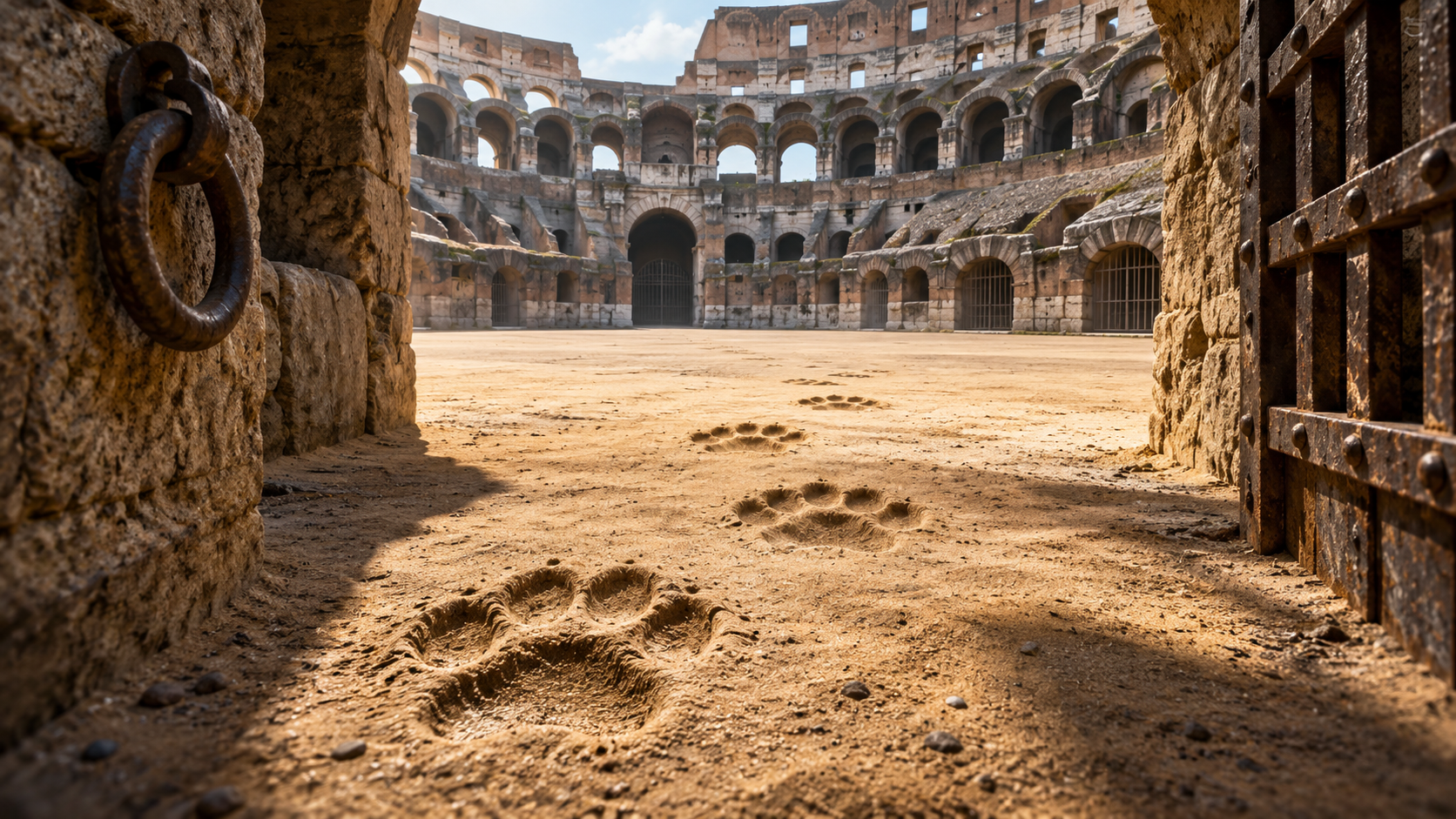
Picture Nero watching lions approach a group of Christians on the sand of Rome’s Colosseum. It is a scene that looks instantly recognisable and contains a decisive chronological error. Nero died in AD 68. The Colosseum opened in AD 80. Romans did use animals to kill condemned people, and early Christians remembered believers who died in arenas. Identifying a particular emperor, animal and amphitheatre requires three pieces of evidence that the familiar image combines without asking.
There are better ways into this history than the imagined scene. A Roman senator describes what Nero did after a fire. A Christian prisoner writes about the animals he expects to face. A North African congregation remembers two women in an arena at Carthage. Read separately, these accounts reveal three quite different experiences of Roman power.
What Tacitus Actually Places in Nero’s Gardens
After the great fire of Rome in AD 64, Nero fastened blame on Christians, according to the later account of the Roman historian Tacitus. He describes punishments turned into spectacles. Some victims wore animal skins and were torn by dogs. Others were crucified or burned. Nero made his gardens available. A circus also features in the account, the word here referring to a Roman entertainment venue.
Tacitus has little sympathy for Christianity. His disgust concerns the emperor’s cruelty and the impression that the killings served one man’s pleasure. That angle matters because it supplies an ancient observer’s way of thinking about an audience. Even spectators disposed to dislike the victims could become disturbed by the character of the punishment.
The detail most likely to disappear in retelling is the dogs. Animal skins on the victims, dogs attacking them, a Roman crowd and an emperor make a sufficiently terrible scene. Substituting lions and moving it to the best-known surviving monument makes it easier for a modern audience to picture. It also changes two things the source actually tells us.
What Ignatius Expected on the Way to Rome
Ignatius, bishop of Antioch, wrote to Roman Christians as a prisoner on his way to their city. In his letter he anticipates wild beasts and asks readers to refrain from intervening to prevent his death. His language is deeply theological. He imagines what the animals will do through the image of grain ground into bread.
It is a rare opportunity to hear what one condemned Christian expected before reaching Rome. The letter also has an obvious limit. Its author cannot report his own execution in advance. It does not identify the arena in which a particular animal finally met him. Later tradition places his martyrdom in the Colosseum. The earlier letter and the later location should retain their separate dates.
A Better-Documented Arena Was in Carthage
The Passion of Perpetua and Felicity describes the execution of Christians at Carthage, in modern Tunisia, in AD 203. Part of the work is attributed to Perpetua herself. An editor records events beyond the point where a prisoner could have written about her own experience. The account distinguishes the prisoners, the animals and the successive stages of their ordeal.
For Perpetua and Felicity the animal is a wild cow. That detail is memorable precisely because it jars with the lion a reader expects. The story also takes the women back from the anonymity of a crowd. One had been nursing a child in prison. The other had recently given birth. Their community remembered people with family histories and bodily needs before it remembered them as figures on arena sand.
Carthage had its own audience, officials and traditions of entertainment. Converting every execution involving animals into a Roman Colosseum story erases the provincial cities where the violence happened. It also loses a rare chance to understand how a text moved between a prisoner’s perspective and that of people who lived to record the end.
How the Colosseum Became a Christian Memorial
The building’s later history helps explain the association. In the seventeenth century popes considered ways to consecrate the amphitheatre and honour the Christian martyrs there. Religious uses also offered a means of protecting a monument suffering from decay and destructive reuse. A sacred interpretation could affect the fate of the structure itself.
Visitors who encounter a cross at the Colosseum are therefore seeing genuine evidence of Christian remembrance. The cross can tell us something important about the people who placed or restored it, when they lived and what they wanted Rome to honour. It cannot retrospectively identify a first-century victim in an arena that had yet to be built.
Could Christians have been killed in the Colosseum during its long working life? It is possible. Can we put Nero there, identify lions from Tacitus’s account or move Perpetua’s group across the Mediterranean? The surviving evidence rules out each move. The closest we can come to the victims is often to leave them in the particular place where an ancient writer remembered them.
Sources
Tacitus — Nero’s persecution of Christians
Ignatius — Letter to the Romans
Fordham University — The Passion of Perpetua and Felicity
Colosseum Archaeological Park — The arena as a shrine to Christian martyrs
Next Reads
The History of Good Friday and Easter — Trace how Christians came to commemorate the Passion.
Why Forty Matters in the Bible — See how biblical time shaped a season of the Christian calendar.
How Much Were Judas’ 30 Pieces of Silver Worth? — Follow the betrayal money through Matthew’s account.
