Who Bought the Field of Blood?
Both Accounts Remember A Field, But They Give It Different Buyers.
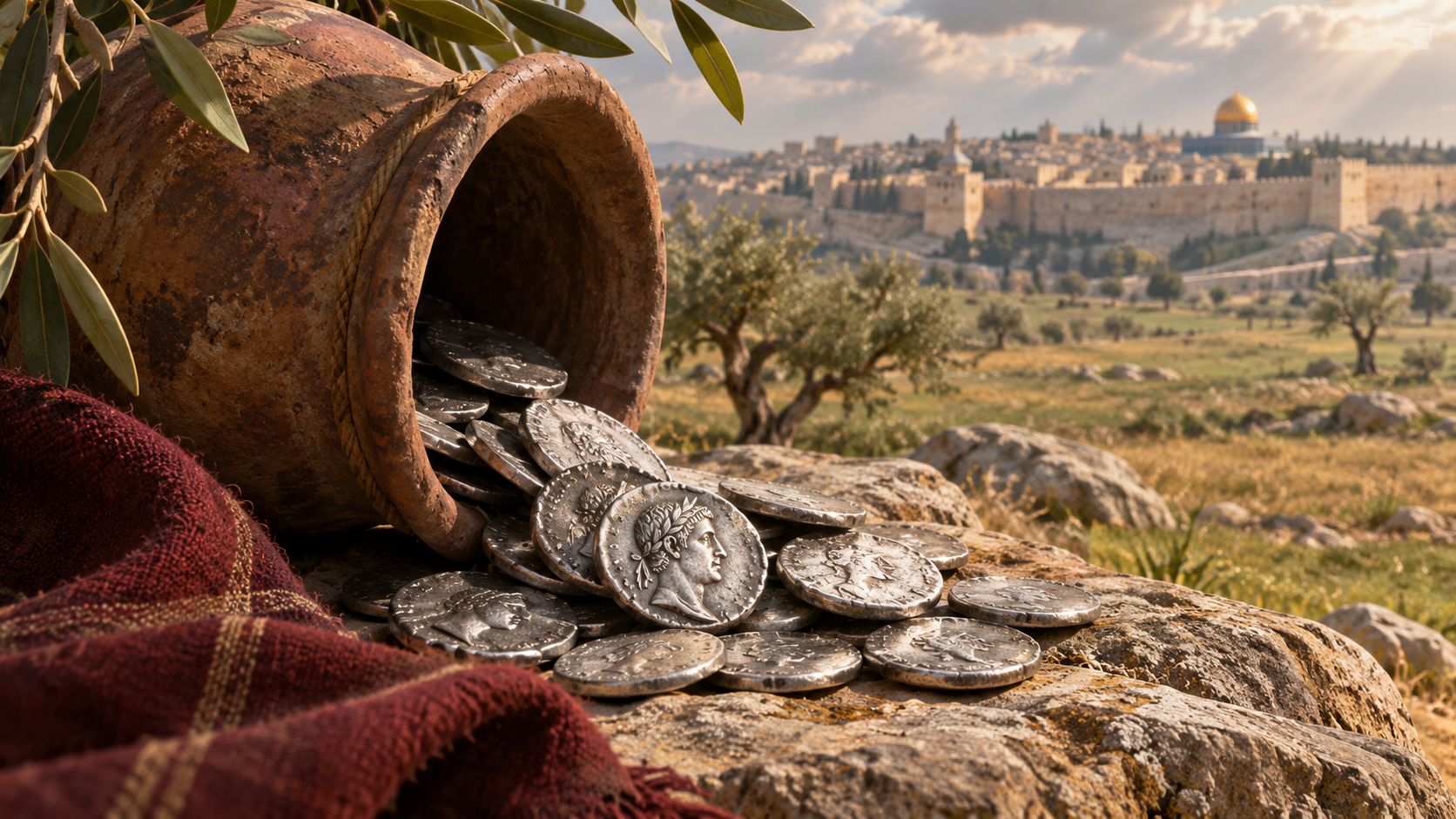
The thirty pieces of silver travel an unexpectedly long way after Jesus is condemned. In Matthew, Judas tries to hand them back. The priests decline responsibility for what he has done, then face an awkward problem about what to do with the coins. In Acts, the reward is connected with property acquired by Judas himself. Anyone remembering a single biblical story about a rope breaking over a field is remembering an attempt to join two accounts together.
Matthew says Judas hanged himself. Acts describes him falling and his body bursting open. Both works know a place called the Field of Blood. Neither provides the intermediate sequence often supplied in retellings. The differences extend beyond the manner of death to who spent the money, what the land was for and why its name made sense to people in Jerusalem.
In Matthew, the Silver Becomes Somebody Else’s Problem
Judas sees that Jesus has been condemned. He acknowledges responsibility for betraying innocent blood and takes the thirty pieces back. Imagine the transaction from the priests’ side. A payment already made has returned to the Temple, accompanied by a statement about what it bought. Their refusal to resolve Judas’s guilt does nothing to settle the practical question of where to put the silver.
Judas throws down the money and leaves. Matthew describes his hanging briefly, then follows the coins. The priests decide the money cannot go into the treasury because it is blood money. Instead they use it to buy a potter’s field as a burial place for strangers. Burial is a public kindness. Matthew leaves that kindness alongside the transaction that financed it. Readers can feel the discomfort without the narrator interrupting to point it out.
The Field of Blood takes its name from the price paid for innocent life. Matthew then connects the transaction to Israel’s scriptures. The attribution to Jeremiah has long interested readers because the thirty pieces and the handling of the money recall Zechariah, while land, pottery and burial have parallels in Jeremiah. The author is working with a set of images that gives the purchase a longer scriptural history.
In Acts, a Vacancy Has to Be Filled
Acts opens after the resurrection. Peter addresses believers faced with the absence of one of the Twelve. Judas had shared their ministry and guided those who arrested Jesus. His death enters the speech because his place is empty. For the immediate audience, the practical question is who could take it.
Here the proceeds of wrongdoing acquire a field for Judas. The account describes a bodily fall and rupture, and links the place to the name Akeldama, translated for readers as Field of Blood. Acts gives neither the price nor Matthew’s account of the priests buying burial space for strangers. The violent death itself supplies a natural explanation for a name invoking blood.
Peter’s scriptural reasoning leads towards appointing another witness. A candidate must have accompanied the group over the course of Jesus’ ministry and be able to bear witness to the resurrection. Two men are proposed. Matthias is chosen. By the end of the chapter the disputed piece of ground has receded and the community has a twelfth member again. That ending explains why remorse and the handling of the coins receive so little attention here.
Could Both Descriptions Refer to One Death?
A familiar reconstruction proposes that Judas hanged himself and that his body subsequently fell. A further suggestion treats him as the effective purchaser because the priests used money that had been his. Those proposals show how a reader might accommodate the accounts within one sequence. The supposed broken rope, branch or interval before the fall would still be supplied by that reader. Neither author describes discovering the body after a hanging.
What would it take to choose between explanations? An independent account placing the hanging at the field, describing the discovery or identifying the buyer would help. Repeating one passage in the vocabulary of the other cannot create that missing witness. The location traditionally shown to visitors can illuminate Jerusalem’s long memory of Judas without adjudicating a first-century land purchase.
There is a more interesting reason to read the passages side by side. Matthew asks what happens when someone returns the money and still cannot reverse the betrayal. Acts asks how a community continues after a trusted insider has helped deliver its leader to his enemies. Matthew ends the episode with ground set aside for people who need burial. Acts ends its opening chapter with someone stepping into a vacant place. Remember only the dispute about how Judas died and both endings go missing.
Sources
Matthew — The silver and the potter’s field
Acts — The Field of Blood and the choice of Matthias
Zechariah — The thirty pieces of silver
Next Reads
How Much Were Judas’ 30 Pieces of Silver Worth? — Follow the betrayal money through Matthew’s account.
The History of Good Friday and Easter — Trace how Christians came to commemorate the Passion.
Why the Number Three Keeps Appearing in Jesus’ Life and the Bible — Explore the patterns that connect the Gospel narratives.
