How Could a Fire in One Flat Kill Six People in the Homes Above It?
On the afternoon of Friday 3 July 2009, a television caught fire in a bedroom on the ninth floor of Lakanal House, a 14-storey council block on the Sceaux Gardens estate in Camberwell, south London. Fires in flats are common, and tower blocks like Lakanal were built on the principle that a fire should stay inside the flat where it starts for long enough for firefighters to put it out. Residents elsewhere in the building were expected to be safe at home.
That is not what happened. Within minutes the fire had climbed the outside of the building and set light to the home directly above. It then spread sideways and downwards as well as upwards, through panels, gaps and ceiling voids that should have held it back. Six people died, three women and three children, in homes where they were supposed to be safe.
The inquests in 2013 found that the deaths could have been prevented. Southwark Council, the landlord, later pleaded guilty to four fire safety offences. And eight years after Lakanal, the Grenfell Tower fire killed 72 people in west London. The Grenfell Tower Inquiry later concluded that the warnings from Lakanal had not been acted on with any urgency. This explainer sets out what happened at Lakanal House, what the inquests and the courts found, and why the fire still matters. It draws on the coroner's recommendations and the government's reply, the inquest transcript, London Fire Brigade statements, court reporting and the Grenfell Tower Inquiry's Phase 2 report. Where sources disagree, we say so.
What Was Lakanal House?
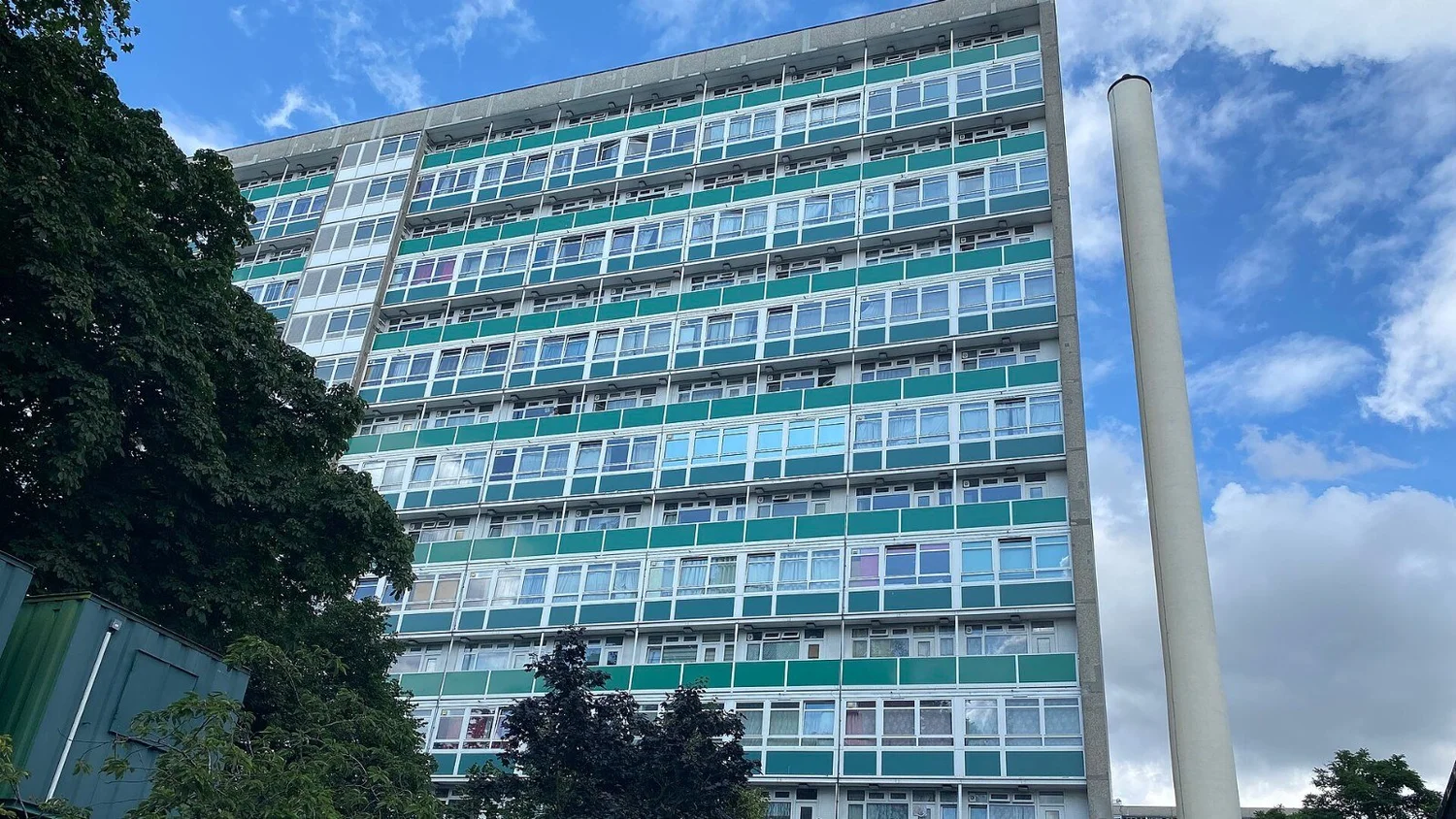
Lakanal House was built at the turn of the 1960s. Designing Buildings Wiki says it was built in 1959; other accounts say it was completed in 1960. It stood about 42 metres high, with 14 storeys and 98 flats. Every flat was a maisonette on two levels, arranged in an interlocking split-level design, so that a front door on one corridor might lead to bedrooms on the floor above or below. Its twin, Marie Curie House, was built on the same estate at the same time to the same design.
The building had a single central staircase and no central fire alarm, which the building regulations guidance of the time did not require. Like most blocks of its kind, it relied on what is called compartmentation. Each flat was meant to be a sealed fire-resisting box, so that a fire would burn itself out or be put out before it could reach anyone else. In buildings designed this way, the standard fire service advice to residents of other flats is to “stay put” unless the fire or smoke affects them.
Decades of changes
In 1999 Southwark Council, which by then owned the block, planned to demolish it, then changed its mind and spent about £3.5 million refurbishing it, according to Designing Buildings Wiki. Over the years, a series of alterations quietly undermined the protections the building had been designed with.
- The corridor ceilings. A suspended ceiling added to the corridors in the 1980s had no fire or smoke barriers above it, creating a hidden void along which fire and smoke could travel, Inside Housing reported from the inquest evidence.
- Inside the flats. In at least one flat, a wall between a bedroom and the internal staircase had been removed, the inquest heard on its first day.
- The external panels. In 2006 and 2007, under the government's Decent Homes programme, new panels were fitted beneath the bedroom windows and on the balconies used as fire escapes. An expert witness, David Crowder, told the inquests that the new panels probably burned faster than the asbestos panels they replaced. Tests carried out for the London Fire Brigade in November 2009 rated them only Class 3 for surface spread of flame, according to the Grenfell Tower Inquiry's report.
Inside Housing reported that building control approval for the 2006–07 work had not been sought or granted, even though a document wrongly said it had. At the inquests, the council and its contractor each said the other had been responsible for making sure the work complied with the regulations.
Most important of all, no fire risk assessment had ever been carried out on Lakanal House. The Regulatory Reform (Fire Safety) Order 2005 required one for the common parts of a block like this. According to Inside Housing, staff had raised concerns with senior managers from November 2006, but Southwark's assessment programme for its blocks did not begin until May 2009, two months before the fire.
What Happened on 3 July 2009?
A fire in flat 65
The fire started in a bedroom of flat 65, on the west side of the ninth floor, at about 4.15pm to 4.20pm. Accounts differ slightly: a 2016 High Court judgment gives about 4.15pm, while Wikipedia gives 4.20pm. Police initially treated the fire as suspicious. The cause, the inquests later heard, was an electrical fault in a television, as Channel 4 News and Designing Buildings Wiki reported.
Up the outside of the building
Firefighters expected the fire to stay inside flat 65 for about an hour, Inside Housing reported. Instead, it broke out of the bedroom window and climbed the outside of the building. The external panels burned through in about four and a half minutes, according to the Fire Brigades Union, and the fire set light to the curtains in flat 79, directly above, in under five minutes, Inside Housing reported from the inquest evidence.
From there, the fire did not behave as a high-rise fire was supposed to. Boxing under the internal stairs failed within two or three minutes. Fire and smoke travelled through the void above the corridor ceilings. The coroner later asked the government to make sure firefighting guidance recognised that fire in such buildings “can spread downwards and laterally”, not just upwards. The inquest jury identified the reasons: fire doors without seals, inadequate fire-stopping between flats and corridors, poorly divided roof and ceiling cavities, and external panels that did not meet the Class 0 standard.
The Grenfell Tower Inquiry noted one important qualification. The jury found that the panels were not Class 0, but also that Class 0 panels would not have stopped the fire spreading from flat 65 to flat 79. The panels were one failure among several.
The calls to 999
As smoke filled corridors and flats, residents rang 999. Some were advised to stay where they were, Channel 4 News and SHP reported; others were told to get out. Catherine Hickman, who lived alone in flat 79, was on the phone to a London Fire Brigade control operator for about 40 minutes. Inside Housing's account of the inquest evidence records that at about 4.30pm she reported an orange glow, that at about 4.36pm she saw flames at her door, and that by 4.55pm the operator could no longer hear her breathing.
In flat 81, Helen Udoaka was at home with her baby daughter, Michelle, and with a visiting family, Dayana Francisquini and the children Thais and Felipe. All five died.
The firefighting response
The London Fire Brigade eventually sent 18 fire engines and around 100 firefighters, according to its commemoration document. The fire took about six hours to bring under control. The inquest heard that there were six incident commanders over the course of the fire, with five changes of command. Crews struggled with the building's layout and flat numbering, which made it hard to work out which flat was where in a block of interlocking maisonettes. About 150 people were rescued or evacuated, and more than 20 were taken to hospital, including one firefighter. More than 250 residents were made homeless.
Who Died in the Lakanal House Fire?
Six people died. They are named in the coroner's findings as:
- Catherine Hickman, 31, who lived in flat 79.
- Helen Udoaka, 34, who lived in flat 81.
- Michelle Udoaka, her daughter, who was 20 days old.
- Dayana Francisquini, 26, who was visiting flat 81.
- Thais Francisquini, six.
- Felipe Francisquini Cervi, three.
The children's ages are taken from the official inquest transcript; the adults' ages from contemporary reporting. Most of those who died were overcome by smoke. Inside Housing reported that Catherine Hickman also suffered burns.
What Did the Inquests Find?
The inquests opened at Lambeth Town Hall on 14 January 2013, three and a half years after the fire, before Her Honour Frances Kirkham CBE, a judge appointed as assistant deputy coroner in 2010. They ran for about 50 days and heard from more than 100 witnesses.
On 28 March 2013 the jury returned unanimous narrative verdicts for each of the six people who died. A narrative verdict sets out how a death came about rather than choosing a short label such as “accidental death”. The jury identified a series of failings by Southwark Council, its contractors and its sub-contractors over many years, including in the 2006–07 refurbishment. It was also critical of aspects of the London Fire Brigade's response and of how the 999 calls were handled. Channel 4 News reported that the jury found the deaths had been preventable, with numerous missed opportunities.
The coroner's own conclusion was blunt. “By 3 July 2009, no fire risk assessment had been carried out on Lakanal House,” she wrote, as reported by Inside Housing.
The coroner's warnings
Coroners in England and Wales can write to organisations to warn of risks that could cause further deaths. On 28 March 2013, Judge Kirkham wrote such letters, then known as Rule 43 letters, to the London Fire Brigade, Southwark Council and the Secretary of State for Communities and Local Government, Eric Pickles, and two days later to the Fire Sector Federation.
Her letter to the Secretary of State made recommendations including:
- clear national guidance on the “stay put” principle and how it should be explained to residents;
- a review of the fire service's generic risk assessment for firefighting in high-rise buildings;
- premises information boxes in high-rise residential buildings, holding plans and information for firefighters;
- a clearer definition of the “common parts” of a building;
- inspection of flats that had been modified, and sample inspections of others;
- encouraging social landlords to consider retrofitting sprinklers in high-rise blocks;
- a review of Approved Document B, the official guidance on fire safety in the building regulations, particularly its section on the spread of fire over the outside of buildings, to make it intelligible and to cover refurbishment of older buildings.
The government's response
Eric Pickles replied on 20 May 2013, and the response was published on gov.uk in June. He said a new edition of Approved Document B was expected in 2016/17. He described premises information boxes as unnecessary and disproportionate. On sprinklers, he pointed to an existing letter encouraging social landlords to consider them. The Grenfell Tower Inquiry later found that this timetable slipped; the review was still unfinished when Grenfell Tower burned in June 2017.
Southwark Council told the coroner it would commission a feasibility study on sprinklers, estimating that retrofitting them across its blocks could cost about £59 million, and noting legal obstacles to entering leaseholders' homes. By 2013 the council said it had committed £48 million to fire risk assessments and fire safety works.
Was Anyone Prosecuted?
In May 2012 the Crown Prosecution Service decided there was insufficient evidence to bring charges of gross negligence manslaughter or corporate manslaughter, concluding there was no realistic prospect of convicting any company or the council.
The London Fire Brigade then brought its own prosecution of Southwark Council under the Fire Safety Order. The council challenged the brigade's power to prosecute and lost in the High Court in July 2016. At Southwark Crown Court, the council pleaded guilty to four offences:
- failing to carry out a suitable and sufficient fire risk assessment;
- breaches of fire-resisting construction between the maisonettes' internal stairs and the common corridors;
- fire loading and a lack of compartmentation in the corridor false ceilings;
- fire doors without intumescent strips or smoke seals.
On 28 February 2017 Judge Jeffrey Pegden fined the council £270,000, reduced from £400,000 because of the guilty pleas, and ordered it to pay £300,000 in costs, a total of £570,000. Some accounts describe the whole £570,000 as a fine, which is not quite right. The judge stressed that the case was about the risks in the building before the fire, not about the cause of the deaths. “This case is concerned with the risk existing prior to those events,” he said, as reported by SHP.
The London Fire Brigade urged building owners to learn the lessons. Councillor Peter John, the council's leader, said the council had since invested £62 million in fire safety. Civil claims by the families had been settled in 2013.
What Happened to Lakanal House?
Lakanal House was not demolished. After the fire it stood empty while the investigations, inquests and civil claims continued. Designing Buildings Wiki records that redesign work began in July 2013, works began on site in August 2015 and the refurbished building was handed over in March 2017, then let again as council homes. The BBC reported in 2024 that it had been modernised and was occupied again.
Its twin, Marie Curie House, has had a harder time. Defects were found there in 2020 and residents were moved out in 2021. In 2024 the BBC reported that a “waking watch” of fire patrols had been in place for almost three years, and in October 2025 a council scrutiny report recommended demolition, according to Designing Buildings Wiki.
How Was Lakanal Linked to Grenfell?
On 14 June 2017, fire spread up the outside of Grenfell Tower in north Kensington and 72 people died. Many of the themes were familiar: a refurbishment that added combustible materials to the outside of a residential tower, a fire that escaped its flat of origin, residents told to stay put, and confused regulatory responsibility.
The Grenfell Tower Inquiry's Phase 2 report, published in September 2024, examined in detail what had been done after Lakanal. Its findings were severe.
- The coroner's recommendations “were not treated with any sense of urgency”, the inquiry found.
- It called the government department's response inadequate, and described it as complacent and short-sighted.
- It found that the promised revision of Approved Document B had slipped, and that senior officials in the department were not even aware of the coroner's recommendations. The inquiry called this a failure of leadership at the highest levels of the department.
- It found that the London Fire Brigade should have responded more effectively to its own experience at Lakanal House.
- It quoted Eric Pickles's 2013 letter, which said the guidance was “a complex subject and should remain, to some extent, in the realm of professionals”.
The inquiry also looked back at the first investigation into Lakanal. A report to ministers by the then Chief Fire and Rescue Adviser, Sir Ken Knight, on 30 July 2009 said external fire spread had not been significant, and work by the Building Research Establishment was cut short at the end of July 2009. No public inquiry into Lakanal was ever held.
Analysis: it would be wrong to say that acting on the Lakanal recommendations would certainly have prevented Grenfell. The two buildings, their materials and their fires were different. But the inquiry's central point is that Lakanal was a clear official warning about fire spreading through and over the outside of a refurbished residential tower, and that the system meant to learn from it did not do so in time.
Why Do Some Accounts Differ?
- Which flat: the fire started in flat 65 on the ninth floor. Flat 79, sometimes wrongly given as the flat of origin, was Catherine Hickman's home directly above.
- Time: about 4.15pm in the 2016 High Court judgment; 4.20pm in Wikipedia; “around 4pm” in the fire brigade's commemoration document.
- Date built: 1959 or 1960, depending on whether completion or construction is meant.
- Michelle Udoaka's age: 20 days in the inquest transcript; three weeks in some reports.
- Thais Francisquini: described in some reports as Dayana's daughter and in others as her stepdaughter.
- The penalty: often reported as a “£570,000 fine”; it was a £270,000 fine plus £300,000 costs.
Why Does Lakanal House Still Matter?
- Compartmentation only works if it is maintained. Lakanal's design depended on every flat being a sealed box. Decades of small alterations to ceilings, walls, doors and panels broke that seal without anyone seeing the whole picture.
- Refurbishment can add risk. Work meant to improve homes changed how fire could travel over the outside of the building, and no one checked it against the regulations.
- “Stay put” depends on the building. The advice is only safe if the building performs as designed. At Lakanal it did not.
- Warnings need owners. The coroner set out clear recommendations in 2013. The Grenfell Tower Inquiry found they were allowed to drift.
Conclusion
The Lakanal House fire began with a faulty television in a ninth-floor bedroom. It became a disaster because the building around it no longer worked as designed. New panels on the outside let the fire climb, gaps inside let it travel sideways and down, and no one had ever assessed the risk. Six people died, including a baby who was not yet three weeks old, in homes where they had good reason to believe they were safe. The inquests found the deaths preventable, the council admitted breaking fire safety law, and the coroner told the government what needed to change. Eight years later, the Grenfell Tower fire showed how much of that warning had gone unheeded.
Sources
- Rule 43 letter from HH Frances Kirkham to Eric Pickles, 28 March 2013 (Grenfell Tower Inquiry evidence, PDF)
- Letter from Eric Pickles to HH Frances Kirkham, 20 May 2013 (Grenfell Tower Inquiry evidence, PDF)
- GOV.UK: Lakanal House, response to coroner's recommendations
- Lambeth Council: Lakanal House coroner's inquest
- Lakanal House inquest transcript, day 1 (PDF)
- Grenfell Tower Inquiry: Phase 2 Report, Volume 1, September 2024 (PDF)
- R (London Borough of Southwark) v London Fire and Emergency Planning Authority [2016] EWHC 1701 (Admin)
- London Fire Brigade: Brigade urges lessons to be learned after Lakanal fire safety prosecution
- London Fire Brigade: Lakanal inquests verdict, Commissioner's statement
- Commemoration document: Lakanal fire, Camberwell, 3 July 2009 (PDF)
- Southwark Council: Lakanal inquests statement, March 2013
- Southwark Council: response to the Lakanal coroner's recommendations, May 2013
- Inside Housing: Lakanal House, the verdict (April 2013)
- Channel 4 News: Lakanal House fire inquest (28 March 2013)
- SHP: Southwark council fined over Lakanal House deaths
- Local Government Lawyer: London borough ordered to pay £570k in fines and costs after tower block fire
- Local Government Lawyer: Southwark escapes corporate manslaughter charges over tower block fire (2012)
- Fire Brigades Union: Lakanal House fire, 3 July 2009
- BBC (via Yahoo): Concerns remain 15 years after deadly flat block fire (2024)
- Designing Buildings Wiki: The Lakanal House fire and Marie Curie House
- Wikipedia: Lakanal House fire (secondary)
Next Reads
- Ronan Point Explained: How a Match and a Gas Cooker Brought Down a London Tower Block in 1968
- The Summerland Fire Explained: How 50 People Died at the Isle of Man Leisure Centre in 1973
- The King's Cross Fire Explained: How a Dropped Match Killed 31 People on the London Underground in 1987
- The Bradford City Fire Explained: How 56 People Died at Valley Parade in 1985 and What Changed
- The Marchioness Disaster Explained: How 51 People Died on the Thames in 1989 and Why Families Fought a Decade for an Inquiry
